

Tariff Pressure Masks Underlying Inflation Trends
Monday, August 17, 2026
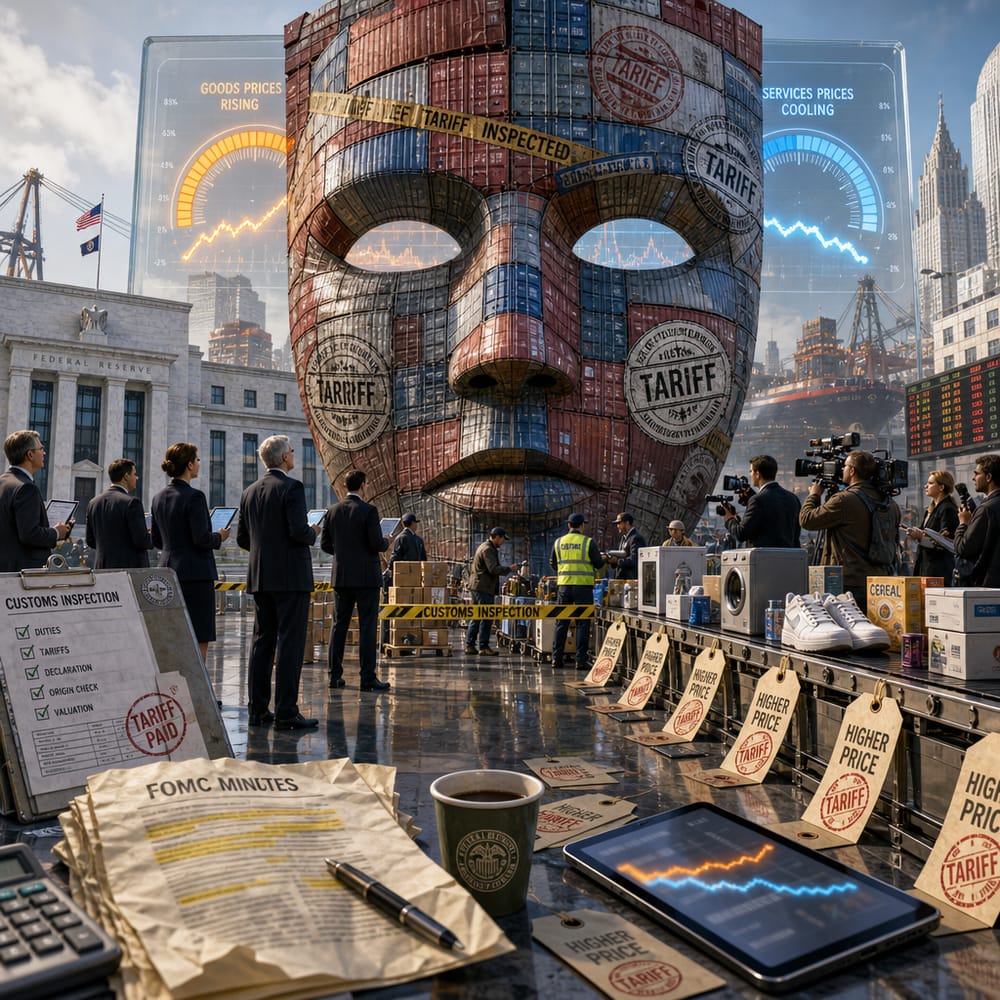
If you think of the Federal Reserve as an overanxious parent, inflation is the unruly teenager causing all the headaches. Just when Mom and Dad thought they had it under control, it's gone and gotten itself into more trouble. The upcoming Federal Open Market Committee (FOMC) minutes may paint a picture that’s a bit more complex than the typical “all quiet on the inflation front.” Spoiler alert: tariffs might be the wild card turning this drama into a thriller.
UNDERSTANDING THE INFLATION PUZZLE
Let’s break it down. Inflation isn’t just one beast; it’s more like a zoo. We’ve got services inflation, where the cost of haircuts and healthcare has been chilling out quite a bit. But in the realm of goods, things are heating up again, and tariffs are to blame. It's like finding out that, while you've been dieting successfully on kale and quinoa, your snack stash has been secretly restocked with triple-fudge brownies — and you wonder why the scale isn't tipping in your favor.
Tariffs are essentially taxes on imported goods, and with global tension running high, these taxes have been creeping up on everyday items. Suddenly, the cost of your morning coffee or the latest gadget spikes. As services inflation cools down, this tariff-induced goods inflation is kicking it back into high gear.
WHAT THIS MEANS FOR THE FED
Now, why does this tariff tango matter for the Fed? The central bank has a dual mandate: keep inflation in check and maximize employment. Think of it as juggling two balls while riding a unicycle. When tariffs drive up goods prices, even if services costs are steady, it can muddy the waters. Imagine trying to balance the checkbook when someone keeps adding surprise expenses.
This scenario could lead the Fed to believe inflation is still too high overall, even if the services side of the equation suggests otherwise. The Fed might hesitate to cut rates if they think inflation is lurking around the corner, even if it’s just a temporary tariff shadow.
DELAYING THE PARTY
Investors are eagerly anticipating rate cuts like kids waiting for summer break. But these tariff tantrums might just postpone the party. Even if headline inflation, the headline number grabbing all the attention, seems to be cooling off, the Fed could opt to keep rates higher for longer. The reasoning? They'd rather not risk inflation getting a second wind, even if it means a slight drag on economic growth.
This is where understanding the composition of inflation becomes crucial. For investors, it’s the difference between betting on a sunny day at the beach or packing for a sudden thunderstorm. If the Fed holds off on rate cuts because of these false signals, the ripple effects will stretch from Wall Street to Main Street.
THE BIGGER PICTURE
So, what’s the big takeaway here? It’s essential for investors to look beyond the surface. Inflation isn’t just about the overall number; it’s about what’s driving that number. Services inflation is slowing, but goods inflation spurred by tariffs could be enough to alter the Fed’s view.
This means investors should brace for potentially longer periods of higher interest rates, even as some economic indicators seem to cool. It's like thinking you're almost at the peak of a roller coaster, only to find there's another climb ahead.
The FOMC minutes are expected to shine a light on these dynamics. If you’re an investor, these insights aren’t just interesting trivia; they’re your script for the next chapter of market moves. Stay sharp, keep your eyes on those tariffs, and prepare for a ride that, while bumpy, could still bring plenty of thrill.
In essence, tariffs are the plot twist in the inflation narrative that could keep investors on their toes and the Fed in a holding pattern. Whether it’s your 401(k) or your grocery bill, understanding these underlying currents helps you navigate the financial seas with a bit more confidence. So, next time you’re scrolling through your phone for market insights, remember: the devil’s in the details, and those details just might be hidden in the fine print of your imported goods.
This article is for informational purposes only and is not investment advice. Always do your own research or consult a licensed financial professional before making investment decisions.
© Copyright 2024. All Rights Reserved.
© Copyright 2024. All Rights Reserved.