

Target's Earnings Beat: A Deeper Dive into the Stock's Unexpected Decline
Wednesday, August 19, 2026
TARGET'S EARNINGS BEAT: A DEEPER DIVE INTO THE STOCK'S UNEXPECTED DECLINE
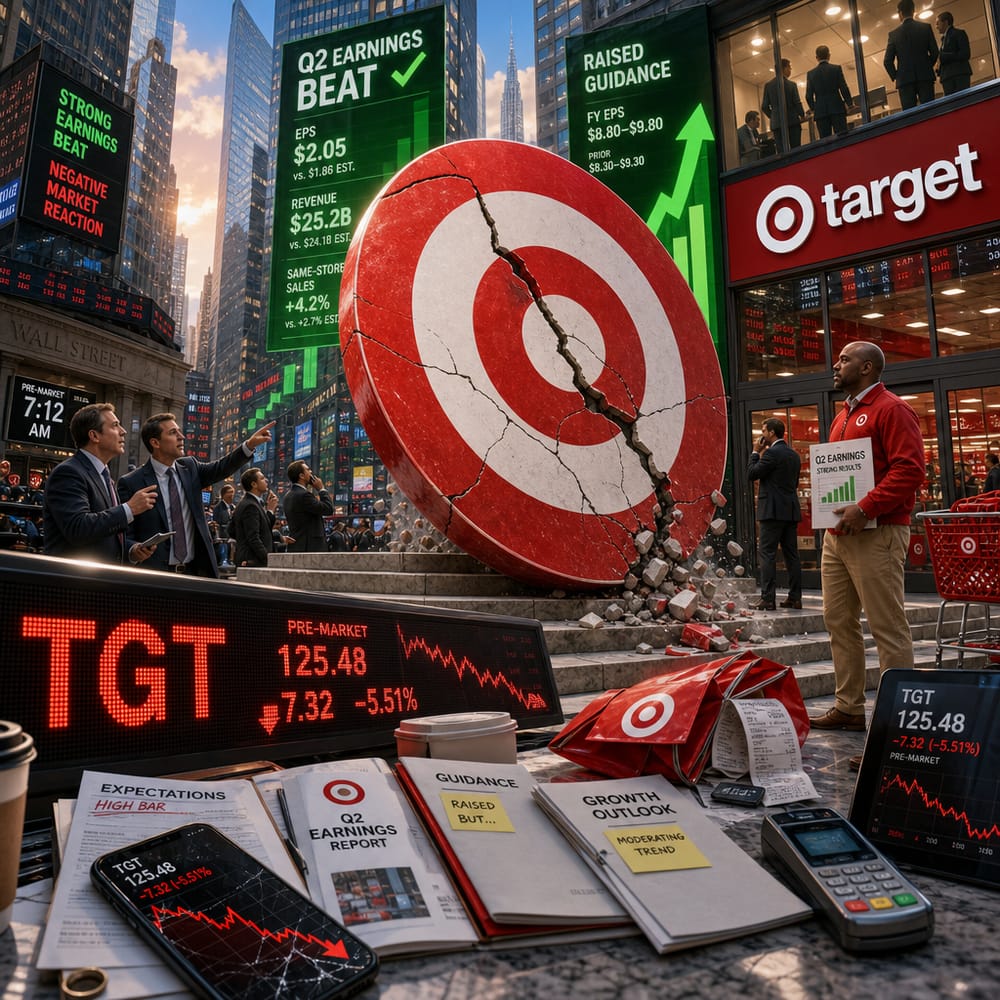
If you were holding your breath for Target to soar after its recent earnings report, you're probably feeling a little blue right now. Despite the retailer crushing it with strong Q2 earnings and even raising its guidance for the year, the stock decided to throw a curveball and headed southward in pre-market trading. So, what in the retail gods’ name is happening here?
First off, let's paint the backdrop. Target recently strutted onto the stage with some pretty snazzy numbers: a 5.3% rise in net sales and a 3.8% lift in comparable sales, both of which outpaced Wall Street's rather modest expectations. Oh, and did we mention the $752 million tariff refund that sweetened the pot? Yes, it was a head-turning performance. The kind you'd expect to be met with thunderous applause—or at least a nice stock uptick. Instead, TGT took a detour south. So, what gives?
WHY THE DECLINE?
Welcome to the mind-bending world of stock market psychology, where good news can be bad news and nothing makes sense until it does. Despite the solid figures, investors are eyeing something a lot more nuanced. For one, Target's earnings were somewhat buoyed by that hefty tariff refund—a financial cushion that might not be there next time around. Investors want to see consistent, organic growth. It's like the stock market's version of "are you really that good, or just really lucky this quarter?"
And then there are those pesky future growth prospects. Sure, Target has raised its guidance, but some investors might still be worried about the broader retail landscape and its potential to act like a roadblock. Inflation could be the annoying fly in the ointment, and with rising costs potentially squeezing consumer wallets, there's a looming question mark over just how much steam Target has left in its sales engine.
MARKET EXPECTATIONS AND COMPARISONS
Now, let's talk market expectations. Investors aren't content with a one-hit wonder; they’re looking for a Grammy-winning album. Target has to prove it's not just a flash in the pan. Remember, its competitors—Walmart and TJ Maxx—are also in the race, and they’ve been chomping at the bit with their own impressive earnings reports. Target needs to show it's not only keeping pace but leading the pack.
Walmart, for one, has been a retail juggernaut with its wide moat of grocery sales and low-cost appeal. And then there's Ross Stores, offering the allure of treasure-hunt shopping at bargain prices. With this kind of competition, Target can't afford to rest on its earnings laurels, tariff refund or no.
LOOKING AHEAD
What does this all mean for Target's future? The company has laid out a roadmap for growth, emphasizing its strategy to adapt to changing consumer needs and fortify its supply chain. But to keep investors hooked, Target will need to execute this plan without hiccups and continue to deliver value beyond just one-off financial boosts.
The retail giant is at a critical juncture, and its next moves will be heavily scrutinized. Are they going to innovate or imitate? Will they capture consumer loyalty or just customer curiosity? These questions loom large.
In a nutshell, while Target's Q2 earnings looked dazzling on paper, the market expects more than a fleeting sparkle. Investors are playing the long game, looking beyond the immediate numbers to the horizon of sustainable growth. As Target navigates this complex retail landscape, it will need to keep hitting the high notes if it wants to stay in the spotlight.
As always, retail investing is about reading between the lines and seeing beyond the numbers. Sometimes, even a good show isn't enough if the audience expects an encore. But who knows, maybe Target is just warming up for its next big performance. Either way, it’s a front-row seat worth keeping an eye on.
This article is for informational purposes only and is not investment advice. Always do your own research or consult a licensed financial professional before making investment decisions.
© Copyright 2024. All Rights Reserved.
© Copyright 2024. All Rights Reserved.