

Taiwan's Short-Sale Curbs Amid AI Stock Volatility
Sunday, November 22, 2026
TAIWAN'S SHORT-SALE CURBS AMID AI STOCK VOLATILITY
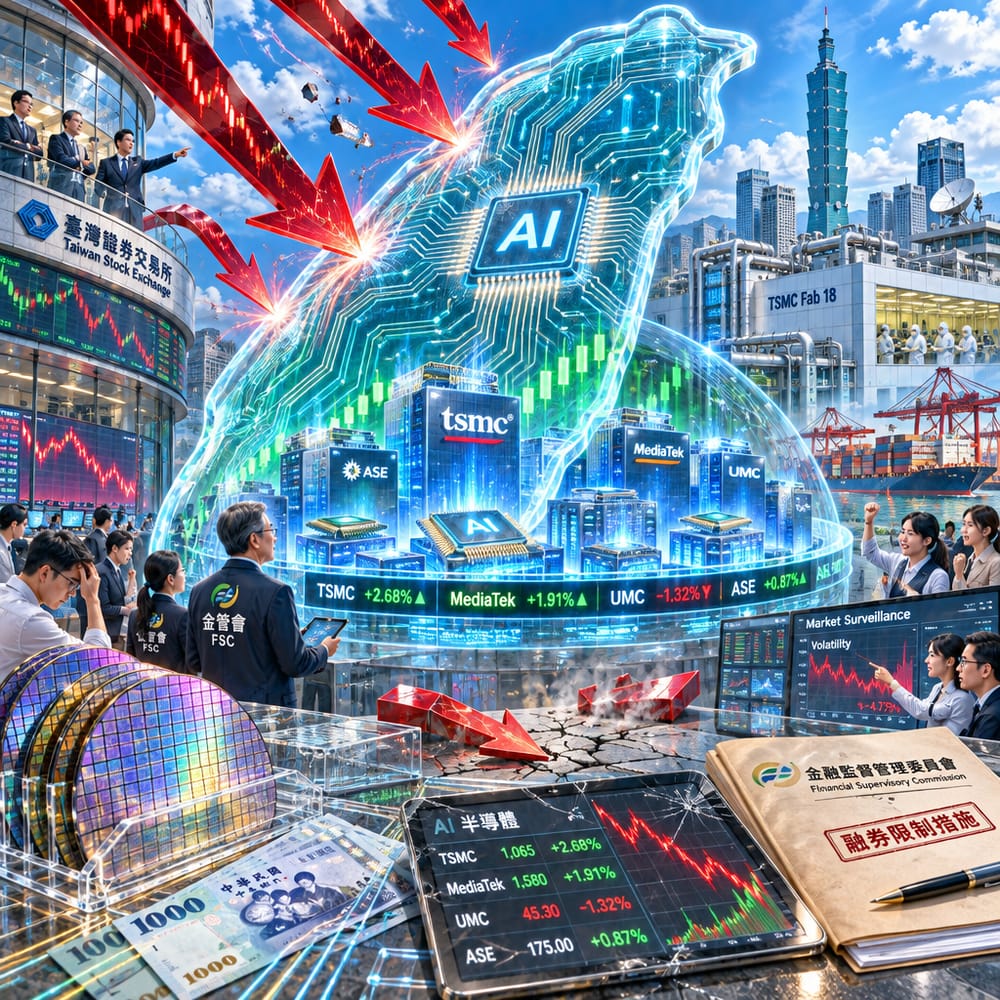
Let's paint the picture: imagine a rollercoaster engineered by AI, with semiconductor stocks strapped in for a wild ride. That’s pretty much what Taiwan’s stock market has felt like lately. The island nation, a linchpin in the semiconductor world, has just thrown down the gauntlet to market volatility by tightening its grip on short selling — a tactic where investors bet against a stock, profiting when it drops.
Taiwan's regulatory watchdogs have stepped in, aiming to calm the storm generated by AI-related stock dips. The island's decision to curb short selling might seem like an overtly cautious move, but it's more of a calculated strategy to stabilize the jittery tech sector.
WHY YOU SHOULD CARE
Taiwan isn’t just any player in the global game of chips and circuits. It’s the MVP. The country is home to major semiconductor companies that keep the world's tech dreams spinning. So, when Taiwan fiddles with its market mechanics, it sends ripples across the tech universe. That tablet you’re reading this on? It might just owe its brainpower to a Taiwanese semiconductor.
THE SHORT-SALE SHAKE-UP
Here's the deal: Taiwan's new rules mean stricter limits on investors who want to short stocks in the AI and semiconductor sectors. By doing so, Taiwan hopes to put a floor under falling stock prices, at least temporarily. But let’s be honest, no regulation is foolproof. So, the big question is whether this move will be the band-aid that stops the bleeding or merely a pause in the chaos.
While the immediate goal is to stop the sharp decline in AI-related stocks, what does this mean for the global semiconductor markets? In the short term, it could offer a breather for battered stocks and provide some much-needed stability. But investors might also take it as a sign to tread carefully, wary that such interventions could become more frequent.
THE LONG GAME
In the grand scheme of things, Taiwan’s market maneuver is a double-edged sword. On one side, it might calm nerves and restore investor confidence, keeping the semiconductor supply chain from wobbling too much. On the flip side, it could signal uncertainty, sparking concerns about the future volatility of AI stocks.
This volatility isn't just a bad dream for day traders — it has real implications for tech giants worldwide. Companies in Silicon Valley and beyond rely on the semiconductors churned out by Taiwanese firms. If the market remains shaky, it could affect everything from the next iPhone release to the rollout of self-driving cars.
WHAT DOES THIS MEAN FOR YOU?
For everyday investors like us, Taiwan’s short-selling curb is a reminder that the tech market can be as unpredictable as a game of high-stakes poker. If you’ve invested in tech, now might be a good time to reassess your portfolio strategy. While the short-term effects of Taiwan’s decision could bring some calm, the long-term impacts on AI stock volatility remain a mystery waiting to unfold.
Here’s where the savvy investor can capitalize: keep an eye on how these regulations shape market behavior. Are companies adjusting their forecasts? Is there a shift in global semiconductor investments? These are the clues that will help you navigate the next wave in tech stock trends.
FINAL THOUGHTS
Taiwan's move is a bold attempt to control the AI-driven tempest that's been rocking its stock market. It's a clear sign that the global tech markets are in a delicate dance, with every step closely watched by investors around the world. As regulatory ripple effects make their way across the globe, staying informed will be your best bet in this high-tech game of chess.
So, whether you’re a tech enthusiast or just looking to keep your investments afloat, remember: the world of semiconductors and AI is ever-evolving, and the moves made today could set the stage for tomorrow’s tech landscape. Buckle up and stay sharp, because the only constant here is change.
This article is for informational purposes only and is not investment advice. Always do your own research or consult a licensed financial professional before making investment decisions.
© Copyright 2024. All Rights Reserved.
© Copyright 2024. All Rights Reserved.