

Swiss Franc Bucking the Trend: Despite Zero Rates at SNB, CHF Gains on Policy Divergence and Safe‑Haven Demand
Sunday, November 08, 2026
SWISS FRANC BUCKING THE TREND: DESPITE ZERO RATES AT SNB, CHF GAINS ON POLICY DIVERGENCE AND SAFE‑HAVEN DEMAND
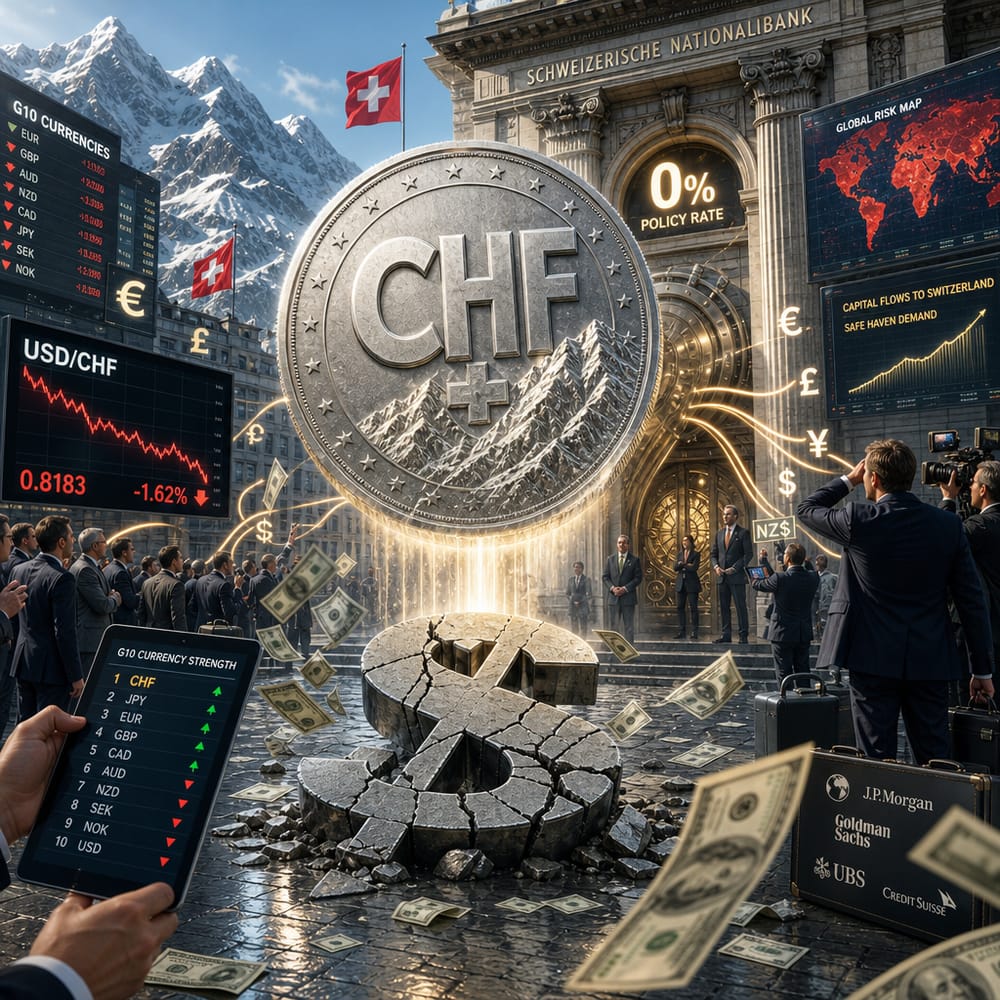
Move over, dollar. Step aside, euro. There's a new sheriff in town, and it’s dressed in Swiss precision and neutrality. Yes, we're talking about the Swiss franc, the little currency that could, and it’s reigning supreme in the G10 currency league. But wait, what's the deal? The Swiss National Bank (SNB) is rocking a zero interest rate policy, yet the franc is flexing its muscles like it's had a double espresso. Let’s dive into the mystery of this finance world conundrum and see what makes the Swiss franc tick.
THE DYNAMICS OF POLICY DIVERGENCE
First, let’s talk about policy divergence. Fancy term, right? But all it really means is that not all central banks are on the same page. While the Federal Reserve has been flirting with rate hikes like they’re going out of style, the SNB’s been sitting back with a “thanks, but no thanks” attitude. So, why does that matter? Well, in the currency world, contrasting policies can make one currency more attractive than another. The Swiss franc’s strength is a classic case of the SNB’s monetary policy playing hard-to-get. Investors sniff out these inconsistencies faster than a bloodhound, and they're flocking to the Swiss franc like it’s the last piece of chocolate at a Swiss fondue party.
SAFETY FIRST: WHY SAFE-HAVEN FLOWS LOVE THE FRANC
Now, let's talk safe-haven flows. Picture this: global markets throwing a tantrum, tech stocks in turmoil, and geopolitical tensions making headlines—sounds like a bad day, right? But for the Swiss franc, it’s just another Tuesday. When the world gets jittery, investors look for a safe place to stash their cash, and nothing says “safety” like Switzerland. There’s a reason the Swiss franc is synonymous with stability—it’s like the currency equivalent of comfort food.
The franc’s allure isn’t just in its neutrality but also its resilience. As the world wrestles with economic uncertainty, thanks to everything from AI-induced volatility to midterm election surprises, money managers are drawn to the steadiness of the Swiss franc. It's not just a currency; it’s a financial security blanket.
READING THE DATA INDICATORS
Let’s get technical for a second (don’t worry, I’ll make it painless). When you look at the economic data, it paints a picture of why the Swiss franc remains attractive. Switzerland’s economy might not be the wildest ride in the amusement park, but it’s certainly the most reliable. Low inflation, a healthy trade surplus, and a knack for avoiding economic hiccups make it a darling for investors. Even with zero interest rates, the Swiss economy’s fundamentals are like a siren’s call to those seeking refuge in stormy financial seas.
WHAT’S NEXT FOR THE SWISS FRANC?
So, what’s the endgame here? Can the Swiss franc keep its stronghold against the mighty dollar and the euro? Well, that depends. If the global economy keeps throwing curveballs and central banks continue their policy dance-offs, the Swiss franc could indeed maintain its sassy swagger. Investors love a steady bet, and as long as Switzerland’s economy stays the course, the franc is likely to remain in their good graces.
But let’s not forget the nature of markets—they love a plot twist. If the global economy somehow finds its groove or if the SNB decides to shake things up with a policy pivot, the dynamics could shift. For now, though, the Swiss franc sits atop its currency throne, eyeing the competition with a quiet confidence.
In the high-stakes poker game of global currencies, the Swiss franc is playing its hand with cool precision. Zero interest rates? No problem. Policy divergence and safe-haven demand? Bring it on. If there’s one thing we’ve learned, it’s that the Swiss franc is more than just a currency—it’s the Rocky Balboa of the forex world, punching above its weight and proving that, sometimes, slow and steady really does win the race.
This article is for informational purposes only and is not investment advice. Always do your own research or consult a licensed financial professional before making investment decisions.
© Copyright 2024. All Rights Reserved.
© Copyright 2024. All Rights Reserved.