

Sweetgreen Cuts Full-Year Outlook amid Cyclospora Concerns
Thursday, August 06, 2026
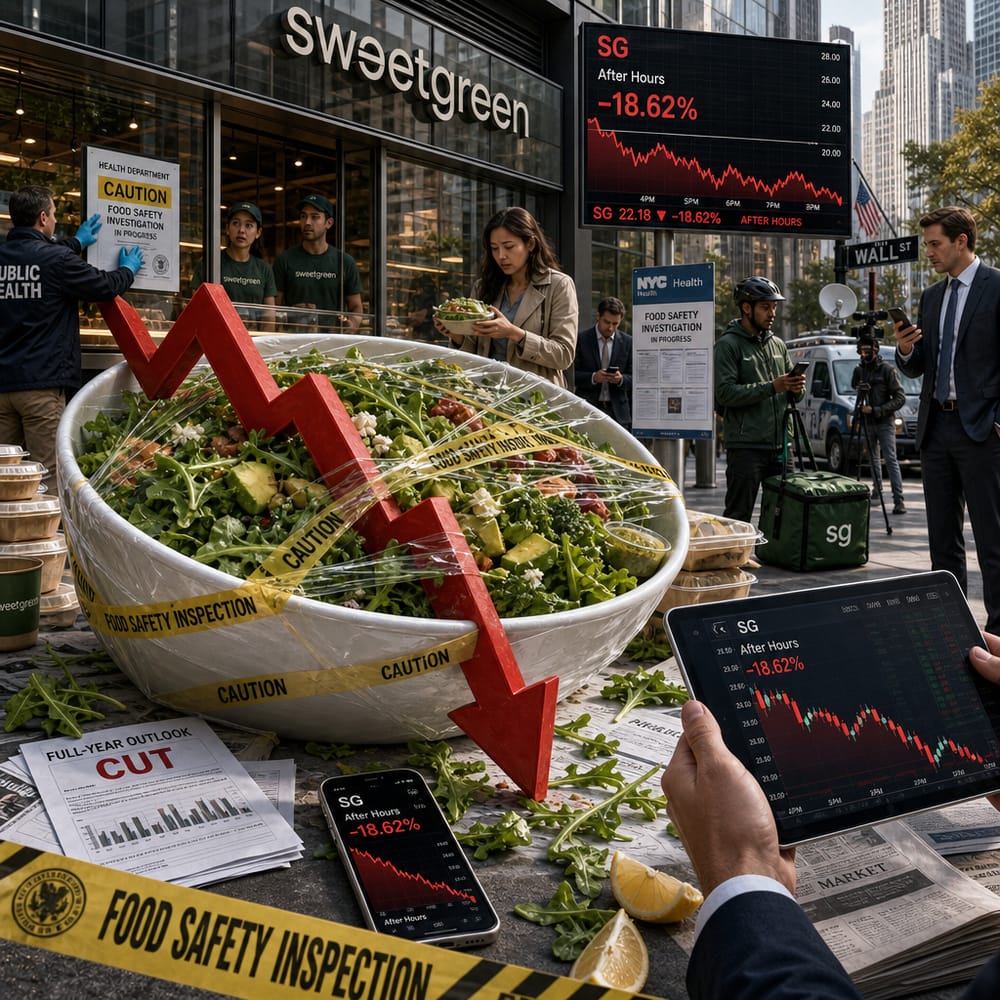
Imagine crafting the perfect salad: crisp greens, fresh veggies, and a drizzle of dressing that takes you to foodie paradise. Now picture someone yanking the bowl from your hands and whispering "Cyclospora." Suddenly, that salad doesn't look so appetizing, does it? This scene—minus the dramatic flair—is exactly what's happening to Sweetgreen, sending its shares into a nosedive faster than you can say "spinach recall."
Sweetgreen, the fast-casual salad slinger synonymous with farm-to-table freshness, just cut its full-year sales outlook. Why? Because consumers have caught a serious case of cyclospora-phobia. If you haven't heard of cyclospora, it's a nasty little water-borne parasite that loves to spoil the salad party. The outbreak, sourced from iceberg lettuce from a particular supplier in Mexico, isn't Sweetgreen's fault. But in the world of fast-casual dining, guilt by association is a powerful thing.
THE SALES SLIP 'N SLIDE
Before the outbreak, Sweetgreen was projecting sunny skies and brisk sales. But now, they're forecasting a stormy drop. Same-store sales, which measure performance at locations open for at least a year, are expected to decline more than previously anticipated. Although Sweetgreen hasn't revealed the exact numbers, the revision was significant enough to trigger a 15% plummet in their stock during after-hours trading. That's a gut punch to investors who like their portfolio as green as the salads Sweetgreen serves.
HARD-HIT MARKETS
Where is this fear of fresh greens hitting hardest? Unsurprisingly, areas where the cyclospora outbreak has been most prevalent are seeing the steepest declines in foot traffic. Consumers in these regions are opting for the perceived safety of cooked and packaged foods over fresh and healthy. This wouldn't be the first time a food safety scare has left diners skittish. Remember the romaine lettuce debacle a few years back? Fresh veggies suddenly became as appealing as week-old leftovers.
LOCAL OR SYSTEMIC?
While Sweetgreen isn't directly implicated, the outbreak casts a shadow on how they and other chains manage their supply chains. Is this a regional supplier problem or something bigger? So far, the spotlight shines on one Taylor Farms facility in Mexico. But the fast-casual industry is taking a collective deep breath and double-checking supplier lists to avoid being the next headline.
THE SILVER LINING FOR COMPETITORS
Some competitors might be eyeing Sweetgreen's woes like a hawk circling a salad bar. Taco Bell, the only nationwide chain directly linked to the outbreak, has already seen sales rebound. Their secret? A menu that leans heavily on cooked foods, which are less likely to carry the parasite. Other chains offering hearty, hot meals can capitalize on this fear of fresh. Could this be Chipotle's chance to remind folks why their burrito bowls are a safe bet? Perhaps.
WHAT'S NEXT FOR SWEETGREEN?
Sweetgreen's next move will be crucial. Will they weather the storm by leaning into transparency and reassuring their customers? Or will they find solace in offering more cooked options to calm jittery nerves? Whatever they decide, the food safety spotlight is glaring, and consumers are the judge and jury.
The fast-casual dining sector thrives on the promise of fresh and healthy. But when freshness feels like a gamble, consumers might just stick to their comfort foods. For companies like Sweetgreen, this cyclospora scare serves as a stark reminder: in the restaurant business, safety and perception are as important as taste and nutrition.
Keep your eyes peeled, because how Sweetgreen navigates this will set a precedent for others in the industry. For now, it’s a waiting game. Will they toss out the right solutions and win back diner trust? Or will they be left with financial indigestion? Grab your fork and stay tuned, because this salad saga is far from over.
This article is for informational purposes only and is not investment advice. Always do your own research or consult a licensed financial professional before making investment decisions.
© Copyright 2024. All Rights Reserved.
© Copyright 2024. All Rights Reserved.