

Swap Lines: New York Fed Dollar Liquidity Into ECB, BOJ
Tuesday, August 25, 2026
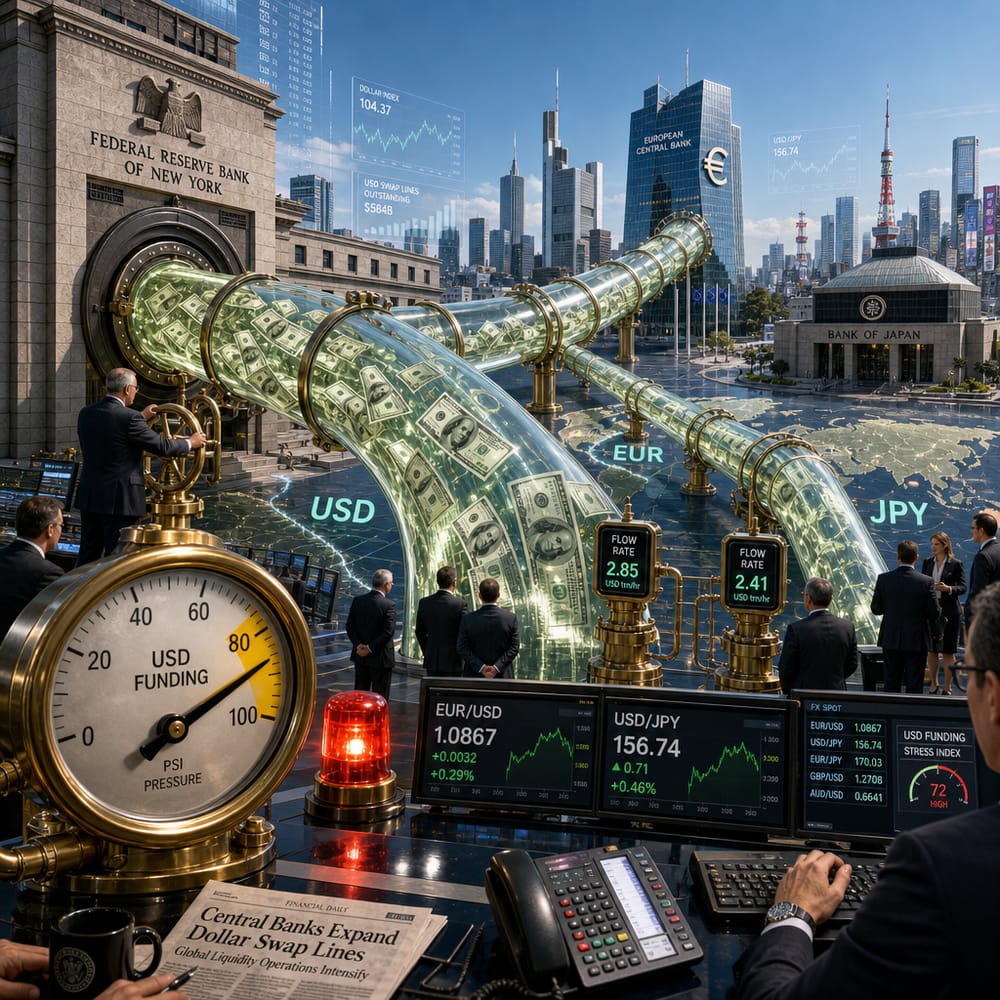
THE DOLLAR DANCE: INSIDE THE NY FED'S LIQUIDITY SWAP MOVES
Picture this: the New York Fed quietly stepping into the global market party, not with a loud announcement, but with a subtle, strategic swap of dollar bills—a move that has everyone asking, “What’s going on?” Welcome to the slightly clandestine world of dollar liquidity swap lines, where the Fed is the DJ mixing tracks between currencies like it’s the hottest new club in town.
So, what’s the big deal with the New York Fed's recent dollar liquidity swap lines with the European Central Bank (ECB) and the Bank of Japan (BOJ)? Well, it might not be grabbing headlines like a celebrity gossip mag, but if you’re even remotely interested in currencies or global finance, this has the undercurrents of a drama series. Here’s the scoop: these swap lines are essentially financial back channels that allow central banks to swap their local currency for U.S. dollars. It’s like the world’s biggest currency exchange, exclusively for the cool kids in central banking.
WHY SWAP NOW?
You might be wondering why the New York Fed felt the need to start spinning the liquidity turntables again. The key here is the subtle signals of stress in the global U.S. dollar funding markets. In non-geek speak: there might be a shortage of dollars flowing around the international financial system, and that makes everyone a little antsy. By activating these swap lines, the Fed is offering a lifeline, ensuring that foreign banks have access to the greenbacks they need. It’s less “emergency intervention” and more “preventing a financial freakout.”
WHAT THIS MEANS FOR YOUR WALLET (AND THE WORLD)
The dollar is the world’s reserve currency—a beacon of stability in an otherwise unpredictable monetary sea. So, these swap line shenanigans? They’re kind of a big deal, especially for those who play the currency market game. For the average investor keeping an eye on USD crosses (where the dollar is pitted against other currencies like the euro or yen), this could mean some interesting shifts. The added dollar liquidity could ease pressure on global funding, possibly leading to a stronger euro or yen against the dollar, depending on how markets react.
Historically, when swap lines have been activated, it’s like giving the global economy a shot of espresso—quickly perking up any sluggish movements in currency flows and reassuring markets that the dollar liquidity tap isn’t going to run dry. For currency traders, this is a dance worth watching, as movements in EUR/USD and USD/JPY can have far-reaching implications, from affecting import/export trade balances to influencing global stock markets.
LOOKING BACK TO LOOK FORWARD
If you’re getting déjà vu, you’re not alone. These swap lines are a throwback to some of the more turbulent economic times. Remember the 2008 financial crisis? Swap lines were all the rage back then, too. They were also dusted off during the COVID-19 pandemic to calm frayed financial nerves. And now, as whispers of economic uncertainty cloud the horizon again—thanks to geopolitical tensions and lingering inflation fears—the Fed is playing the liquidity swap line card once more.
The past tells us that these actions are typically a preemptive strike, a kind of financial Band-Aid to prevent bigger wounds from opening. And while it’s not a guaranteed win, it does tend to settle the markets, at least temporarily.
THE BOTTOM LINE
In the whirlwind world of finance, stability is a currency of its own. By reactivating these swap lines, the New York Fed is doing more than just moving money—they’re sending a reassuring message to the world: “We’ve got this.” For investors, this is a key moment to watch. The ripple effects of dollar liquidity can shape global markets, influence currency valuations, and ultimately impact everything from international trade to how much you pay for that imported bottle of wine.
So, the next time someone casually mentions swap lines in conversation, you can nod knowingly and drop this bombshell of financial wisdom. And keep your eyes peeled—because with the global economy playing musical chairs, every beat counts.
This article is for informational purposes only and is not investment advice. Always do your own research or consult a licensed financial professional before making investment decisions.
© Copyright 2024. All Rights Reserved.
© Copyright 2024. All Rights Reserved.