

Sustained Institutional Demand: Bitcoin ETF Inflows Top $600M Over Early August
Friday, August 14, 2026
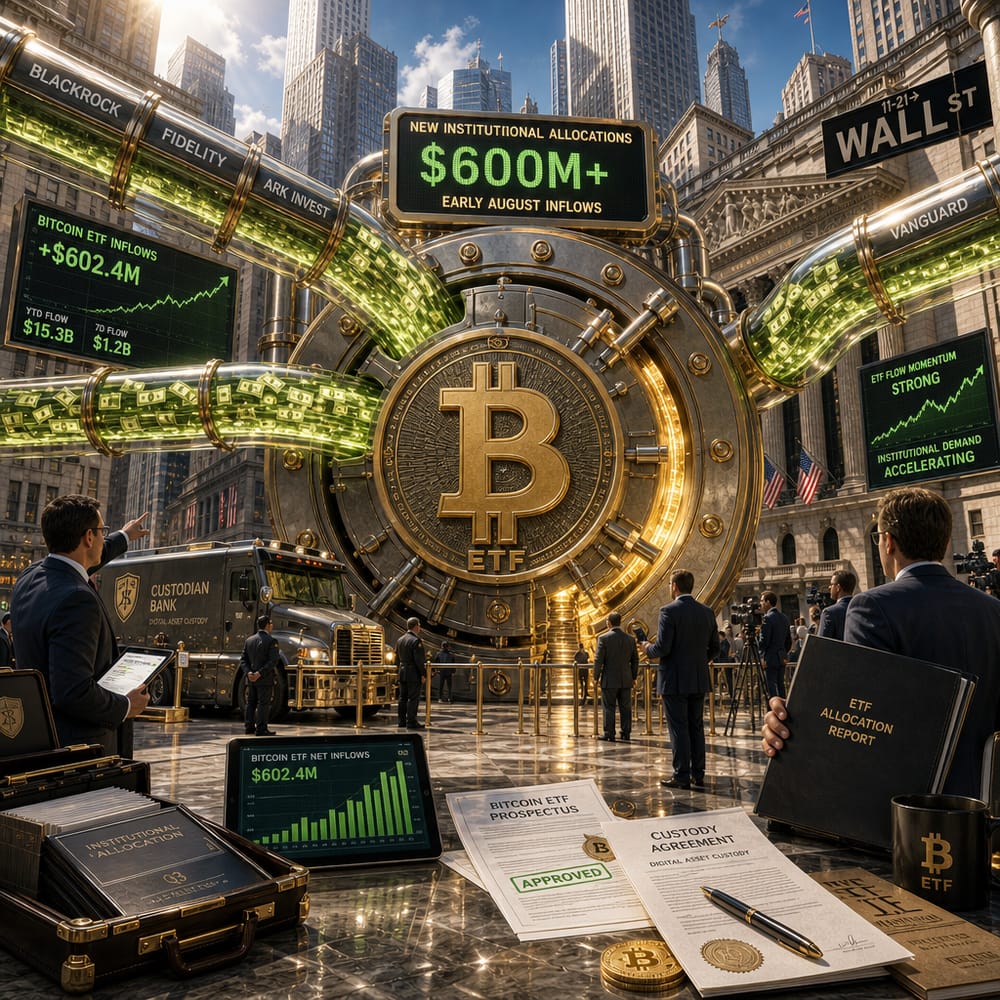
BITCOIN’S BACK, BABY: INSTITUTIONS POUR OVER $600M INTO ETS
Forget the stock market, folks. While Wall Street debates if software stocks are the main course or just a side dish, Bitcoin's back in the headlines and it's dressed to the nines. Over $600 million has flooded into U.S. spot Bitcoin ETFs this August, marking a dazzling comeback for institutional interest in everyone's favorite volatile digital asset. So what's got these money movers cruising back to Crypto Town, and what does it mean for us regular investors?
A SUNNY SPOT FOR BITCOIN ETFs
Bitcoin ETFs are like the gateway drug of crypto investments. They offer a more straightforward, less anxiety-inducing way to put money into Bitcoin without actually buying (and securely storing) the asset itself. And while they’ve had their ups and downs, early August has felt like a victory lap. What's driving this investor love fest?
First, the FOMO (Fear Of Missing Out) is real. Bitcoin has been on a rollercoaster since its inception, and institutional investors know a good thrill ride when they see one. With regulatory clarity slowly emerging and Bitcoin's price stabilizing somewhat, these investors are seeing a chance to ride the crypto wave without getting caught in a wipeout.
COMPARING THE CURRENT CRAZE
If you’re wondering how this month stacks up, think of it as the '90s boy band reunion tour of financial inflows. It's hard to compare exactly since the crypto market often behaves like a moody teenager, but $600 million in inflows is significant. Previously, the market was like a high school dance: lots of hype but not many actual slow dances.
Last month's numbers were a snooze fest compared to August’s fiesta. Institutional investors were tentative, navigating a murky market sea of regulation and skepticism. But now, confidence in Bitcoin ETFs seems to be clawing its way back from the crypto abyss.
WHY THE RENEWED INTEREST?
Several factors are at play here, and no, it’s not because Bitcoin finally figured out how to make a decent cup of coffee. Part of the rush comes from the broader economic backdrop. With the Fed rate hike odds falling due to a lukewarm economy, some investors are looking at Bitcoin as a hedge against potential inflation and fiat currency instability.
Additionally, tech companies with deep pockets and influential voices have continued their courtship with blockchain and Bitcoin, lending it an air of credibility. This makes institutions feel safer dipping their toes into the crypto pool.
RIPPLE EFFECTS ON THE CRYPTO MARKET
So what does this mean for the broader crypto market? In short, it’s like a caffeine shot to the system. Institutional money doesn’t just bring capital; it brings credibility, which is a hot commodity in the crypto world. Retail investors often follow the institutional crowd, meaning Bitcoin could see increased holdings by everyday investors.
Moreover, these inflows could stabilize Bitcoin prices. Volatility has been Bitcoin’s frenemy for years—exciting yet nerve-wracking. If institutional investments continue to trend upwards, the market might finally find a stable ground, allowing for more mainstream adoption and paving the way for Bitcoin to be taken seriously as a store of value.
A PEEK INTO THE CRYSTAL BALL
The crypto market is as predictable as a cat—just when you think you know what it’ll do, it acts completely differently. However, with sustained interest from institutions, we might just be on the cusp of a new chapter in Bitcoin’s storybook.
Could Bitcoin become the gold of the digital age? Maybe. Will the next crash scare off these institutions again? Possibly. But for now, the influx of over $600 million into Bitcoin ETFs is a clear signal that big players are hungry for crypto. Whether you’re a seasoned investor or someone who still thinks Dogecoin is pronounced “doggy coin,” keep a close eye on Bitcoin’s next move. It's likely to be an exciting one.
This article is for informational purposes only and is not investment advice. Always do your own research or consult a licensed financial professional before making investment decisions.
© Copyright 2024. All Rights Reserved.
© Copyright 2024. All Rights Reserved.