

Surprise July Payroll Loss Reverberates Through Bond Markets
Monday, August 10, 2026
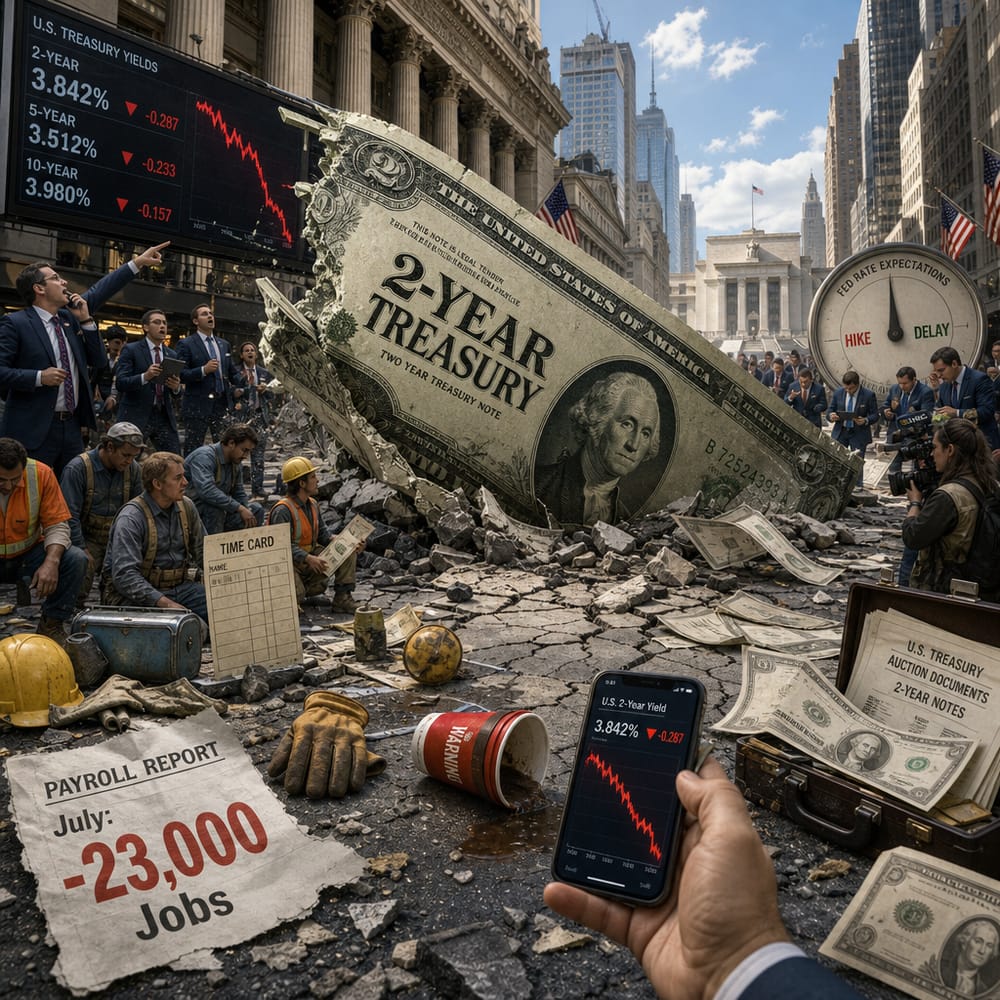
JULY’S JOBS BOMBSHELL: WHAT IT MEANS FOR THE FED AND YOUR PORTFOLIO
In the financial world, no news is big news, and when it’s unexpected news, it’s seismic. Last month, the U.S. economy pulled a Houdini, making 23,000 jobs vanish when most were expecting a gain. This surprise slip has sent the financial markets into a guessing game frenzy, trying to predict what the Federal Reserve, the all-powerful wizard behind the curtain of U.S. monetary policy, will do next.
The disappearing jobs act is already casting its shadow, especially on the 2-year Treasury yields, which took a nosedive as investors began speculating that the Fed might pause on cranking up those interest rates. For a bit of context, Treasury yields (fancy talk for the return you get on government bonds) move inversely with bond prices. So, when yields drop, it usually means investors are snapping up bonds, expecting rates to stay put or decrease.
FED WATCH: WILL THEY, WON’T THEY?
Everything hinges on the Federal Reserve’s next move. Interest rates are the Fed’s Swiss army knife – they can cool down or heat up the economy by making borrowing more or less expensive. If the job market is showing signs of weakness, as it seems to be, the Fed might hesitate to raise rates. The thinking is, higher rates could further squeeze the economy by making loans pricier for consumers and businesses.
But why does this matter to you, the retail investor scrolling past your morning coffee? Well, the Fed’s decision influences everything from your mortgage rate to the interest on your savings account. Not to mention, it sets the mood for the stock market. If the Fed decides to pause or even cut rates, it could mean more investment fueling into stocks, hoping for a better return than the newly unattractive bonds.
RIPPLE EFFECTS: YOUR BONDS AND BEYOND
The job report didn’t just stir up Fed speculation; it sent ripples through the bond market. Imagine bonds as the steady, reliable friend in your portfolio’s social circle – not the most thrilling, but dependable. However, suddenly, short-term bonds are now the popular kids on the block, drawing all the attention. Investors are racing to grab 2-year Treasuries, betting on a longer halt in rate hikes.
But hold on, before you start stuffing your portfolio with bonds, consider the broader picture. While current yields might drop, they could bounce back once economic data starts to sing a happier tune. Still, for those who crave a bit of stability amidst the market’s mood swings, government bonds are looking like the savvy pick.
SHARING STRATEGIES: WHAT SHOULD A SAVVY INVESTOR DO?
So, what’s an investor to do while the Fed plays its waiting game? First, don’t panic. Economic data is like a weather forecast – sometimes it predicts sunshine, sometimes a storm, and often it's somewhere in between. Diversification remains your best umbrella. A mix of stocks, bonds, and maybe some real estate for good measure ensures you’re not too exposed to the whims of any one market.
If you’re feeling particularly bold, keep an eye on sectors sensitive to interest rates. Real estate and utilities often react to rate moves. And don’t forget, the stock market is still a viable playground. A softer rate environment could mean tech and growth stocks, previously hammered by high rates, might start to look shiny again.
KEEP CALM AND CARRY ON INVESTING
As the old saying in finance goes, the only certainty is uncertainty. But in times of economic surprise like this, keeping a cool head and a well-balanced portfolio is key. Investors who don’t flinch at the first sign of trouble often reap the rewards in the end. And always remember, the markets have a way of rewarding patience and punishing impulsiveness.
In the coming weeks, keep your eyes peeled for more economic signs, clutch your diversified portfolio tightly, and maybe brush up on your Fed speech lingo. Because with every twist and turn, there are opportunities hiding in the folds – if you know where to look.
This article is for informational purposes only and is not investment advice. Always do your own research or consult a licensed financial professional before making investment decisions.
© Copyright 2024. All Rights Reserved.
© Copyright 2024. All Rights Reserved.