

Surge in Small Bitcoin Transfers Following Coldcard Hack
Friday, August 07, 2026
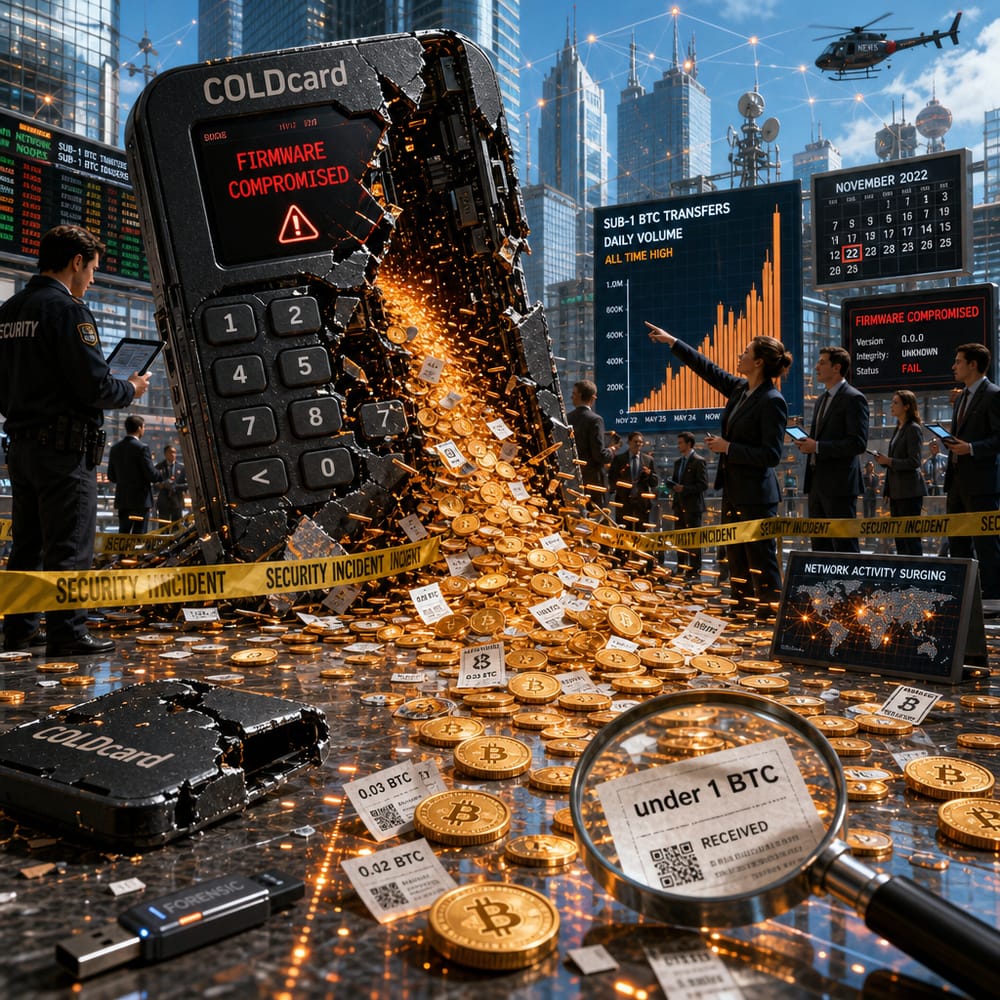
Bitcoin just got its groove back, but not for reasons anyone would celebrate. Imagine waking up to find a crowd of people shouting, "My wallet’s safe!" as they hurriedly transfer their Bitcoin in small amounts. This peculiar scene has unfolded in the crypto world, with a wave of Bitcoin transactions under 1 BTC lighting up the digital landscape. What’s the catalyst? A security breach that’s shaking the foundation of trust in hardware wallets, specifically the Coldcard firmware.
Picture this: Bitcoin transactions surging like a Black Friday sale, except the buyers are just trying to protect their stash from metaphorical shoplifters. This isn't just a subtle uptick; we're talking about the largest daily volume of small transfers since the crypto chaos of November 2022. The culprit? A firmware hack on Coldcard wallets, those nifty little gadgets touted as a Fort Knox for your digital riches.
HARDWARE WALLET SECURITY: CRACKED OR CLOAKED?
Now, if you’re the type who stashes your life savings in a cookie jar under the bed, a Coldcard wallet might sound like a tech-savvy safe deposit box. But despite the promise of ironclad security, this hack shines a spotlight on the chinks in the armor. Hardware wallets are supposed to be the ultimate guardians against online threats, isolating your keys (the passwords of the crypto world) from the hungry maw of the internet. The theory is solid: disconnect from the web, and you're untouchable. That’s what Coldcard users thought, until now.
The breach suggests that even the digital equivalents of Fort Knox have vulnerabilities. So what’s a crypto enthusiast to do? Understand that no system is impenetrable, but they all have layers of security measures. Hardware wallets typically involve encrypted keys, secure cryptographic algorithms, and often require user authentication via PINs or biometric data. But as the Coldcard fiasco shows, these measures aren't foolproof.
TRUST, OR LACK THEREOF, IN CRYPTO LAND
Cryptocurrency, by nature, is about decentralization and the empowerment of the individual. But when trust is eroded, so too is the essence of what makes crypto appealing. This Coldcard mess has injected a dose of insecurity into a market that already teeters on the edge of volatility. Traders and holders alike are now questioning the very tools they rely on to safeguard their assets.
When security breaches hit, the ripple effect can be massive. We’re seeing shaken confidence that could lead to broader hesitancy in adopting crypto technologies, especially among new or cautious investors. Remember, the crypto market is as much about psychology as it is about technology. If confidence dips, market dynamics can shift dramatically.
BITCOIN’S NOT-SO-HAPPY DANCE
This uptick in transfers doesn’t mean Bitcoin's immediate value will plummet. But it does send a signal that could turn investors jittery. As more small transactions flood the network, the sheer volume could clog systems, potentially causing delays and increased transaction fees. It's a reminder of Bitcoin's scalability issues that have haunted its evolution.
For the everyday retail investor, this means staying vigilant. Keep an ear to the ground for any further developments or announcements from wallet manufacturers. And if you haven't already, now might be a good time to refresh your understanding of wallet security measures.
THE BROADER IMPACT
The Coldcard hack isn't just a headache for Bitcoin holders; it ripples throughout the entire cryptocurrency ecosystem. It underscores the constant tug-of-war between cybercriminals and defenders of the digital realm. Hardware manufacturers will need to double down on fortifying their systems, possibly investing more in research and development to stay ahead of potential threats. This could mean higher costs down the line, which might trickle down to consumers in the form of pricier hardware.
Additionally, regulators might take this breach as a cue to revisit how they monitor and guide cybersecurity measures within the crypto space. This could lead to tighter standards and possibly inspire new regulatory frameworks aimed at protecting digital financial assets.
The Coldcard breach is a stark reminder that while we may be dealing in digital gold, the security challenges are as old as piracy itself. As crypto continues to evolve, so too must our strategies for safeguarding our digital treasures. Keep your friends close, and your Bitcoins closer. And until this storm passes, maybe double-check that hardware wallet — just in case.
This article is for informational purposes only and is not investment advice. Always do your own research or consult a licensed financial professional before making investment decisions.
© Copyright 2024. All Rights Reserved.
© Copyright 2024. All Rights Reserved.