

Surge in Long-Term Treasury Yields Hits 19-Year Highs
Tuesday, August 18, 2026
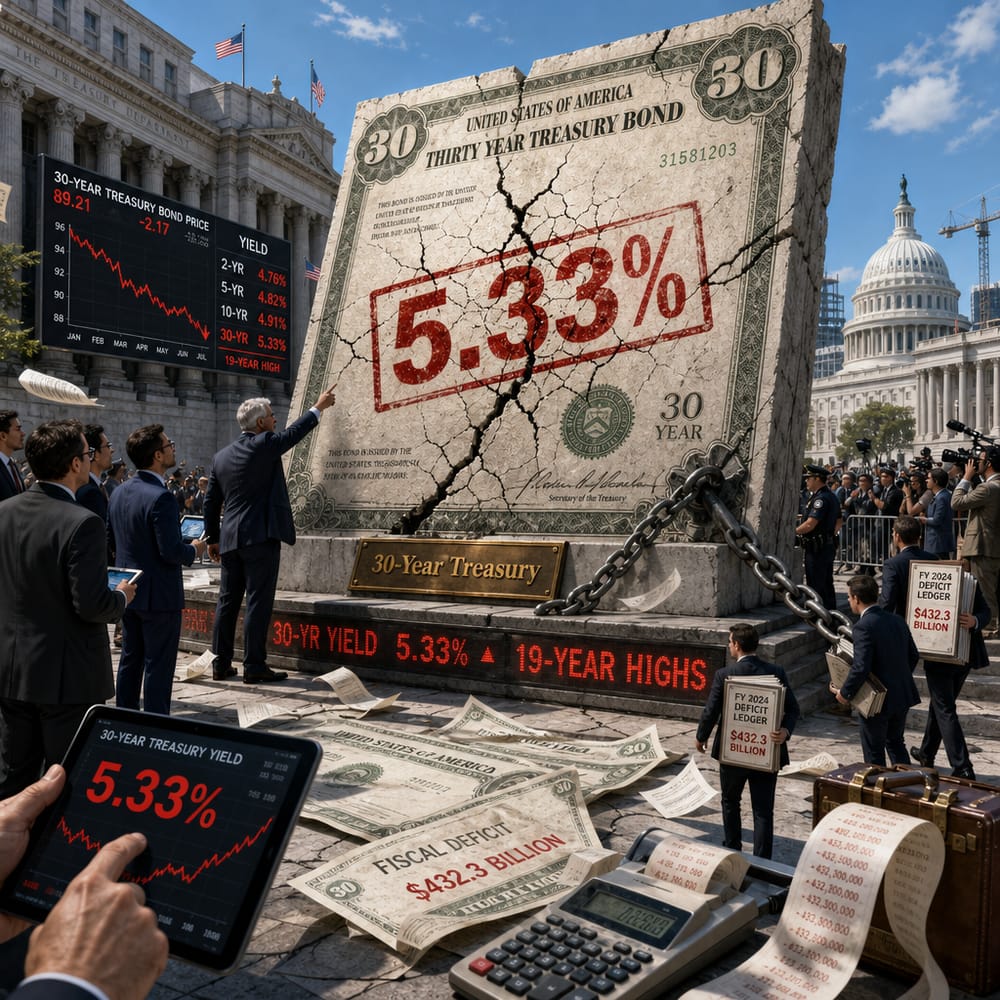
SURGE IN LONG-TERM TREASURY YIELDS HITS 19-YEAR HIGHS
Breaking news, folks! The yield on the 30-year Treasury bond just hit 5.33% for the first time since 2004, and Wall Street is buzzing like a beehive at sunrise. Now, before you hit snooze and scroll past, let me tell you why this not-so-sexy number is actually a big deal.
If you’ve ever tried to buy a house, finance a car, or just tried to keep pace with your credit card payments, what I’m about to say affects you. When long-term Treasury yields spike, it’s like throwing a financial grenade into the borrowing costs across the board, from consumer credit to corporate financing. And this latest leap in yields? It’s set to make things a bit more, shall we say, spicy.
LET’S TALK DOLLARS AND SENSE
You might be wondering, "Why should I care about some number in a government bond?" Well, imagine the economy as an intricate ballet where every dancer is trying to stick to the rhythm — and then one dancer, let's call him Mr. Treasury Yield, suddenly decides to breakdance. The delicate dance of the economy is disrupted, and everyone else has to adjust their steps.
For starters, these rising yields can make mortgages, auto loans, and even those dreaded credit card balances more expensive. Brace yourself for higher monthly payments that might squeeze your budget a little tighter. And if you’re thinking about refinancing your home or getting a new car, consider acting fast — those interest rates might climb faster than a cat on a hot tin roof.
BUSINESS IN THE HOT SEAT
Now, let’s shift gears and think like a CEO for a second. Companies large and small rely on borrowing to fund everything from expanding their operations to paying salaries. With Treasury yields climbing, that borrowing gets pricier, and companies might have to reconsider their growth strategies.
In other words, instead of investing in new hires or snazzy new office spaces, companies may hold back, turning a little stingier with their budgets. It’s not just homes and cars feeling the pinch — businesses may slow down their spending, which can ripple through the economy like a pebble in a pond.
DANCING WITH DEFICITS
While we’re talking numbers, let's not forget the U.S. fiscal deficit, which ballooned to a hefty $432.3 billion just last month. That's like tossing a ball and chain into our economic dance. The government funds its operations by issuing Treasury bonds, and when yields rise, the cost of borrowing for Uncle Sam — who’s already pretty deep in debt — gets a lot pricier.
This can lead to some tough decisions down the line. Do we cut spending on things like infrastructure and social programs, or do we hike taxes and risk getting everyone from Main Street to Wall Street a bit hot and bothered? Either way, it's a balancing act that could affect just about everyone.
KEEPING AN EYE ON THE FUTURE
So, what should everyday investors like us do in this topsy-turvy yield environment? Well, first, take a deep breath. Markets have a way of balancing out over time, and this surge could be a momentary blip or the start of a new trend. Keep a close watch on interest rates, especially if they’re affecting your personal finances or investment portfolio.
Diversification remains key — don't put all your eggs in one basket, whether it’s in bonds, stocks, or that curious crypto craze. Stay informed and flexible, and you’ll be better positioned to ride the waves of this financial storm.
As we watch the bond market’s grand performance, remember that each fluctuation tells us something about the broader economic picture. Whether it’s signaling market fears or fiscal optimism, these yield movements are like the economy’s version of a weather forecast. And just like the weather, it pays to be prepared for the unexpected. Hang tight, keep your eyes wide open, and don't let the yields of today derail the dreams of tomorrow.
This article is for informational purposes only and is not investment advice. Always do your own research or consult a licensed financial professional before making investment decisions.
© Copyright 2024. All Rights Reserved.
© Copyright 2024. All Rights Reserved.