

Surge in Federal AI Regulation — Impact on Tech Platforms and Cloud Providers
Sunday, September 27, 2026
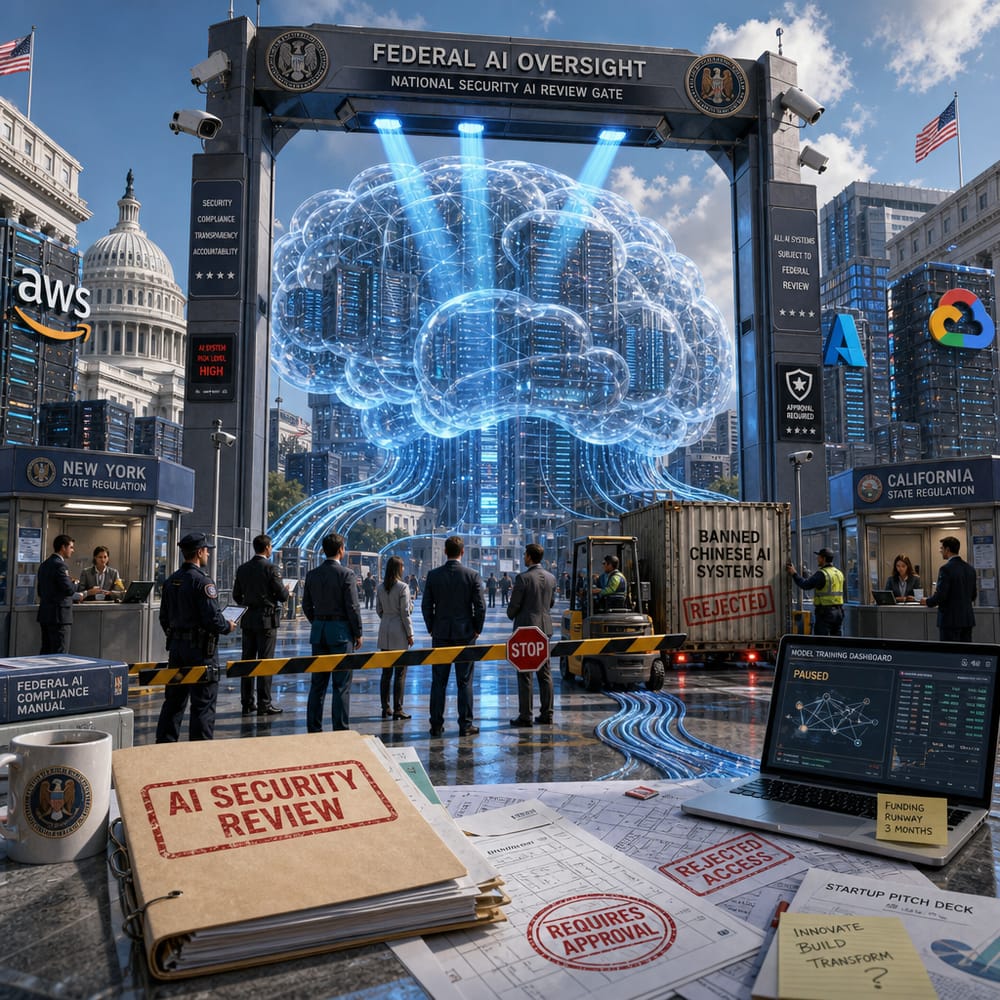
When the U.S. House decides it's time to play hall monitor for AI, the tech giants hold their breath. The American AI Security Act is marching down the legislative runway, potentially adding a layer of cyber Velcro to the slick operations of tech titans. And it’s not just a Washington thing—New York and California are drafting their own scripts in this AI drama. The common theme? More hoops for artificial intelligence models to jump through, especially if they’re from China.
Why should you care, fellow phone-scroller? Well, these new regulatory toys might just change the game for the cloud kings—AWS, Azure, and Google Cloud—as they scramble to fit their square innovations into round legal restrictions. In the AI race, this could be the banana peel moment.
THE REGULATORY MAZE
Let’s break it down. The proposed legislation would have the NSA peeking into AI models like overzealous librarians checking overdue books, aiming to sniff out anything that smells like a national security risk. Throw in bans on Chinese AI tech, and you have a cocktail that might just leave tech companies nursing a compliance hangover.
The cloud giants, whose servers host a vast constellation of AI applications, could feel the squeeze. With New York and California crafting local laws, the U.S. could soon become a tapestry of tech rules, each demanding its own set of keys. For tech platforms, it's like playing chess on several boards at once, each with its own rules and regulations.
IMPACT ON INNOVATION
So, what does this mean for the innovation train? Is it grinding to a halt or just switching tracks? The regulatory cloud might slow things down, but don't count out tech's talent for reinvention. AI startups, in particular, could find themselves in a "survival of the nimblest" scenario, needing to adapt quickly to keep pace with their bigger counterparts.
The ban on Chinese AI tech is a double-edged sword. It aims to protect U.S. data but might also wall off a fertile ground of innovation. Companies will have to navigate this delicate dance, ensuring they keep their technology above board while not stifling their creative juices.
NAVIGATING THE MINEFIELD
How are these companies tackling the regulatory Rubik's Cube? Many are beefing up their legal teams faster than you can say "compliance review." They’re investing in AI ethics boards and transparency teams, hoping to stay ahead of the curve—or at least not lag too far behind.
Some companies are turning to the strategy playbook, diversifying their models and seeking novel partnerships to outmaneuver the regulatory hurdles. They might even borrow a page from old-school diplomacy, engaging with lawmakers to shape the rules that govern them.
AN EYE ON THE STOCKS
For investors, this is where the popcorn comes out. How the big names in cloud and AI adapt could heavily influence their stock trajectories. AWS, Azure, and Google Cloud, already juggernauts in the market, might see their paths diverge as they navigate these new waters. AI startups could either flourish in niche markets or wither under the weight of compliance burdens.
In the end, the American AI Security Act and the growing patchwork of state regulations are reshaping the tech landscape. The innovators will need to be as clever as the machines they create, not just to survive, but to thrive in this brave new world.
As the dust settles, keep your eyes peeled. The companies that can skillfully navigate this regulatory minefield will likely lead the charge in the next wave of technological advancement. Whether that’s AWS flexing its cloud muscle or an upstart AI company unlocking new levels of innovation, one thing’s for sure: the AI regulatory rollercoaster is just getting started. Buckle up.
This article is for informational purposes only and is not investment advice. Always do your own research or consult a licensed financial professional before making investment decisions.
© Copyright 2024. All Rights Reserved.
© Copyright 2024. All Rights Reserved.