

Supply Pressure Undermines Treasury’s Yield-Control Efforts
Monday, August 24, 2026
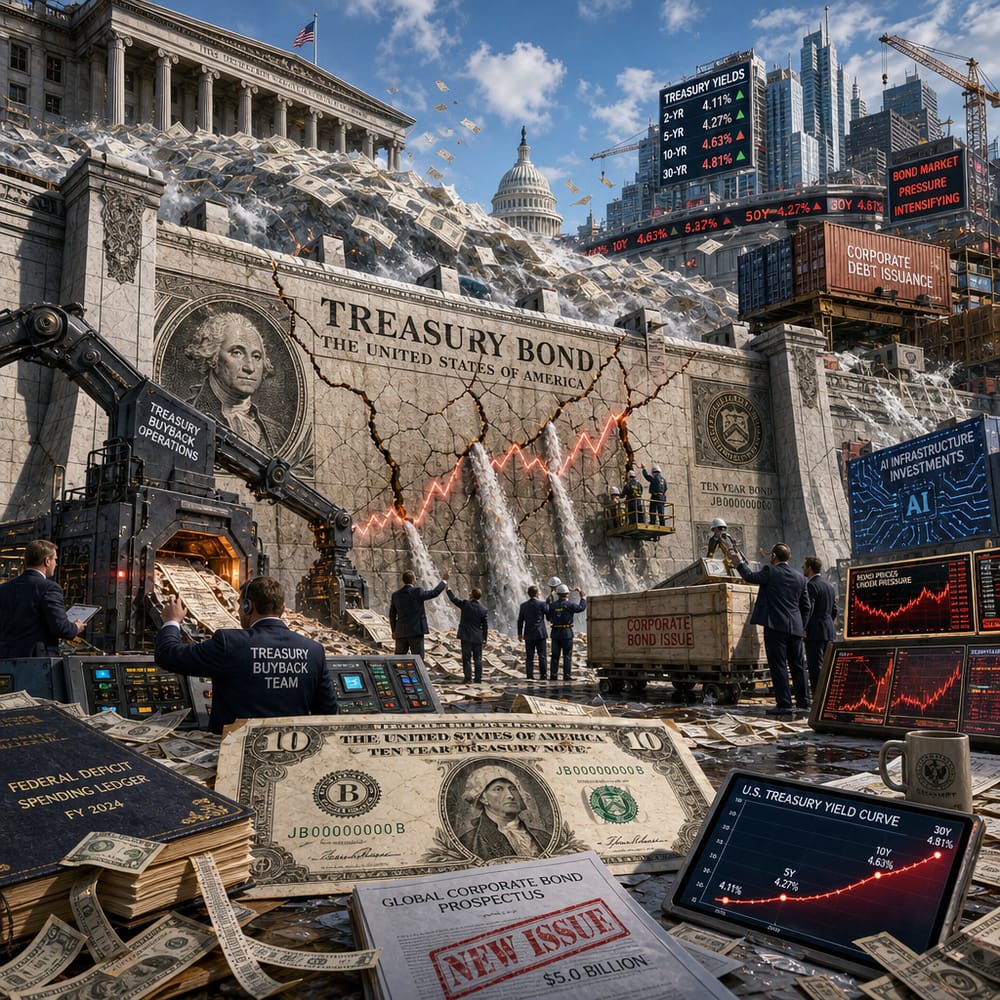
SUPPLY PRESSURE UNDERMINES TREASURY’S YIELD-CONTROL EFFORTS
In the world of bonds, think of the U.S. Treasury as a tightrope walker trying to juggle flaming torches — while balancing on a unicycle. The Treasury's recent attempts to control bond yields have been anything but smooth sailing. Despite their efforts, they're up against some weighty issues, and it's starting to look like the high-wire act is teetering.
The U.S. Treasury, under the steady hand of Secretary Scott Bessent, has been on a mission to keep bond yields from spiraling out of control. Rising yields mean higher borrowing costs, which can slow economic growth — a nightmare scenario for anyone who likes their economic pie warm and fluffy. But this isn't just a case of David versus Goliath; it's more like the Treasury versus an entire army of Goliaths. What are these giants? Well, let's take a look.
THE SUPPLY PRESSURE COOKER
First up are the relentless supply pressures. Think of them as the pesky rain clouds that keep dampening the Treasury's parade. The U.S. government's deficit spending is one big cloud hanging overhead. When Uncle Sam spends more than he brings in, he has to issue more Treasury bonds to make up the difference. More bonds mean more supply, and when you flood the market with bonds, their prices drop and yields rise — simple supply and demand.
Then there's the corporate world. Companies have been issuing bonds like they're going out of style. With interest rates relatively low (despite the recent uptick), corporations have been grabbing the chance to lock in cheap financing. This corporate bond bonanza means more competition for investors' dollars, which puts upward pressure on yields.
Throw in the latest geopolitical tensions and trade kerfuffles — looking at you, Trump with your 50% tariffs on Canadian autos — and you've got a recipe for uncertainty. And if there's one thing bond markets hate, it's uncertainty.
IMPACT ON ECONOMIC POLICY
So, what does this all mean for future economic policy? In a word: complications. High yields can thump the brakes on economic growth because they make everything more expensive — from mortgages to business loans. That forces policymakers into a tricky corner.
The Federal Reserve might have to rethink its interest rate strategy. If yields keep rising, the Fed could hit pause on further rate hikes or even cut rates to keep the economy humming along. That's the economic equivalent of pouring water on a grease fire — it might work, but watch out for the sizzle.
Meanwhile, the Treasury's toolset might include more buyback operations — essentially taking bonds out of circulation to reduce supply and ease yield pressures. But it's a delicate dance. Overdo it, and you might accidentally trip up the markets.
THE AI ANGLE
And here's a wildcard for you — the AI sector. Everyone's darling, AI investments, could play a role too. If AI continues to gobble up investment dollars, it could shift focus away from bonds, adding to supply pressure woes. But hold your horses; AI investments also mean greater productivity and efficiency, which could help cool down inflation and, in turn, yields.
WHAT DOES IT ALL MEAN FOR YOU?
As an everyday investor, it’s crucial to keep an eye on these yield movements. If you're invested in stocks, rising yields could mean a rocky ride, especially for growth stocks, which tend to get hit harder. And if bonds are in your portfolio, know that rising yields could eat into your bond prices.
But fear not, retail investors! Remember that uncertainty breeds opportunity. Savvy investors can find diamonds in the rough by staying informed and ready to pounce when the market shows its cards.
In the end, the Treasury's yield-control act is a high-stakes performance with no safety net. But with a little luck and some nimble footwork, they might just keep the show from going up in flames — and leave us with a market that's a bit more predictable and a lot more stable. And that, my friends, is no circus trick.
This article is for informational purposes only and is not investment advice. Always do your own research or consult a licensed financial professional before making investment decisions.
© Copyright 2024. All Rights Reserved.
© Copyright 2024. All Rights Reserved.