

Strong October Jobs Report Fuels Talk of Additional Fed Tightening in December
Saturday, November 07, 2026
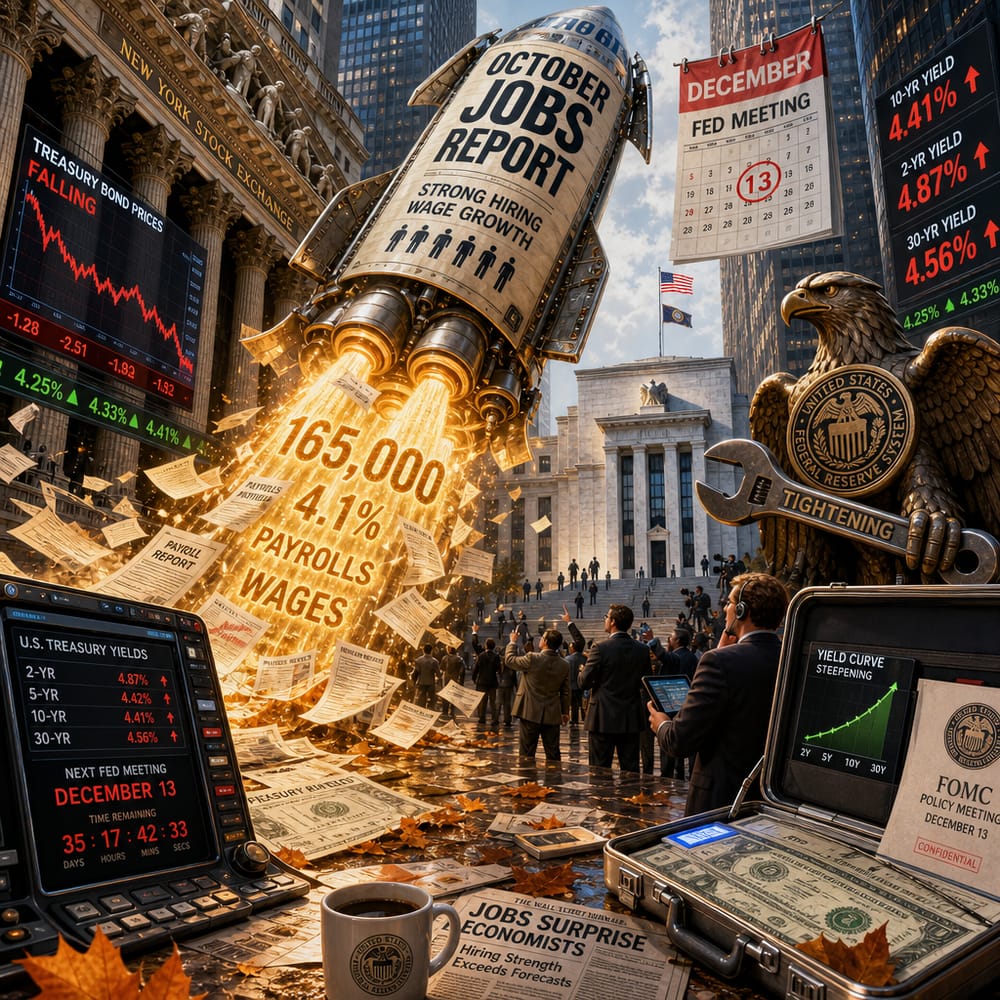
STRONG OCTOBER JOBS REPORT FUELS TALK OF ADDITIONAL FED TIGHTENING IN DECEMBER
Unemployment's down, jobs are up, and suddenly the Federal Reserve's December looks busier than Santa’s workshop. October's jobs report was the economic equivalent of a surprise party where everyone's invited: 165,000 new jobs instead of the expected 125,000, and unemployment slipping to 4.1%. That’s a recipe for the Federal Reserve to start sharpening its rate-hiking pencils.
Picture this: the Fed's office. A room filled with economists sipping coffee and debating the nuances of money supply and demand. And, oh boy, would you want to be a fly on the wall now. The kind of job growth we're seeing could make the Federal Reserve consider tweaking interest rates like they're playing a particularly high-stakes game of Jenga. Higher rates can cool down an economy that’s running a bit too hot, and by hot, we mean inflation.
The Fed, America’s economic hall monitor, has been on high alert for inflation, and it's as jumpy as a cat on a hot tin roof. The logic goes: more jobs mean more wages, and more wages can pump up consumer spending. That sounds great unless it's pushing prices up faster than a rocket. In response, the Fed might start nudging interest rates higher to keep inflation in check, a bit like turning down the stove to prevent a pot from boiling over.
But here’s the kicker: with more interest rate hikes, borrowing money becomes pricier. That means you, dear reader, might think twice about that shiny new car or house remodel. It’s a classic case of "cool your jets, America," courtesy of the Federal Reserve.
While some folks may cringe at the thought of higher rates, there's a silver lining. Higher interest rates can also make saving money in your bank account a bit more rewarding. It's like getting a little financial pat on the back for being prudent.
U.S. Treasury bonds also play a role in this economic dance. As rates rise, bond yields generally follow, which can attract investors looking for safer, steadier returns. But let's not get too cozy; if you're heavily invested in stocks, that’s where you might feel some discomfort. Stocks can waver when investors start seeing those juicy bond yields as more appealing.
Of course, it’s not just about the Federal Reserve and its rate hikes. Consider the consumer, the ever-important cog in the economic machine. With employment up and wages potentially heading the same way, there's room for optimism about consumer spending. But if prices rise too quickly, those paychecks won't stretch as far, and that extra spending money could evaporate before it turns into retail therapy.
The big question is, will holiday cheer be enough to fuel consumer spending, or will consumers clutch their wallets a bit tighter? The Fed certainly hopes for the former while preparing for the latter. It’s a delicate balance, like walking a tightrope over a pit full of budget spreadsheets.
In the coming weeks, expect the financial world to buzz with speculation about the Fed’s next move. And the market will react, adjusting to every whisper and wink from the Fed as if deciphering a cryptic text from an elusive crush. Will they, won't they raise rates further? It’s all part of the suspenseful narrative that keeps investors on their toes—and financial journalists employed.
In the background of this economic drama, there's a much broader discussion about long-term sustainability. Can the job market keep up this momentum without inflation rearing its ugly head? That's the puzzle the Fed is trying to solve. Meanwhile, the rest of us can only watch, wait, and hope that the economic balance beam holds steady.
So, there you have it: a jobs report that’s got everyone talking, markets jittering, and the Fed weighing its next move like a chess grandmaster. Whatever happens, keep your ear to the ground and your portfolio diversified. Because in the world of finance, the only constant is change, and the next few months promise to be anything but predictable.
This article is for informational purposes only and is not investment advice. Always do your own research or consult a licensed financial professional before making investment decisions.
© Copyright 2024. All Rights Reserved.
© Copyright 2024. All Rights Reserved.