

Strong AI-Fueled Capital Expenditures Highlight Resilience
Friday, August 28, 2026
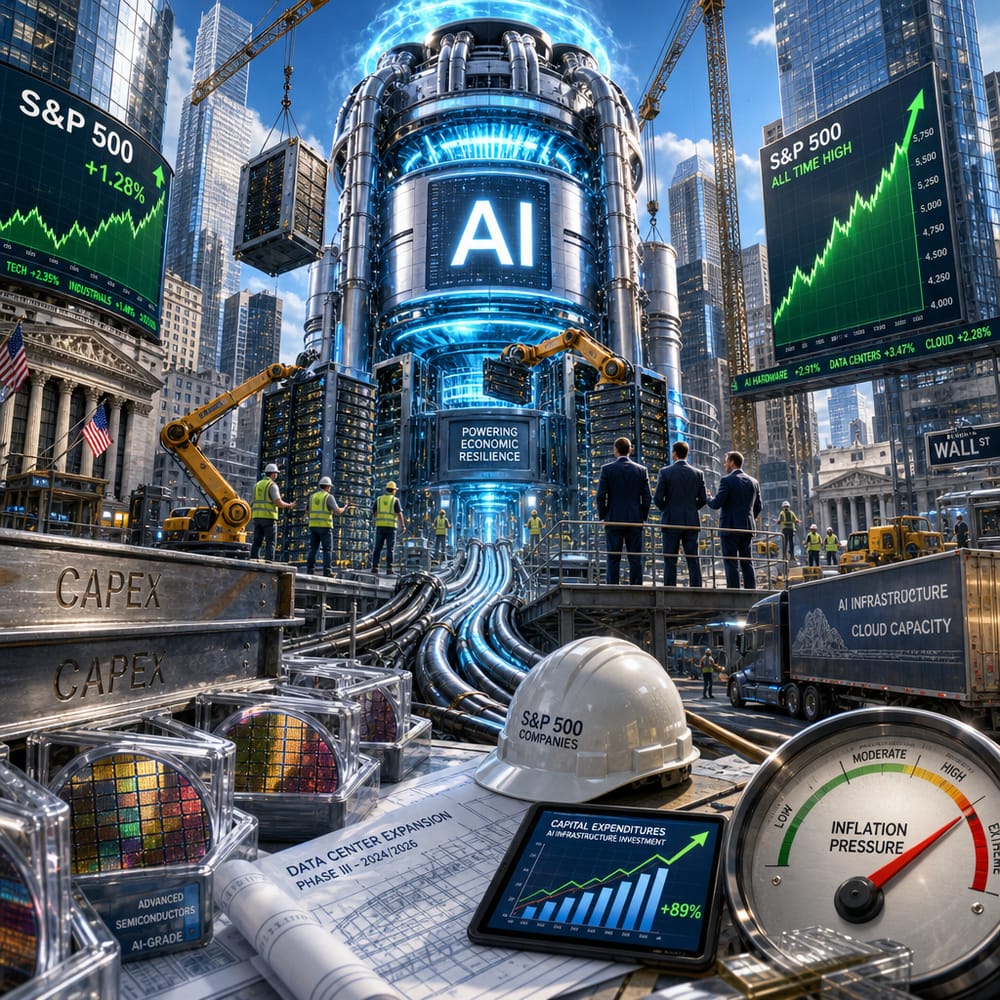
Artificial Intelligence is not just learning how to mimic human thought; it's learning how to spend money—big money. In fact, AI investments are driving business capital expenditures at speeds we haven't seen since the pre-COVID boom times of 2021. While inflation is keeping the Federal Reserve on its toes like a jittery dance partner, AI is busy playing the role of the bold DJ, blaring the soundtrack of economic resilience and growth across the board.
So, what’s all the fuss about AI-fueled spending? Well, it's not just about cool robots or slick chatbots anymore. Companies across sectors are pouring buckets of cash into AI, acting like it’s Black Friday and they've spotted a killer deal. From rolling out autonomous driving systems to enhancing cybersecurity and even optimizing supply chains, the applications of AI are as vast as Uncle Sam's bar tab.
The tech giants like Google, Amazon, and Microsoft are clearly having a field day, but this isn't just a Silicon Valley shindig. Traditional sectors are joining the party too. Take automotive, for instance. Think less horsepower, more computational power. AI is driving innovation in self-driving cars, predictive maintenance, and even personalized infotainment systems. If you thought your car was just for getting from A to B, think again—it’s on its way to becoming your new best friend.
But AI's influence doesn’t stop with your morning commute. Healthcare organizations are spending big bucks to harness AI's potential in diagnostics and patient care, potentially shaving down those exorbitant healthcare costs. Meanwhile, in finance, AI is the new sharp-eyed intern, spotting fraud faster than you can say "Ponzi scheme."
Now, here’s where it gets extra juicy: AI-driven capital expenditures are not just a fad. They're becoming the bedrock of corporate strategies. Think about the S&P 500; it’s basically the Fortune 500 of stock indexes, and guess what? Companies within this index are the ones beefing up their AI game. Investing in AI is like giving these firms a caffeine fix, enhancing productivity and opening doors to new revenue streams.
But is this enough to ward off the inflation boogeyman? Well, that’s the question on everyone's lips. Federal Reserve Chairman Kevin Warsh recently voiced concerns about inflation’s stubborn streak, candidly admitting that while some inflation metrics are looking better, the Fed's battle is far from over. If inflation is the villain in our economic saga, AI investments could be the heroes, cushioning the impact by driving efficiency and growth even as prices tick upward.
So, who’s winning in this AI-fueled race? Apart from the tech titans, sectors like automotive, healthcare, and finance are reaping substantial benefits. Manufacturing is also getting a piece of the AI pie, with smart factories reducing waste and optimizing production lines. Even retail's getting in on the action by using AI to enhance customer experiences online and optimize logistics.
The big takeaway for investors? Keep a keen eye on those companies ramping up their AI capabilities. They might just be positioning themselves as the economic darlings of tomorrow. Firms betting big on AI could be the horses you want in your stable as we navigate these inflation-ridden tracks.
In essence, AI isn't just a technological trend; it's becoming a financial powerhouse. As companies invest heavily in AI, we could well see a ripple effect that boosts resilience across the economy. Amid inflation worries and rate hikes, AI might just be the secret sauce keeping the growth engine purring. So, next time you see headlines about AI and its role in business expenditures, remember—it’s not just about technology; it’s about bolstering economic resilience in an increasingly uncertain world.
This article is for informational purposes only and is not investment advice. Always do your own research or consult a licensed financial professional before making investment decisions.
© Copyright 2024. All Rights Reserved.
© Copyright 2024. All Rights Reserved.