

Strait of Hormuz Deal Rumors Send Oil Prices Sharply Lower
Tuesday, August 04, 2026
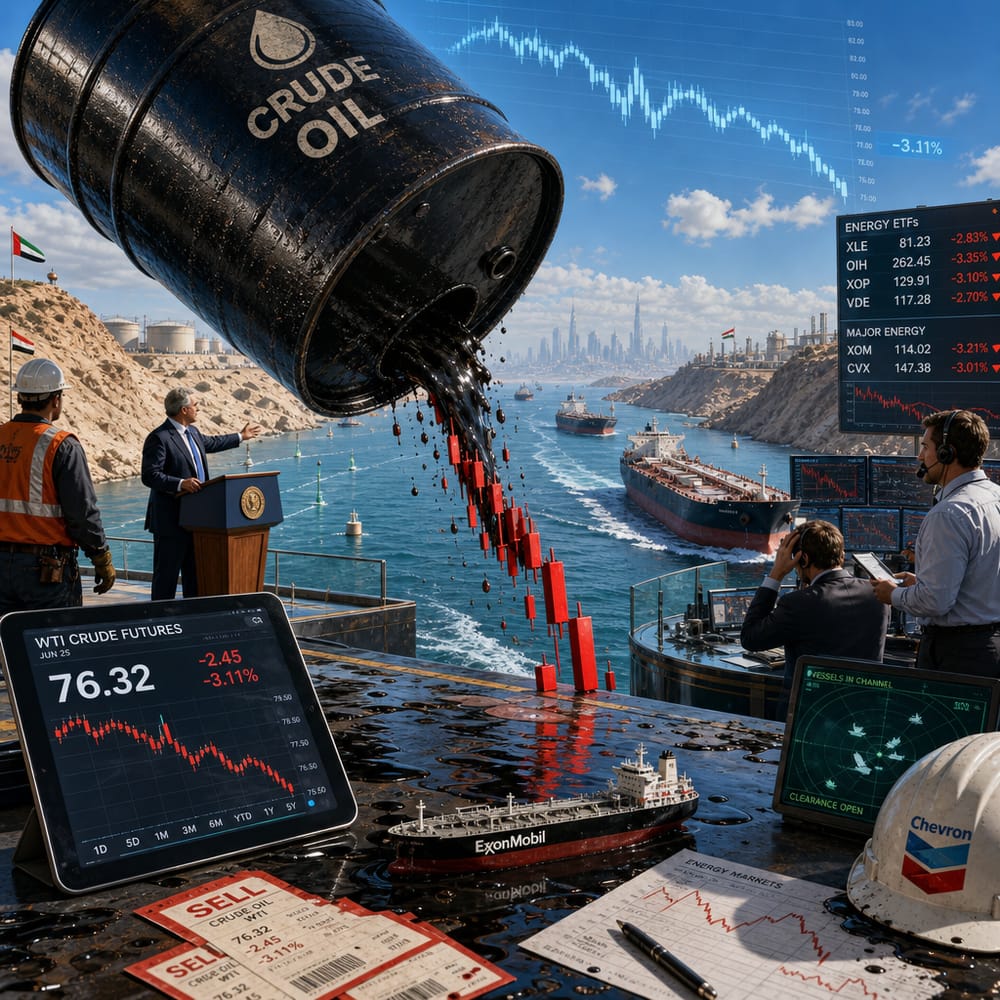
LET'S TALK STRAIT: OIL SLIDES ON HORMUZ DEAL RUMORS
Hold onto your hats, folks! The oil market just did a swan dive, all thanks to some whispered sweet nothings about peace talks over the Strait of Hormuz. You know, that little sliver of water where around 20% of the world's oil takes a leisurely cruise to your local gas station. Newsflash: Treasury Secretary Scott Bessent hinted we might be on the brink of a game-changing deal with Iran to reopen this critical passage, and oil prices promptly took a 3% nosedive. Talk about making waves!
So, what would it mean if this deal goes through and the Strait of Hormuz is open for business? Picture this: tankers that have been playing the world's longest game of freeze tag finally unfrozen and running wild. Crude oil, refined products, and even fertilizers would start flowing like liquid gold. Well, more like liquid black gold.
In the oil market, more freedom of movement equals one thing: oversupply fears. Prices could slide further, making it a sweeter morning for importers but a sour one for producers. Think of major oil guys like ExxonMobil and Chevron. For them, a price drop isn't exactly a reason to pop the champagne. On the flip side, refineries and import-dependent countries might find themselves giggling all the way to the bank.
You might be wondering: how credible is this talk about a deal? Are we talking immediate action or a speculative daydream? Well, Bessent didn't drop any solid dates, but his anticipation of a deal this week feels like something's brewing. And if he’s remotely accurate, it could be time to strap in for a wild ride on the global commodity rollercoaster.
And don’t think it's just the oil market feeling the heat. This could be a pebble that triggers an avalanche, sending ripples across all commodities. With cheaper oil, transportation costs drop, and that could put a spring in the step of global equities, especially those squeezed by high logistics expenses.
But let’s not gloss over the fine print. Even if a deal is inked, the geopolitical landmines in the region won’t magically disappear. The Strait of Hormuz has been a geopolitical pain in the neck for decades. Closing it is akin to putting a cork in the world's energy bottle. Sure, a deal may temporarily ease tensions, but it's unlikely to rewrite the region's complex power dynamics.
Energy companies like Exxon and Chevron might feel the pinch, but it’s not all doom and gloom. With lower oil prices, their refining operations could actually see a boost. Lower crude prices mean cheaper feedstock costs, which is a boon for refining margins. So, it’s not exactly a one-way street to despair for Big Oil.
Meanwhile, if you’re an investor in oil ETFs or futures, it might be time to rethink your strategy. Should you double down or cash out? That’s the million-dollar question, isn't it? But remember, markets don't like uncertainty — and in the Middle East, uncertainty is basically a local celebrity.
And how about the broader market? Well, Wall Street could feel the tremors, albeit indirectly. Lower oil prices might put some wind into the sails of transportation and manufacturing stocks, making them worth a second glance. Meanwhile, energy stocks might start singing the blues if the price suppression sticks.
So, should you get all hot and bothered over these Hormuz headlines? Maybe, maybe not. It all hinges on whether this deal talk solidifies into action or evaporates like last night’s dream. As always, keep a keen eye on updates, because in the fast-moving world of finance, yesterday’s news is today’s paper hat.
This article is for informational purposes only and is not investment advice. Always do your own research or consult a licensed financial professional before making investment decisions.
© Copyright 2024. All Rights Reserved.
© Copyright 2024. All Rights Reserved.