

Stocks Snap Losing Streak as Treasury Bond Support Stabilizes Markets
Tuesday, August 25, 2026
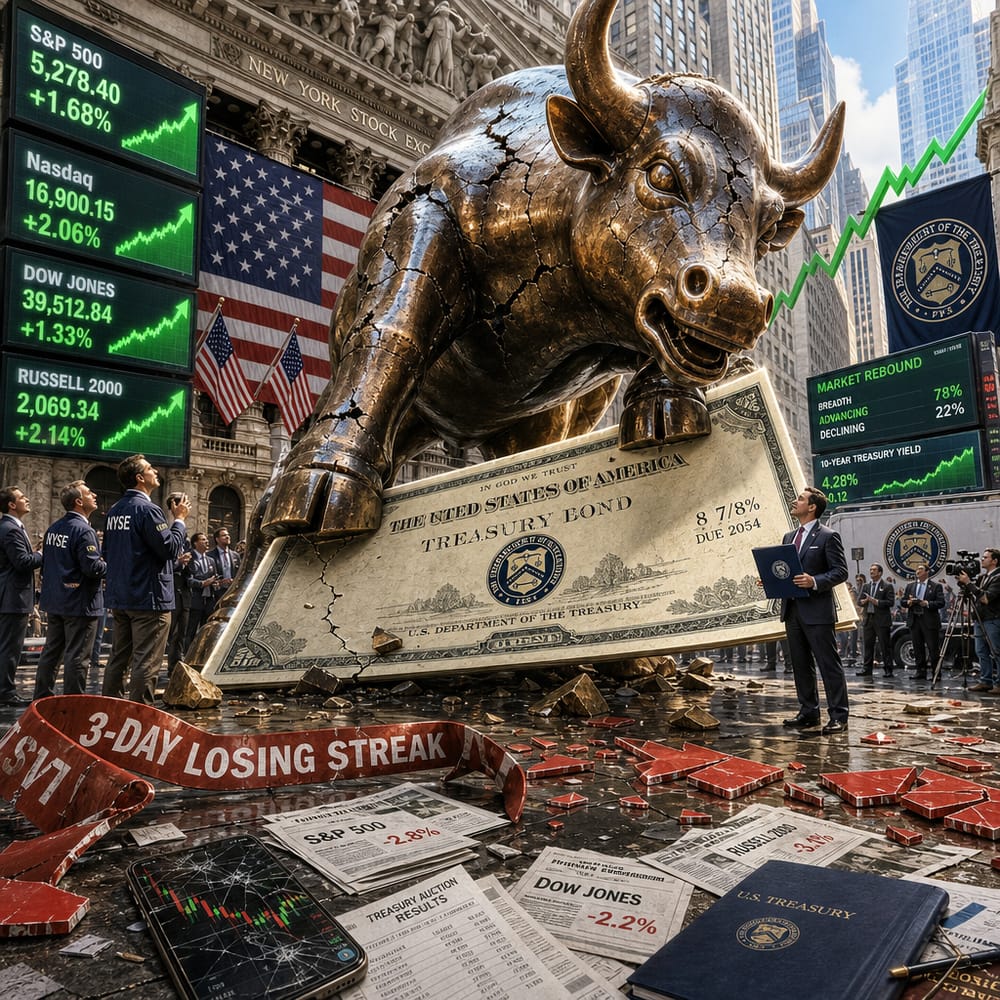
MARKETS GET AN ADRENALINE SHOT AS TREASURY TAKES ACTION
It's not every day that Treasury plays hand puppets, but when it does, the market pays attention. This past week, after a dramatic three-day slide that had investors clutching their pearls, U.S. stocks staged a rebound, all thanks to Uncle Sam's cool moves in the bond market.
So, what's the scoop? The Treasury Department, seeing the bond market flailing like a teenager at a mosh pit, decided to step in with a little intervention. It was like market CPR. Treasury Secretary Scott Bessent announced that the government is considering using its $1 trillion General Account to fund bond buybacks. In layman's terms, they're planning to buy back government bonds from the open market, which basically helps lower interest rates. It's a bit like giving a dog a soothing belly rub to calm it down.
This move seemed to be the caffeine shot the markets needed. The S&P 500, the Nasdaq, the Dow, and even the shy Russell 2000 all perked up after days of yawning. Futures for these indices saw gains, with the tech-heavy Nasdaq 100 futures jumping 0.8% higher. Investors, it seems, were ready to pop the champagne (or at least ginger ale) as the Treasury's actions buoyed spirits.
But wait, there's more. The bond buyback plan also nudged Treasury yields lower. The 10-year Treasury note yield, which had been doing a pretty good impression of a helium balloon, started to come back down to Earth. This decline in yields made stocks look more attractive to investors hunting for returns, thus adding more fuel to the equity market rally.
So why does this Treasury tango matter? Picture the bond and stock markets as frenemies at a high school reunion. They're always subtly influencing each other, sometimes with the slyness of a soap opera villain. When bond yields are high, borrowing costs for companies rise, potentially hurting profits and dragging stock prices down. Lower yields, conversely, can boost stock prices because borrowing is cheaper, which can boost profits and make stocks more appealing.
The Treasury's action is a reminder of just how intertwined these markets are, and how government policy can influence that delicate dance. It's like a financial rom-com, with Treasury as the quirky best friend who sets everything right.
Now, let's get a little speculative, shall we? What could these Treasury maneuvers mean in the long run? Lowering yields might inject a dose of confidence into the market, encouraging investment and risk-taking. It can also help keep inflation in check, as lower borrowing costs can spur spending and economic growth. But—and it’s a big but—if the economy overheats, inflation could spike, forcing the Federal Reserve to pump the brakes with rate hikes. It's a tightrope walk, and the stakes are high.
Of course, other factors are always lurking in the background. Like the oil price dip that followed reports about the U.S. diplomats returning to the Middle East, or the geopolitical drama with China and Iran that could have ripple effects across markets. Investors are perpetually juggling these variables, adjusting their strategies like a chef tweaking a secret sauce recipe.
In the coming weeks, all eyes will be on the Fed, the economy's version of a reality show judge, to see how it reacts to these Treasury moves and the broader economic signals. With inflation numbers and key earnings reports just around the corner, investors will need to stay sharp. It's a financial chess game, and every move counts.
So, as always, stay curious, stay informed, and remember: the market may be as unpredictable as a cat on catnip, but there's always a method to the madness. Whether you're a seasoned investor or a newbie just dipping your toes in, keep your wits about you and your eye on the horizon. The market's rollercoaster may have its ups and downs, but it's one heck of a ride.
This article is for informational purposes only and is not investment advice. Always do your own research or consult a licensed financial professional before making investment decisions.
© Copyright 2024. All Rights Reserved.
© Copyright 2024. All Rights Reserved.