

Stocks, Rates, Dollar: Bonds Rally Tugging at Risk Appetite into the Weekend
Saturday, August 29, 2026
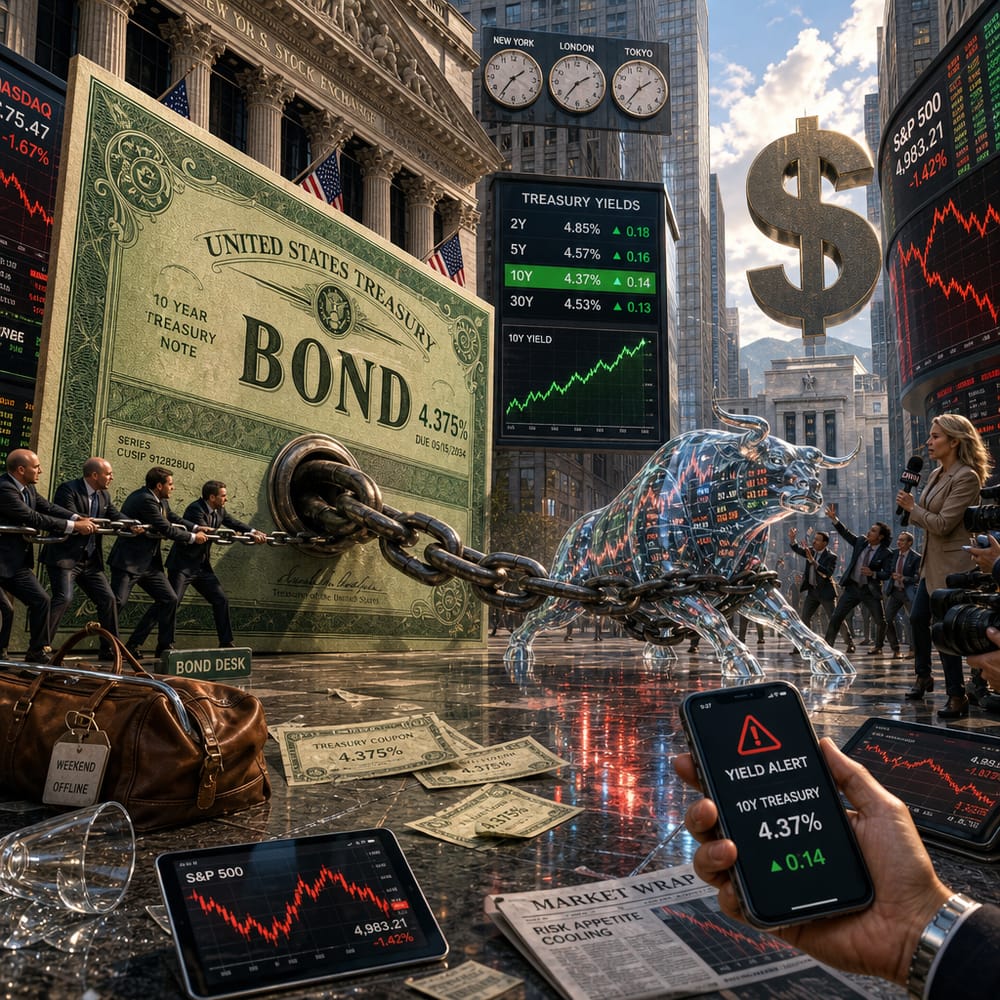
STOCKS, RATES, DOLLAR: BONDS RALLY TUGGING AT RISK APPETITE INTO THE WEEKEND
Picture this: the Fed Chair's words are like a dropped pebble creating ripples across a still pond. But instead of water, we're talking billions of dollars in the markets, and instead of a pebble, it's Fed Chair Kevin Warsh's latest comments. The recent chatter from the Jackson Hole conference has investors on edge, not unlike a cat in room full of rocking chairs.
In Warsh’s first keynote at the iconic Jackson Hole, he didn't exactly roll out a red carpet of reassurance for the markets. Instead, he hammered home the Fed's commitment to beating back inflation like a relentless game of whack-a-mole. But, true to his newly minted reputation for keeping everyone guessing, he left out the juicy details about interest rate moves. Naturally, this left market watchers furiously analyzing his every pause and inflection, like a room full of amateur Sherlocks.
So, what’s the takeaway for our wallets, 401(k)s, and maybe those secret dogecoin stashes? As bond yields and the dollar go for a little joyride upwards, global equities are like the little engine that couldn’t. The S&P 500, our trusty domestic stock barometer, is feeling the fidgety vibes, sliding down as the world preps for potential rate hikes.
Now, let's break down this roller coaster. When Warsh’s words set off alarms about potential rate hikes, bond yields—basically IOUs from Uncle Sam with a dash of interest—got a promotion. Why? Well, if future Fed rate hikes are expected, current bonds have to up their game to be attractive against the soon-to-be more tempting new bonds. It’s like your favorite band suddenly announcing a better setlist—you suddenly want to see them now, not later.
But here’s the rub: as yields climb, the gravitational pull on stocks becomes undeniable. Why risk your hard-earned cash in volatile equities when safer bonds are offering better returns? This fear factor sends stock markets into a tizzy, with investors eyeing bonds with a newfound appreciation.
Meanwhile, the dollar, not one to miss a headline opportunity, decided to make its move. As rate hike fears rise, the greenback often flexes its muscles, becoming more appealing to foreign investors. A stronger dollar might sound patriotic, but let's not pop the champagne just yet. For U.S. companies that sell goods and services abroad, this means higher prices for their international customers, potentially squeezing profits.
For us everyday spenders, a stronger dollar could mean cheaper vacations abroad and lower prices on imported goods. But before you book that European getaway, remember: this is the market, where surprises are as common as a Starbucks on every corner.
Now, some might ask, "What about inflation, the bogeyman of our purchasing power?" Warsh's focus on inflation isn't just central bank theatrics. Inflation eats away at the value of money, so keeping it in check is like trying to keep a lid on a pot that's boiling over. Rate hikes are the Fed's simmer button, slowing spending and borrowing, which theoretically cools prices.
For retail investors, the game plan is to stay agile. Diversify your investments; don't put all your eggs in the tech basket or gamble solely on growth stocks. Keep an eye on sectors that historically perform well in higher-rate environments, like financials, and consider how currency shifts might impact international investments.
In the end, it's a tangled web of economics. The interconnectedness of bond markets, currency movements, and equity risk sentiment is like a never-ending game of chess, but instead of pawns, you've got dollars, yields, and stocks. And in this game, staying informed and adaptable is your best strategy. As the market dance continues, remember: change is the only constant, and the next big move is just a Fed comment away.
This article is for informational purposes only and is not investment advice. Always do your own research or consult a licensed financial professional before making investment decisions.
© Copyright 2024. All Rights Reserved.
© Copyright 2024. All Rights Reserved.