

Stock Futures Unsettled as Hormuz Diplomacy Hangs in the Balance
Tuesday, August 11, 2026
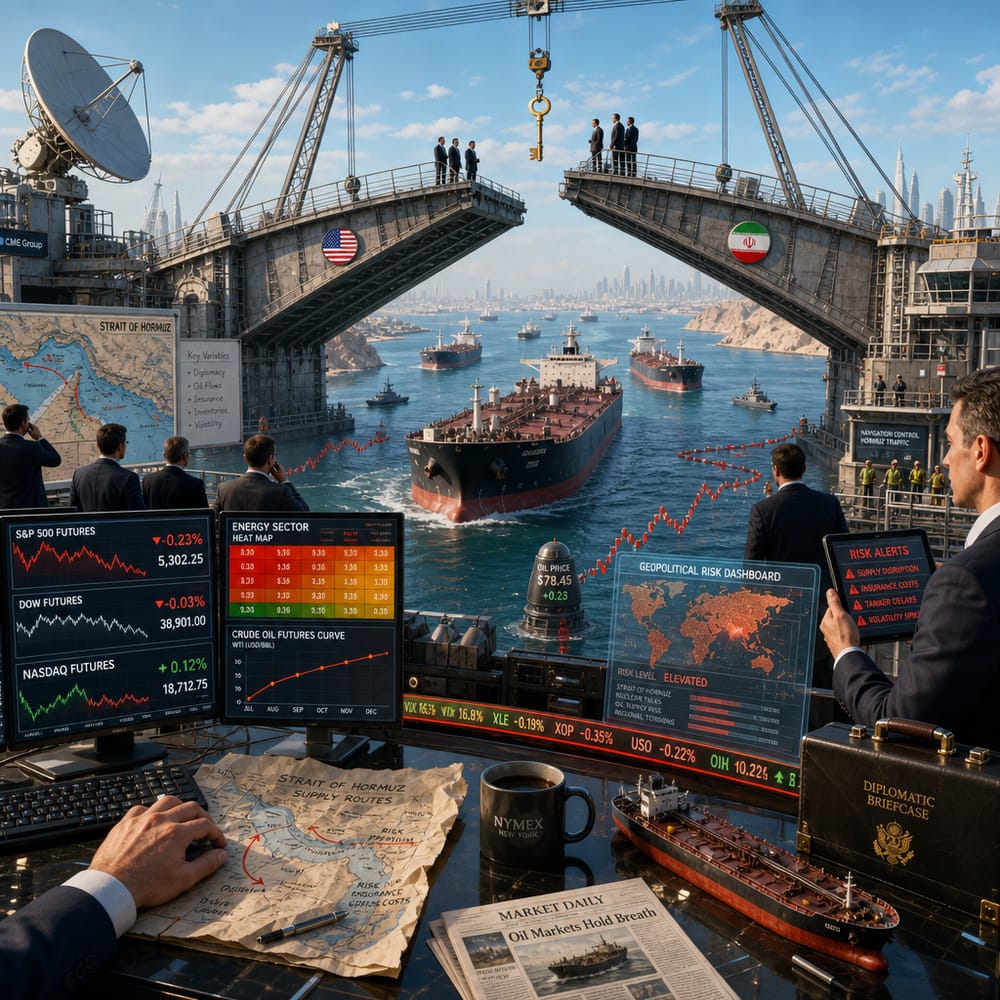
STOCK FUTURES UNSETTLED AS HORMUZ DIPLOMACY HANGS IN THE BALANCE
Hey, ever feel like the world’s balancing on the edge of a knife and Wall Street’s fate is mere inches from falling into chaos or calm? Well, welcome to Tuesday, where stock futures are as undecided as a cat in front of a sliding door. Investors this morning are doing their best “waiting for the kettle to boil” impression, eyes darting between screens as they digest the latest diplomatic dance over the Strait of Hormuz.
Let’s set the stage. The Strait of Hormuz, a crucial maritime chokepoint through which about a fifth of the world’s oil flows, has been the geopolitical equivalent of a hornet's nest. Iran hints it’s inching toward a deal with Oman to reopen this strategic waterway, which sounds promising, but here’s the kicker: Tehran wants nothing to do with Uncle Sam until some conditions are met. It’s like trying to plan a dinner party where none of the guests can agree on who’s bringing dessert, and the main course is stuck in traffic.
WHY IT MATTERS
Geopolitical tensions can whip up market volatility faster than a toddler at naptime, making investors as skittish as cats in a thunderstorm. When something as critical as the Strait of Hormuz is at stake, the ripples can spread far and wide, from oil prices to your favorite tech stocks. Buckle up, because this affects the S&P 500, Dow, and Nasdaq, along with your good old friend, the energy sector.
HOW A RESOLUTION COULD AFFECT ENERGY PRICES
If Iran and Oman hug it out and ships start cruising through the Strait like it's rush hour on the freeway, you can bet your bottom dollar—or barrel—that energy prices will take a breather. Supply jitters would ease, potentially lowering oil prices, and energy stocks might see a bump. But remember, this isn’t a done deal yet. Until then, uncertainty reigns supreme, and that could keep energy prices on a knife’s edge, swaying with every word from the negotiators.
POTENTIAL MARKET REACTIONS TO A U.S.–IRAN DEAL
Now let’s say, hypothetically, the U.S. and Iran put aside their differences and sign a grand peace accord. Such a deal could set off fireworks—of the financial kind. Markets love stability like fish love water. You could see a risk-on rally, where investors throw caution to the wind and dive back into stocks, confidence buoyed by the thought of reduced tensions. On the flip side, dashed hopes or prolonged ambiguity might just leave markets grinding their teeth and wiping beads of sweat from their brows.
THE BROADER MARKET PICTURE
While the geopolitical soap opera plays out across the Middle East, U.S. markets are juggling other balls too. Intel’s planning a $15 billion share sale, a move that’s stirring up mixed reactions. Meanwhile, investors are also eyeing inflation data like a hawk, because any whiff of higher inflation could spur the Fed to hike interest rates faster than you can say “interest rate hike.” Gold, a safe haven in times of uncertainty, is already flexing its muscles, hitting $4,400 an ounce.
And just to add another layer of complexity, the job market isn’t exactly the picture of robust health right now. The U.S. lost 23,000 jobs last month, a shocker for those expecting a gain. This makes for a Goldilocks scenario that’s a little too cold—low job growth and stubbornly high inflation, creating a puzzle even the Fed’s struggling to piece together.
LOOKING AHEAD
For the moment, the market’s mood is like a teenager’s: restless and easily swayed by the latest drama. Investors are keeping one eye on the Strait of Hormuz, one on Washington’s next moves, and a third eye—if they had it—on the upcoming economic data and corporate earnings reports.
So what’s the takeaway for you, dear investor? In times of uncertainty, diversification is your best friend. Keep your portfolio balanced, stay informed, and remember: in the market, much like in life, the only constant is change.
This article is for informational purposes only and is not investment advice. Always do your own research or consult a licensed financial professional before making investment decisions.
© Copyright 2024. All Rights Reserved.
© Copyright 2024. All Rights Reserved.