

Sticky Inflation: PCE Prints Keep Pressure on Fed Outlook Ahead of Jackson Hole
Thursday, August 27, 2026
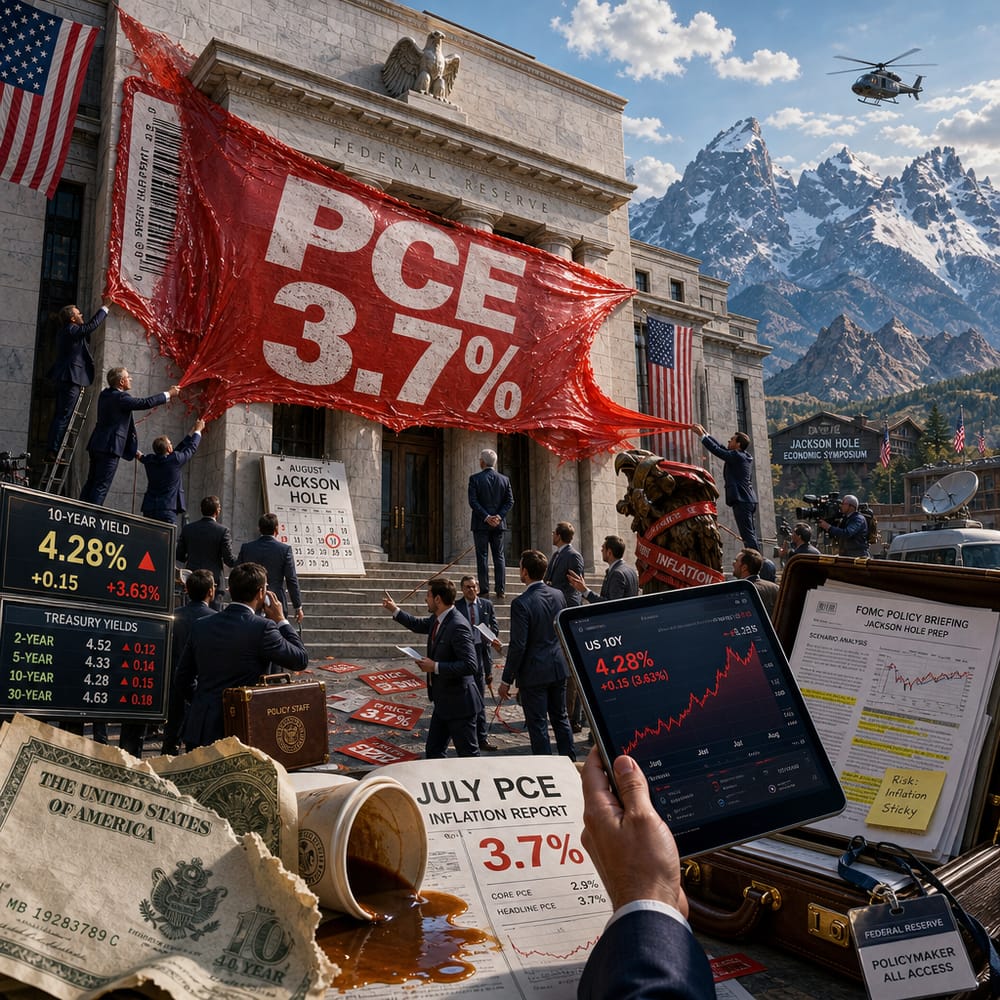
INFLATION'S BACK, AND IT'S READY TO THROW A PARTY
Inflation just can’t seem to keep a low profile. It’s like that uninvited guest who shows up unexpectedly and insists on staying just a little too long. The Personal Consumption Expenditures (PCE) index for July decided to strut in, rising 0.2% month-over-month and sending the annual reading to a sizzling 3.7%. And just like that, the Federal Reserve has a juicy new dilemma to chew over at their upcoming soiree in Jackson Hole.
WHAT’S THE BIG DEAL?
For the uninitiated, the PCE index is a measure of how much consumers are spending on goods and services, and it’s the Fed’s favorite inflation barometer. When PCE numbers climb, it means consumers are spending more, often because prices are going up. And when prices rise faster than expected, it sets off alarm bells at the Fed headquarters.
Why does this matter? Because every time inflation spikes unexpectedly, it complicates the Federal Reserve's carefully constructed plans to keep the economy balanced on the tightrope between growth and recession. The Fed’s already engaged in a high-wire act, adjusting interest rates to keep inflation in check without stifling growth. It's like trying to win a game of Jenga during an earthquake.
FED’S CROSSROADS
With inflation playing hardball, the Fed's crystal ball is looking a bit foggy. The team at the helm, led by the newly-appointed Fed Chair Kevin Warsh, is set to converge in Jackson Hole for their annual economic symposium. The big question looming over this gathering is: What’s next for monetary policy?
Higher inflation often pushes the Fed to raise interest rates. They’ve been on this path already, trying to rein in the post-pandemic spending spree. But with the PCE numbers outpacing expectations, there’s a chance they might need to hit the gas pedal harder, and that could send ripples through the market.
MARKET MAYHEM OR MELLOWED REACTION?
So what happens when the Fed decides to tweak those interest rates? For starters, it’s a game-changer for U.S. Treasury bonds. When the Fed raises rates, bond yields tend to follow suit. But this time, Treasury yields have been playing it cool, staying relatively unchanged as if they're holding their breath before the big announcement at Jackson Hole. Investors might be bracing for a surprise, but they’re also hoping for some clarity from Warsh’s inaugural address.
Persistent inflation also tends to rattle the stock market, especially sectors sensitive to interest rate changes like tech and real estate. But, in this peculiar dance, tech stocks have been up to something else entirely. Thanks to Nvidia’s blockbuster earnings and bullish forecasts, shares are on the rise—an unexpected twist of optimism amidst inflationary woes.
SAME OLD SONG FOR THE FED?
The PCE data sets the stage for one of two possible outcomes at Jackson Hole: Either the Fed sticks to its plan, gently nudging rates upward, or it goes hawkish, opting for a more aggressive stance to combat this stubborn inflation. Both paths have their risks. A gentle approach might see inflation continue to simmer, while a hawkish stance might cool the economy too quickly.
Investors, business leaders, and economists will be hanging onto every word from Warsh. The Fed’s strategy will not only determine the direction of interest rates but will also set the tone for economic growth in the coming months.
WHAT’S THE SILVER LINING?
This inflationary battle might feel like a rerun of a long-drawn-out series, but it’s also a reminder of the economy’s resilience. Consumers continue to spend, companies like Nvidia are booming, and the stock market hasn't completely lost its nerve.
For those savvy enough to read the tea leaves, the current environment could offer opportunities in sectors that traditionally fare well during times of rising rates, like financials and energy. It’s all about finding the right groove in the economic symphony.
SO, WHAT’S NEXT?
As we await the Fed’s policy remix at Jackson Hole, the best thing for investors might be to stay informed, stay flexible, and maybe even embrace a little chaos. After all, inflation might be an uninvited guest, but it doesn’t have to ruin the whole party.
This article is for informational purposes only and is not investment advice. Always do your own research or consult a licensed financial professional before making investment decisions.
© Copyright 2024. All Rights Reserved.
© Copyright 2024. All Rights Reserved.