

Sticky Housing Costs Keep Core CPI Elevated
Saturday, August 15, 2026
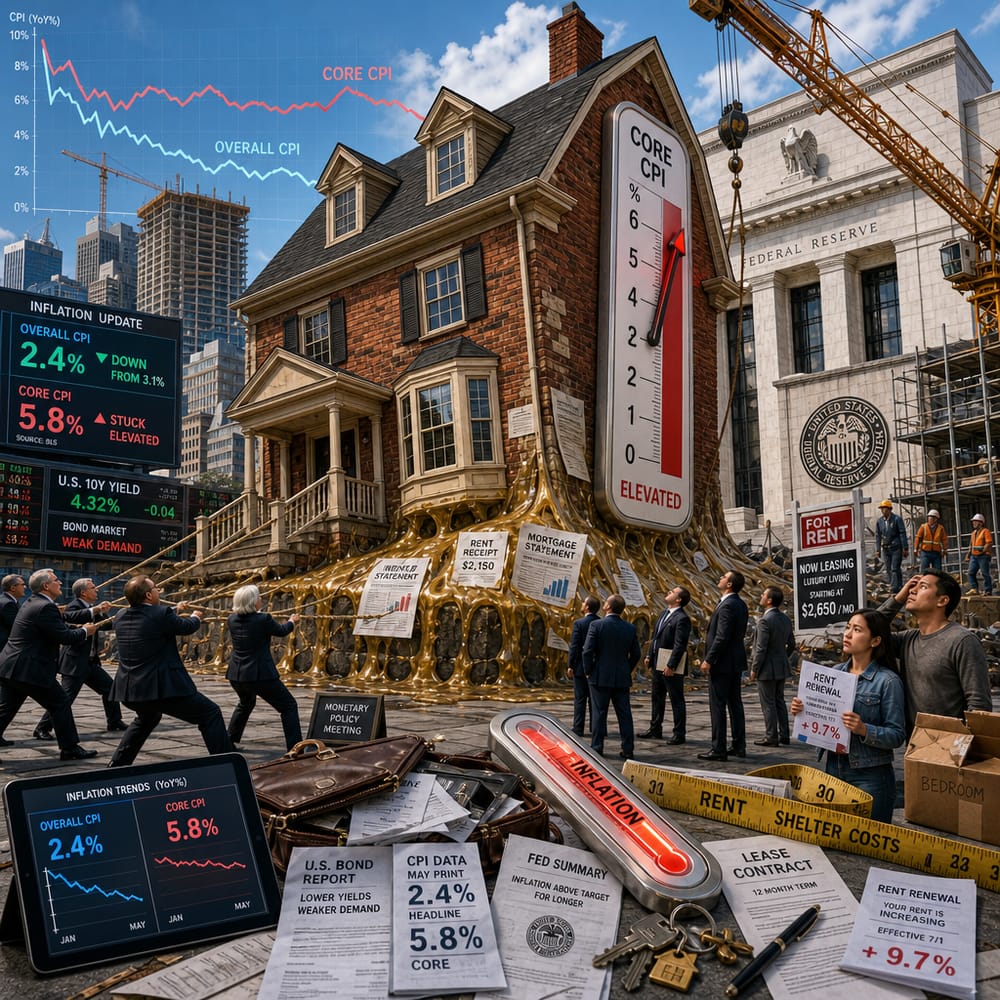
Sticky Housing Costs and the Fed's Inflation Conundrum
Hold onto your wallets, folks—housing costs are rising like that last bid in an eBay auction, and they’re pulling the core Consumer Price Index (CPI) up with them. While some parts of the economy are taking a chill pill, housing is the caffeine shot that refuses to let inflation nap. So, let's break it down: why are housing costs playing hard to get, and what does that mean for the Federal Reserve's interest rate tango—and your wallet?
HOUSING COSTS: THE UNINVITED PARTY GUEST
First things first, why are housing costs still sky-high? Well, it's a cocktail of factors: low inventory, high demand, and let's not forget our old friend, the mortgage rate. With fewer homes on the market, sellers can play hardball with prices. It’s like shopping for rare Pokémon cards—only the stakes are your living situation.
Now, sprinkle in the double-edged sword of rising mortgage rates. This makes new home loans more expensive, but it also keeps existing homeowners from selling—because who wants to swap a 3% mortgage for a 7% one? Thus, the vicious cycle of limited supply continues.
THE FED: INTEREST RATE JUGGLER
So how does the Federal Reserve fit into this real estate saga? The Fed’s primary tool to combat inflation is to adjust interest rates. By hiking rates, the Fed makes borrowing more expensive, which should cool off spending and, ideally, inflation. But with housing costs digging their heels in, this strategy becomes as tricky as a game of whack-a-mole.
Persistent housing inflation could force the Fed to keep interest rates higher for longer, or even notch them up a bit more. It’s like trying to win a carnival game—every time you think you’ve got it, something pops up. The Fed must tread carefully, balancing between cooling inflation and not tipping the economy into a recession.
WHY SHOULD YOU CARE?
Alright, so the Fed’s in a pickle and housing prices are stubborn. What’s in it for you? Well, if interest rates climb, borrowing becomes pricier across the board. That means everything from your credit card rates to loans for that shiny new car you’ve been eyeing could go up.
For the broader economy, persistent housing inflation poses a growth conundrum. Higher interest rates can slow down economic growth, making businesses hesitant to invest, and that can trickle down to hiring freezes or even layoffs. It’s the domino effect, and you don’t want to be the last tile standing.
INVESTMENT STRATEGY AND SECTOR IMPACT
If you're playing the markets, keep an eye on the real estate sector and Federal Reserve policies. Real estate investment trusts (REITs) might feel the pinch in a high-interest-rate environment as borrowing costs rise. Conversely, sectors less sensitive to interest rates might fare better.
Investors are always looking for hedges against inflation, and housing is often seen as a solid bet. However, when the market dynamics are this complex, diversification is your best friend. Keep your portfolio nimble and spread across various sectors to weather the ups and downs.
THE ROAD AHEAD
So, where do we go from here? The Fed will continue to walk a tightrope, managing inflation without stifling growth. Meanwhile, you'll want to keep a close watch on housing trends. Whether you’re buying, renting, or investing, stay informed and be ready to adapt.
In this game of economic chess, being one move ahead can mean the difference between check and checkmate. So keep your ear to the ground, your eye on the Fed—and maybe, just maybe, figure out how to win that eBay auction while you’re at it.
This article is for informational purposes only and is not investment advice. Always do your own research or consult a licensed financial professional before making investment decisions.
© Copyright 2024. All Rights Reserved.
© Copyright 2024. All Rights Reserved.