

Sterling Holds Steady at ~1.3585 Against USD Amid BoE Uncertainty
Sunday, August 30, 2026
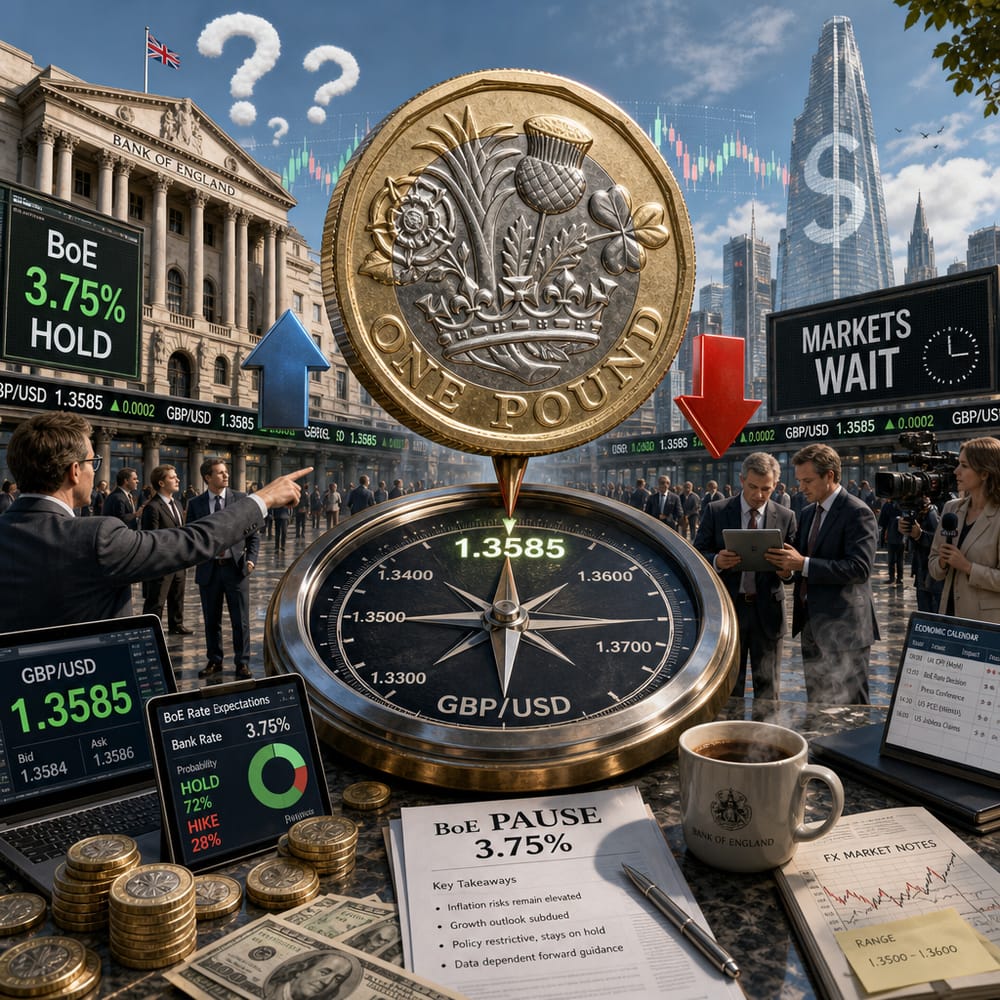
STERLING'S STANDSTILL: WHY THE BRITISH POUND IS PLAYING THE WAITING GAME
Picture this: a crowded soccer match where the teams are playing with no clear winner in sight. The crowd's on edge, watching every move. That's the British pound right now, hanging out at around 1.3585 against the U.S. dollar, caught in a thrilling back-and-forth of central bank drama. So, what’s keeping the pound so tight-lipped and steady? Let's dive in and decipher this currency puzzle.
AN UNEXPECTED CALM
If you blinked, you might have missed the action in the forex market. While the world grapples with oil skirmishes and geopolitical chess, the British pound is sitting pretty, embracing a zen-like calm. But why isn't the pound swinging wildly like a pendulum on caffeine? The key lies in the suspenseful pause by the Bank of England (BoE), which recently decided to keep its interest rates at 3.75%.
Now, before you nod off at the term “interest rates,” let's break it down. Picture interest rates as the levers pulling your car’s handbrake: yank it up, and less money speeds through the economy. Push it down, and you’re off to the races with more money zooming around. The BoE's pause means they’ve parked the car safely, simply observing the market's traffic flow.
CENTRAL BANK DILEMMA
Why the caution? Economic cues are mixed, like getting a weather forecast that predicts both sunshine and rain. The BoE's hesitancy is as much about reading the tea leaves of the UK economy as it is about tuning into the noise from across the Atlantic.
Meanwhile, in the U.S., the Federal Reserve's dance around interest rates is like watching a tightrope walker teetering over a canyon. Fed Chairman Kevin Warsh has decided to keep his lips sealed tighter than a politician at a scandal inquiry. His silence leaves investors playing a guessing game, translating into uncertainty that mirrors back across the pond.
The takeaway? The pound's stability isn't a sign of tranquility. It's more like a poker game where players are eyeing each other's hands, not making any sudden moves until someone shows their cards.
THE BALANCE BEAM
But hang on. Isn’t a stable pound a good thing? Yes, and no. It's a double-edged sword. On one hand, stability offers a reassuring blanket for businesses and investors, like finding a dry spot during a rainstorm. On the other, it could mean missed opportunities if the BoE holds its bets longer than necessary, especially if inflation—the invisible monster under the bed—decides to rear its head again.
Inflation's been a pesky shadow, creeping in and out like a cat at midnight. If it starts clawing at the economy again, the BoE might have to pivot faster than a ballerina, potentially raising rates to keep things in check. And that, my dear reader, could send the pound on a rollercoaster ride.
THE ROAD AHEAD
Let's peer into the crystal ball. What happens next? The BoE's next moves could either be a soothing lullaby or a rousing wake-up call. If they decide economic growth needs a boost, they may lower rates, making money cheaper and potentially weakening the pound. On the flip side, if inflation jitters return, expect them to crank up those rates, strengthening the pound as investors chase those shiny, higher yields.
For now, all eyes are on the BoE's next meeting, where every word will be dissected like a high school English paper. The interplay between UK and U.S. monetary policies could set the stage for a dramatic showdown that even Shakespeare would envy.
In the meantime, keep your popcorn handy and your eyes peeled on the forex ticker. The British pound's standstill is just the calm before what could be the next big market storm. Get ready, because when central banks start their engines, it's bound to be a thrilling ride.
This article is for informational purposes only and is not investment advice. Always do your own research or consult a licensed financial professional before making investment decisions.
© Copyright 2024. All Rights Reserved.
© Copyright 2024. All Rights Reserved.