

Steady PCE Inflation and Its Impact on Fed Policy
Friday, August 28, 2026
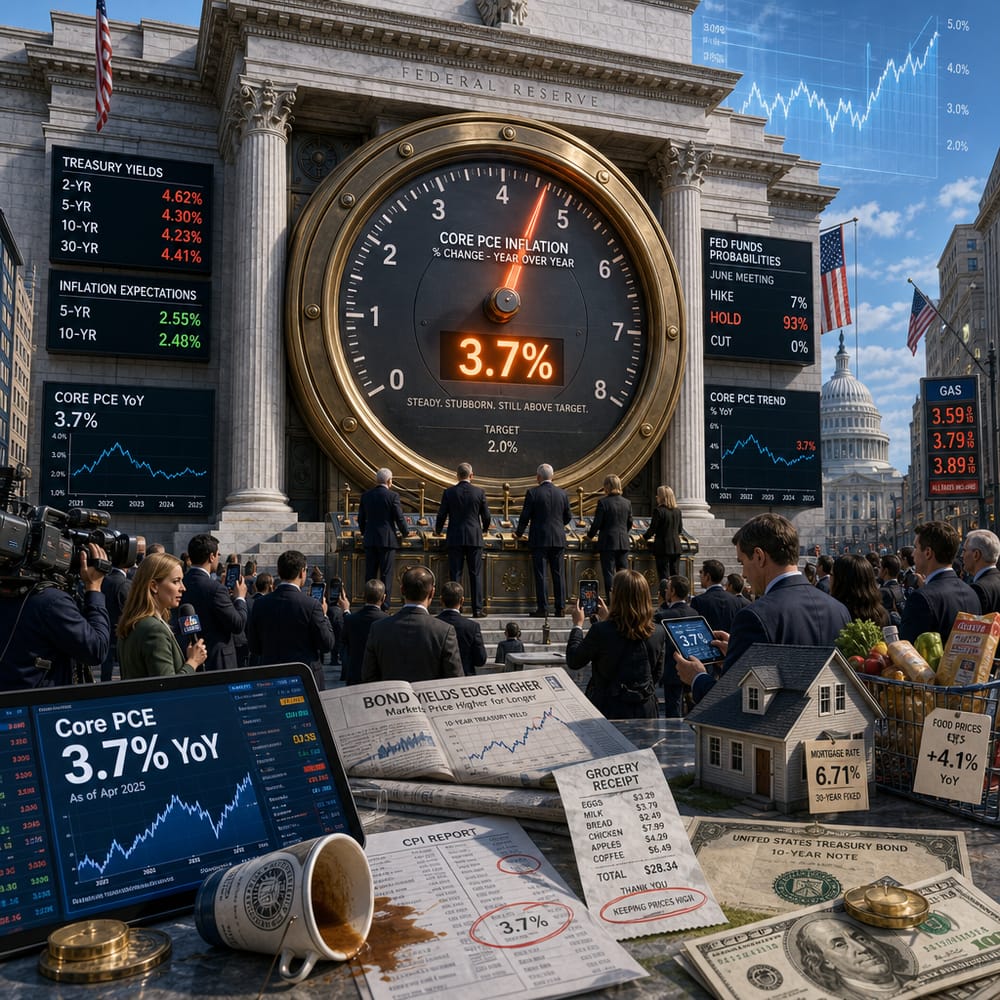
THE INFLATION GAME: WILL THE FED PLAY CHICKEN OR CHECKMATE?
Inflation is like that pesky fly buzzing in your ear all summer long — you can swat at it all you want, but it never seems to go away. Case in point: The U.S. Core Personal Consumption Expenditures (PCE) Price Index, the Federal Reserve’s favorite inflation yardstick, remained steady at 3.7% year-over-year in July. So, what's behind this stubborn number, and more importantly, how might it influence the Federal Reserve's next move in the big chess game of interest rates?
INFLATION'S CAST OF CHARACTERS
First, let's dissect the main drivers of this not-so-charming inflation performance. Energy prices have notched up, like a surprise plot twist in a summer blockbuster. With geopolitical tensions, like the ones in Ukraine, causing ripples through global oil supplies, energy costs remain a significant player. Then there's the sticky wicket of wage demands. With unemployment low and workers flexing their negotiating muscles, higher wages are keeping the inflation oven preheated.
Add to this mix the lingering supply chain hiccups—yes, those are still a thing—and you have a recipe that keeps prices simmering higher than your thermostat in July.
THE FED'S NEXT MOVE: TO HIKE OR NOT TO HIKE
Now, the Federal Reserve, with all its gravitas, has to decide: do they hike interest rates again to douse the inflationary flames, or do they let the economy coast? A steady 3.7% might not be setting off alarms, but it's certainly not the 2% target the Fed covets like a golden fleece.
When inflation won't budge, the Fed gets antsy with its rate hike hammer. Raising rates can cool an overheating economy by making borrowing more expensive, thereby slowing spending. The downside? It can also slam the brakes on economic growth, which is about as popular as a cold shower in February.
THE ECONOMIC RIPPLE EFFECT
So, what happens if the Fed decides to wield its rate-raising cudgel? For one, borrowing costs for everything from mortgages to car loans will feel the squeeze. That new dream home? Suddenly, it’s more expensive to finance. Businesses might think twice before expanding, and consumers might tighten their belts — not exactly the recipe for economic euphoria.
On the flip side, a failure to act could send a signal that the Fed is soft on inflation, potentially leading to even higher prices down the road. It’s a delicate balance, like walking a tightrope while juggling flaming torches.
THE MARKET WATCH
Investors aren’t exactly lounging around with their feet up. With Federal Reserve Chairman Kevin Warsh’s upcoming address at Jackson Hole adding fuel to the speculative fire, markets are on edge. Will there be a rate hike hint dropped like a mic at a rock concert? Treasury yields are edging up in anticipation, and global bond yields are on the rise too, hitting highs not seen in over a decade.
For equity markets, any hawkish signals from Warsh might throw a wet blanket on the party, as rate hikes generally aren't ticker tape parade material for stock investors. Sectors sensitive to interest rates, like real estate and utilities, will be keeping a particularly close eye on any Fed tea leaves.
WHAT'S THE ENDGAME?
Persistent inflation is like that itch you just can't scratch away. Whether the Fed decides to raise rates or hold steady, the economic landscape will be reshaped. The potential impacts are as varied as they are complex: higher borrowing costs, slowed consumer spending, potential stunts in economic growth — or, conversely, an unchecked inflationary spiral.
The Federal Reserve's next moves are set against a backdrop of global uncertainty, energy market volatility, and a domestic economy that's simultaneously resilient and fragile. As the Fed strategizes its next gambit, retail investors should stay alert, ready to adjust their portfolios like a poker player at a high-stakes table. Whether you’re invested in real estate, tech stocks, or even just carefully watching your savings account, the Fed’s decision will ripple through the financial ecosystem.
So, as you scroll through your newsfeeds and sip that overpriced frappuccino, remember: inflation isn't just a number — it's the plot twist in the grand financial drama we’re all living in. Stay tuned, because the Fed's next move could be the climax we didn't see coming.
This article is for informational purposes only and is not investment advice. Always do your own research or consult a licensed financial professional before making investment decisions.
© Copyright 2024. All Rights Reserved.
© Copyright 2024. All Rights Reserved.