

Stark Labor Crunch at U.S. Chip Fabs Sets Stage for Investment & Policy Clash
Monday, September 21, 2026
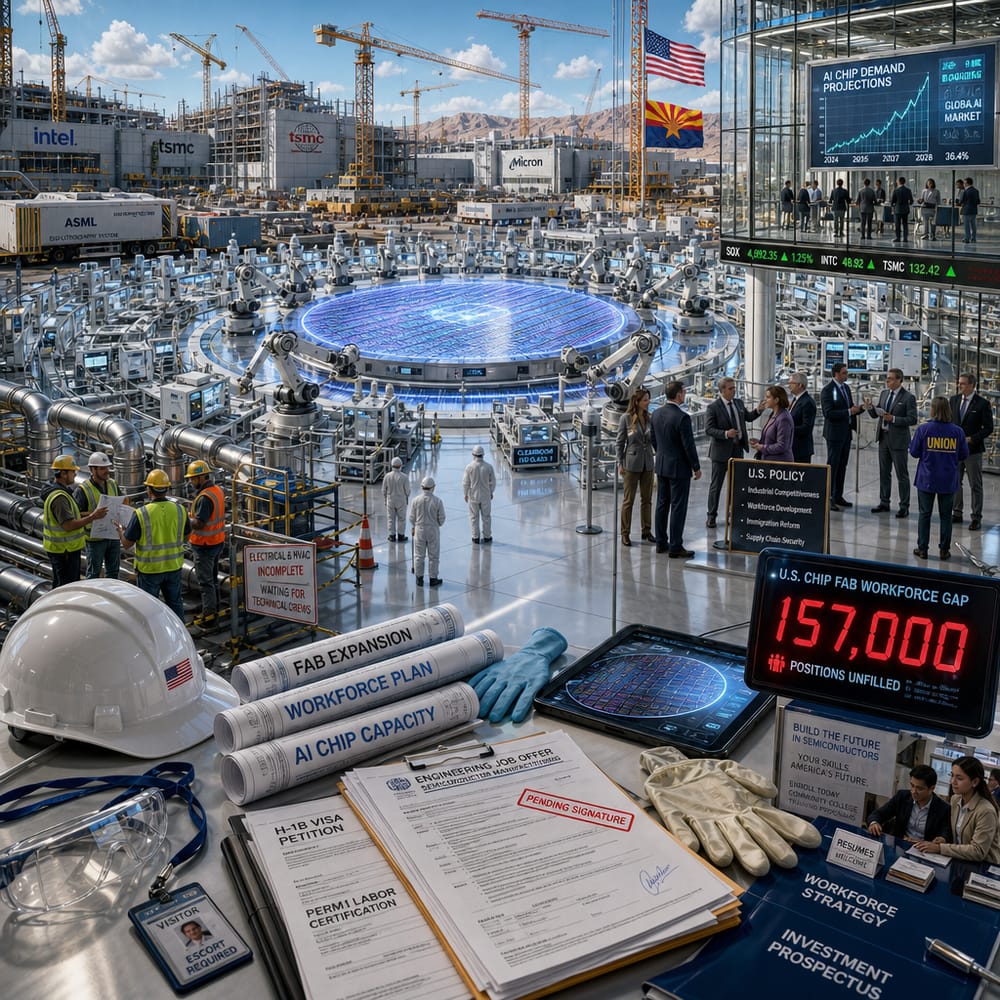
THE CHIP CRUNCH: AMERICA'S SILICON DREAMS IN SHORT SUPPLY
If you think the world of high-stakes drama is confined to reality TV, think again. The real soap opera is unfolding in the U.S. semiconductor industry, where a talent shortage threatens to leave our silicon dreams hanging by a thread. Picture this: by 2030, U.S. chip manufacturing could be short by a whopping 157,000 engineers and technicians. That's like trying to host a football game without the players. And with AI demands skyrocketing faster than the latest TikTok trend, this labor crunch is a recipe for a serious plot twist.
The stakes? Only the U.S.'s global competitiveness in semiconductor production—no biggie, right? The semiconductor sector is not just about powering your smartphone or laptop; it's the heartbeat of AI-driven technology that's reshaping industries. So when we're talking chips, we're really talking about the future of everything from healthcare to autonomous vehicles.
THE TALENT SHORTAGE: A MYSTERY WRAPPED IN DOLLAR SIGNS
You might wonder why lucrative salaries aren't enough to fill these roles. Aren't tech salaries the golden ticket to early retirement and a life of luxury? Well, yes and no. While salaries in chip manufacturing are certainly attractive, the industry has an image problem. It's not as glamorous as coding the next viral app, and with the grueling hours and complex skill sets required, it's not exactly a walk in the park.
TECH GIANTS' TACTICAL MOVES
So, how are the chip maestros like Intel, TSMC, and Micron Technology planning to tackle this talent conundrum? For starters, they're doubling down on investment in education and training programs. Intel has partnered with universities across the U.S. to create specialized courses aimed at churning out the next generation of chip wizards. TSMC, a Taiwanese heavyweight setting its sights on U.S. soil, is also collaborating with educational institutions to bridge the skills gap.
But let's face it, even Herculean efforts in education might not be enough to meet the astronomical demands. Enter automation—AI isn't just driving demand for chips; it might also be the solution to producing them. Increased automation in chip fabs, the factories where these miniature marvels are made, could help keep production lines humming when human hands are scarce.
THE PRICE TAG OF THE SHORTAGE
For retail investors, the talent shortage spells both risk and opportunity. On the risk side, project timelines could stretch and costs could balloon, impacting the bottom lines of semiconductor companies. Delays could ripple through sectors reliant on cutting-edge chips, from automotive to consumer electronics.
However, the opportunity lies in companies that can successfully navigate this storm. Those investing in automation and workforce development might emerge stronger, capturing market share from rivals left in the dust. Keeping a close eye on companies like Intel, which is bullish on expanding U.S. production, might just pay off.
CAN POLICY SAVE THE DAY?
The question on everyone's lips: Can Uncle Sam step in and save the day? Federal and state initiatives could play a pivotal role. The U.S. government has already earmarked billions to boost domestic chip production, but money alone won't solve the skills gap. Policy-makers could incentivize STEM education, streamline immigration processes for skilled workers, and support public-private partnerships aimed at workforce development.
For investors, this means keeping an eye on legislation and policy changes that could affect the semiconductor landscape. More support for STEM could speed up talent development, while immigration policies might provide a quicker fix to the immediate labor shortage.
THE FINAL ACT
As the curtain rises on this unfolding drama, the U.S. semiconductor sector stands at a crossroads. The choices made today will shape the industry's future and, by extension, the trajectory of AI technology worldwide.
So, whether you're a seasoned investor or a curious onlooker, this is one story worth following. It's a rare glimpse into the high-stakes world of technology where every decision, every policy twist, and every market move could mean the difference between leading the pack or falling behind in the race for innovation supremacy. Grab some popcorn and stay tuned.
This article is for informational purposes only and is not investment advice. Always do your own research or consult a licensed financial professional before making investment decisions.
© Copyright 2024. All Rights Reserved.
© Copyright 2024. All Rights Reserved.