

Stalled Hiring Eases Pressure on Fed: What the Weak September Payrolls Mean for Next Moves
Friday, October 02, 2026
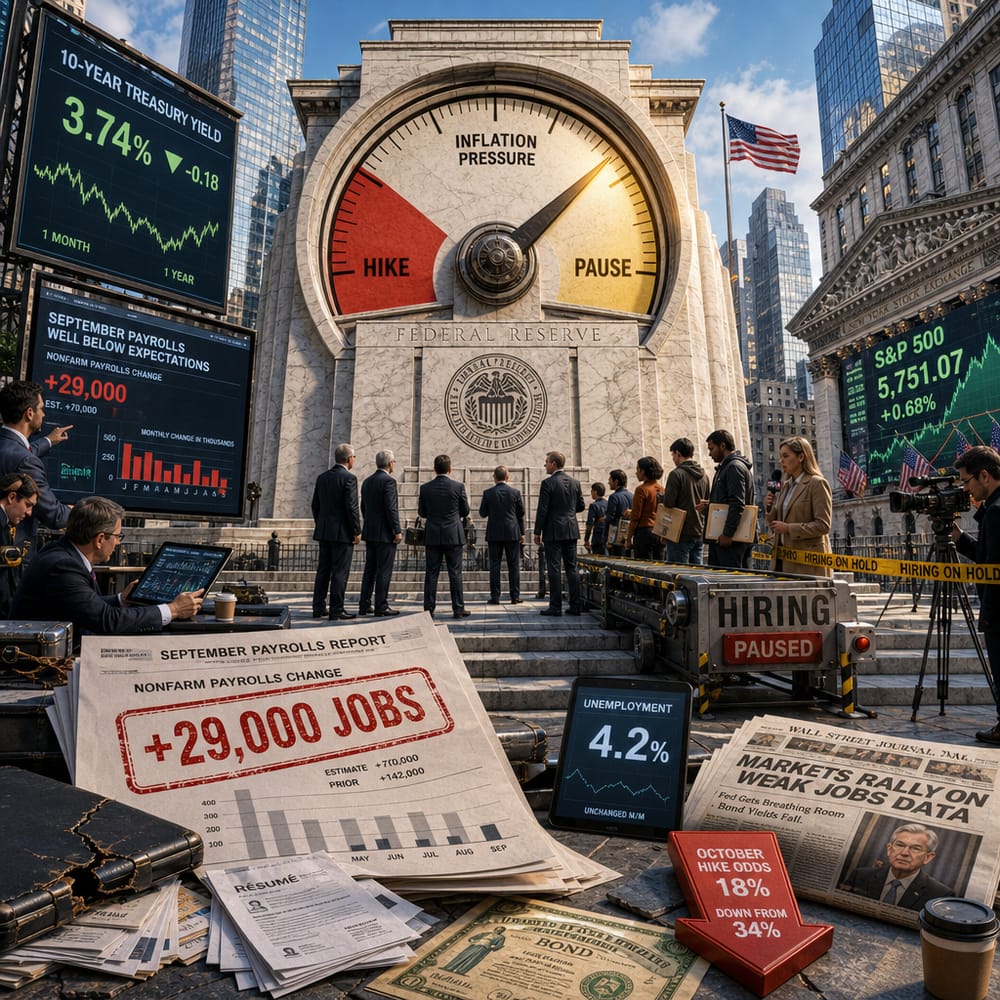
September's jobs report is out, and it's making the Federal Reserve pause like a deer in headlights. Just 29,000 jobs added, with the unemployment rate inching up to 4.2%. That’s about as surprising as spotting a unicorn at a zoo. Everyone expected more—economists were betting on an 84,000 increase. For Fed Chair Jerome Powell, this might feel like getting a "Do Not Pass Go" card in Monopoly. So, what does this mean for the Fed's plans to hike rates? Well, it seems the Fed's itchy trigger finger on raising interest rates might just cool off for a bit.
With the September job numbers acting more like a wet blanket than a revival spark for the economy, the likelihood of an October rate hike just took a nosedive. The Fed’s been on a rate-hiking frenzy lately, trying to tackle inflation faster than a sprinter out of the blocks. But this lackluster jobs report suggests they might need to pump the brakes. A rate hold could be on the horizon, giving the Fed some room to see if the economy finds its groove without their intervention.
So, what does this mean for your portfolio? Stocks seem to be relishing the prospect of a rate reprieve. The S&P 500 and Nasdaq clocked in some gains, with tech stocks like Nvidia hitting record highs. It's as if Wall Street has found a new lease on life, free from the clutches of looming rate hikes. If you're holding shares or considering buying, this could spell opportunity. But don't get too comfy—market moods change faster than your favorite TV series plot twist.
Meanwhile, over at the bond market, the reaction was a bit of a rollercoaster. Initially, Treasury yields took a dip, but then rebounded, with the 10-year Treasury yield ticking up slightly. It's a classic case of "what goes down must come up," as yields and prices have their eternal tug-of-war. For bond investors, the signals are mixed, bordering on chaotic. While lower rates are generally good for bond prices, uncertainty still looms.
Here's the crux of it: this soft jobs report might not just be a temporary blip; it could signal broader economic challenges. Rising unemployment and stagnant job growth don't scream "economic vitality." Instead, they whisper caution, suggesting the robust post-pandemic recovery we all hoped for is hitting some speed bumps. For everyday folks, this could mean a slowdown in consumer spending, which is the lifeblood of the American economy.
If you're thinking, "Well, where's the economy headed next?"—you're not alone. The Fed is surely huddling, trying to decode whether this is a sign of a broader slowdown or just a temporary setback. With fuel prices rising globally, courtesy of geopolitical tensions, and economic policies in flux, there are more questions than answers. The possibility of a sluggish economy might just put the Fed into a wait-and-see mode.
In the grand scheme, weaker job numbers might offer a silver lining by staving off immediate rate hikes, but they also bring uncertainty about future growth. So, buckle up, stay informed, and maybe hold off on any big financial moves until the dust settles. In this market, being nimble and aware is as valuable as owning a crystal ball. Now, wouldn't that be nice?
This article is for informational purposes only and is not investment advice. Always do your own research or consult a licensed financial professional before making investment decisions.
© Copyright 2024. All Rights Reserved.
© Copyright 2024. All Rights Reserved.