

Stablecoins Fuel $1B+ in Daily Card Spend; USDC & USDT Dominate
Wednesday, August 26, 2026
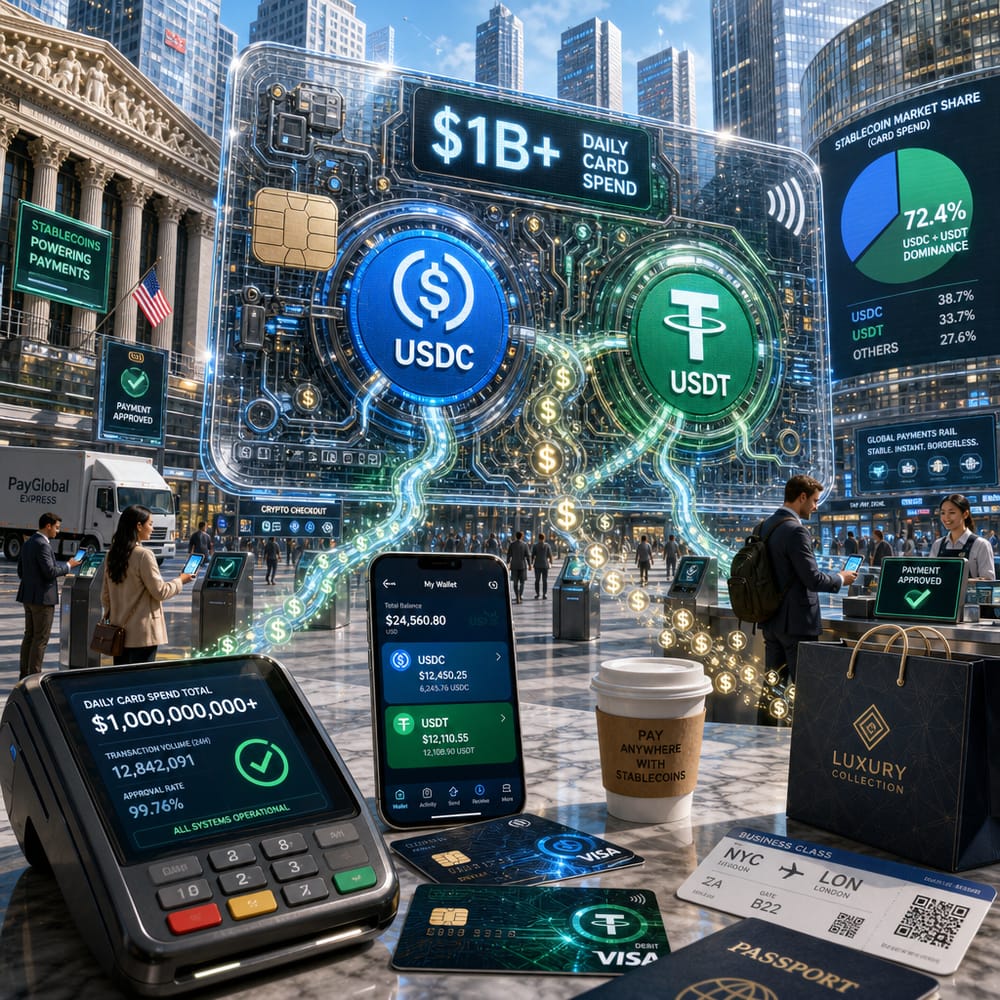
STABLECOINS FUEL $1B+ IN DAILY CARD SPEND; USDC & USDT DOMINATE
Imagine this: you're at your favorite coffee shop, and instead of reaching for cash or a plastic card, you whip out your phone and pay with digital coins that don't swing like a pendulum in value. Welcome to the world of stablecoins, where the cryptosphere finally meets your morning latte. In a striking twist of fate for digital currency enthusiasts, stablecoins have silently stormed the payments scene, now racking up over a billion dollars in daily transactions. If that doesn't perk up your coffee, what will?
THE RISE AND SHINE OF STABLECOINS
First things first: what on earth is driving this surge in stablecoin transactions? In a nutshell, stablecoins are the Clark Kent of the crypto world—by day, they look like any other digital currency, but they’re secretly pegged to stable assets like the U.S. dollar. This means you can buy a pack of gum today and not wonder if tomorrow that same gum will cost you a house.
Many folks were first introduced to stablecoins as a safe harbor during crypto trading storms. Now, they’re the new darling of everyday transactions. Why? Because they offer the convenience of digital payments without the drama of crypto volatility. With inflation proving as sticky as last week's chewing gum on your shoe, people are embracing any financial tool that promises stability.
USDC AND USDT: THE BATMAN AND ROBIN OF THE STABLECOIN WORLD
Among the stablecoin brigade, USDC and USDT are the undisputed champions, leading the charge in this payment revolution. Together, they account for over 70% of the stablecoin spending spree. But how did these two become the dynamic duo of digital payments?
USDC, run by Circle, is known for its transparency and regulatory friendliness. In the often shadowy world of crypto, having your books open is like turning on the lights at a party—everyone feels a bit safer. On the other hand, USDT, or Tether, has a different approach, but its first-mover advantage and deep liquidity have kept it relevant in the game. It's the equivalent of having a credit card that everyone accepts.
THE CRYPTO PAYMENT ECOSYSTEM: A BRAVE NEW WORLD
So, why does this matter? Well, the rise of stablecoins in real-world transactions is like the first ripple of a wave that could wash over the entire financial landscape. We've heard the hype about cryptocurrencies disrupting traditional finance, but stablecoins actually have the chops to do it. These digital dollars are already being used in everything from online shopping to remittances, lowering costs and speeding up transactions along the way.
But hold your horses—or should I say, hold your stablecoins—before betting your house on this trend. There are still hurdles ahead. Firstly, regulatory scrutiny is tightening. Governments don't want to be left behind or lose control over monetary supply, and stablecoins sit right on that fault line. Secondly, adoption is still growing, and skepticism isn’t about to vanish overnight—hey, some people still don't trust microwaves, let alone digital coins.
Nonetheless, the implications are tantalizing. If stablecoins continue to spread like wildfire across the payment ecosystem, they could redefine what we consider "money" and who controls it. Traditional banks might find themselves playing catch-up in a race where stablecoins are already sprinting ahead.
THE FUTURE IS STABLE
In conclusion, while other cryptocurrencies still dream of mainstream acceptance, stablecoins are already attending the party. Their newfound role in everyday purchases suggests that the age of digital payments is not just near; it's here. Keep an eye on USDC and USDT, because if current trends hold, they might just become synonymous with digital cash.
So next time you're buying that cup of joe, remember that the future of money might already be in your pocket—or, more accurately, in your phone. And in this brave new world, stability is the name of the game.
This article is for informational purposes only and is not investment advice. Always do your own research or consult a licensed financial professional before making investment decisions.
© Copyright 2024. All Rights Reserved.
© Copyright 2024. All Rights Reserved.