

Stablecoin Market Dynamics: USDC Growth vs. USDT Contraction
Sunday, August 23, 2026
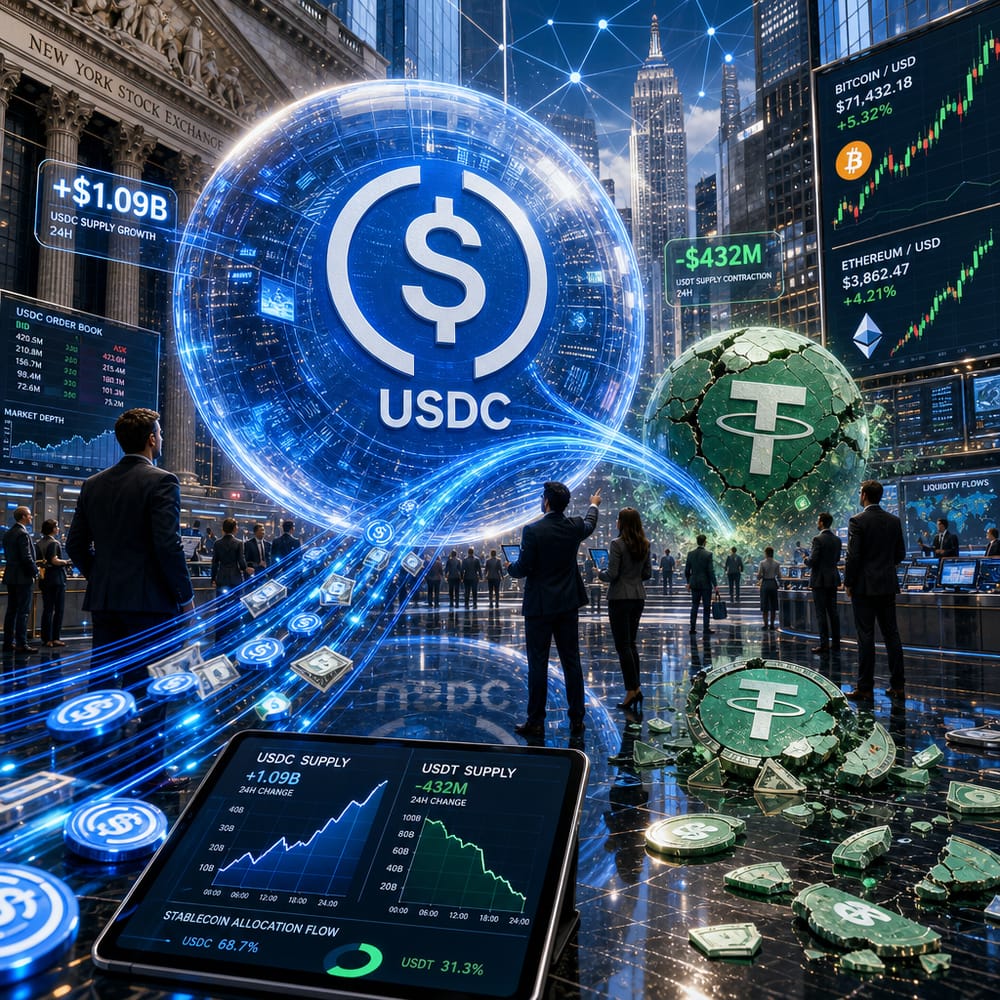
USDC VS. USDT: THE STABLECOIN SHOWDOWN SHAKING UP THE CRYPTO WORLD
In the often theatrical world of cryptocurrencies, where one day Ethereum’s soaring and the next day Bitcoin’s plunging, there lies a drama within a drama: the battle of the stablecoins. And right now, it’s looking like USDC just swiped right on the market, while USDT is hitting snooze.
THE SUPPLY SURGE AND THE SHRINKAGE SAGA
What’s all this fuss about? Let’s unpack it. Stablecoins are like the calm sea in the crypto storm—pegged to a stable asset like the U.S. dollar, they’re supposed to avoid the wild swings that make Bitcoin adrenaline territory. Recently, USDC (USD Coin) saw a growth spurt of $1.09 billion in its supply while its rival USDT (Tether) shed $432 million. That’s not just a numbers game; it’s a seismic shift in investor sentiment.
Now, why are investors flocking to USDC like it’s the last chopper out of Saigon while bidding adieu to USDT? Some say it’s about trust. USDC, managed by Circle and Coinbase, is often perceived as more transparent and better regulated. They’ve been flaunting their audits like a peacock, showing off their reserves and reassuring investors that their dollar is indeed backed by something substantial.
Meanwhile, USDT, which has been the reigning champion in the stablecoin department, has been on the receiving end of some side-eye glances. Critics have long questioned the opacity surrounding Tether’s reserves. The recent contraction might indicate that investors are losing confidence—like finding out your favorite restaurant doesn’t have an A-grade health inspection.
RIPPLES IN THE CRYPTO POND
But this isn’t just about USDC and USDT exchanging blows. The ripples of their tussle spread wider across the crypto ocean. When the supply of a stablecoin rises, it suggests that more people are parking their funds in a safe zone, possibly anticipating market turbulence. Conversely, a shrinking supply might indicate a cash-out mode or simply a pivot to other digital assets.
If USDC’s gain and USDT’s loss were merely about investor confidence, it could mean slight recalibrations in trading strategies. Yet, these shifts can also affect liquidity in crypto markets. Stablecoins are often used in trading pairs with various cryptocurrencies, impacting the ease with which you can switch from one flashy coin to another.
THE TRUST FACTOR
So, what’s fueling this cold war between these digital dollars? Well, trust is a currency that converts quite well in the crypto world. The stablecoin market isn’t just about holding steady; it’s about being steady. USDC, which prides itself on its transparency and regulatory compliance, is seemingly winning the trust race.
In contrast, USDT has had a rocky romance with regulators—think of it as a headline-grabbing couple, always on the verge of a public spat. While it’s still widely used, and its market cap is nothing to sneeze at, this recent contraction could be a sign that crypto enthusiasts are looking for a safer harbor as the broader market goes through its usual fits and starts.
IMPLICATIONS FOR INVESTORS
For the everyday investor scrolling through their crypto portfolio with a cup of coffee, this shift might seem like an inside baseball story. But it matters—a lot. A stablecoin’s stability can dictate how smoothly your investments ride the waves of volatility. If more investors lean towards USDC, it might not only bolster its position but could also signal a broader shift in how people view risk and trust in the crypto ecosystem.
As the crypto world continues its operatic drama, with highs and lows fit for a Wagnerian opera, the stablecoins are the accompanying cello section—steady, reassuring, but occasionally stealing the spotlight.
So, whether you’re team USDC or rooting for a USDT comeback, one thing’s clear: in the crypto arena, trust and transparency are more valuable than ever. As the market continues to evolve, keep an eye on these digital duels—they might just offer clues to the next act in the crypto saga.
This article is for informational purposes only and is not investment advice. Always do your own research or consult a licensed financial professional before making investment decisions.
© Copyright 2024. All Rights Reserved.
© Copyright 2024. All Rights Reserved.