

Stablecoin Market Dynamics Under the Microscope
Tuesday, August 18, 2026
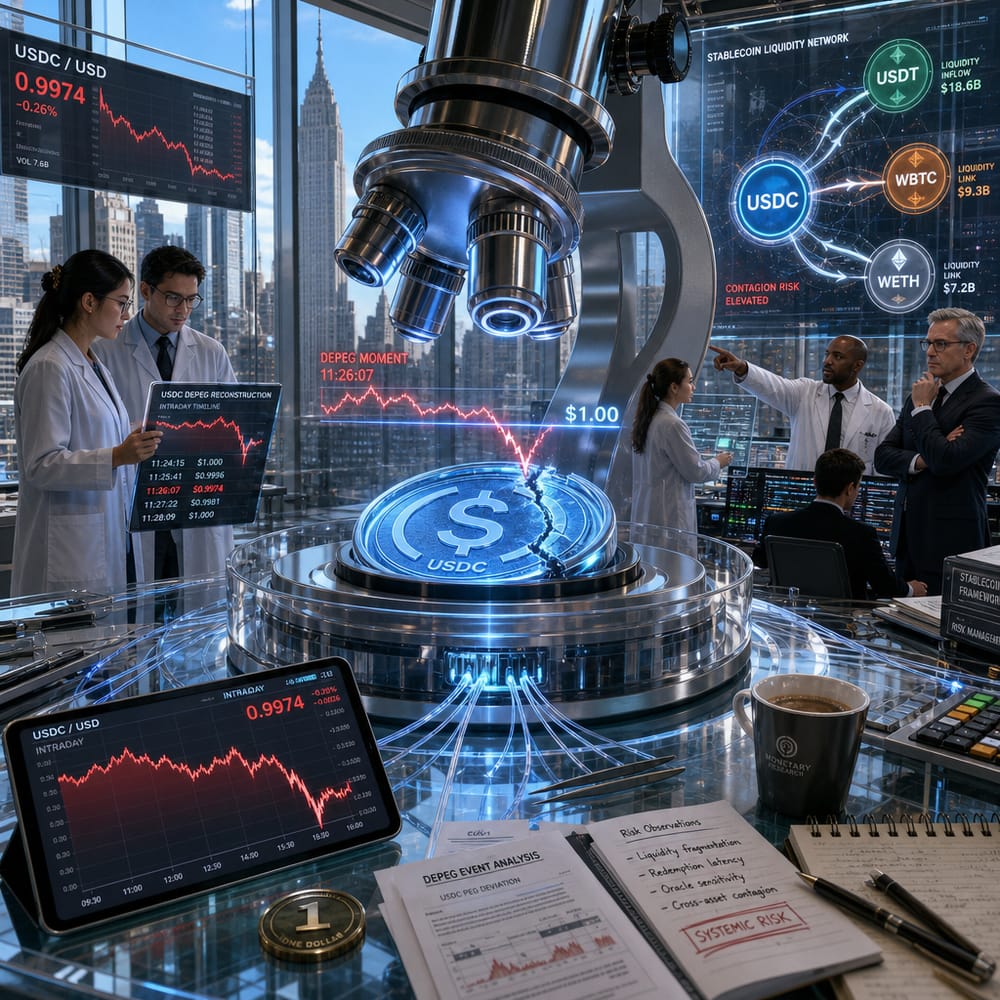
STABLECOIN MARKET DYNAMICS UNDER THE MICROSCOPE
If you thought the financial world was all about old-school bonds and spicy stock market action, think again. Welcome to the wild west of stablecoins—a digital frontier where the stakes are high, the rules are shaky, and the risks, well, they might just give you a heartburn. The recent USDC depeg event is a perfect poster child for what's going wrong—and what needs to be set right—with these digital dollars. So, buckle up, because we're diving into a deep digital ocean with no life vests.
Let's start with a quick refresher. Stablecoins are like your digital piggy bank, pegged to the U.S. dollar to keep things stable. They're the user-friendly middle ground between cryptos like Bitcoin and good old-fashioned cash. USDC, USDT, WBTC, and WETH are the big names here, each promising a dollar's worth for every coin. Easy, right? Well, not so fast.
The recent USDC depeg event knocked that stability notion out of the park. Picture this: a supposedly steady ship hit by turbulence, causing the USDC to momentarily lose its dollar peg. This isn't just some theoretical exercise—it’s an alarming wake-up call about the fragility lurking beneath the surface of these digital assets.
So, what lessons can be learned from this digital hiccup? First off, we've seen that stablecoins can wobble when under stress. The USDC depeg event was like watching a safety net suddenly give way. It highlighted how interconnected and vulnerable stablecoins really are—if one falls, it can send other digital dominoes crashing down.
Stablecoins, by design, should be immune to the mood swings of the larger crypto market. However, when one trembles, it often triggers a chain reaction. The USDC event showed us that in times of market stress, stablecoins aren't as "stable" as we’d like them to be. It’s like discovering your trusty umbrella has holes right when the storm kicks in.
This brings us to the billion-dollar question: What can regulators do to mitigate these systemic risks in the stablecoin realm? With the financial world watching closely, it's clear that the regulatory spotlight is intensifying. Current frameworks are struggling to keep up with the rapid pace of digital innovation, leaving gaps as wide as the Grand Canyon.
Regulators could start by demanding greater transparency. Just as we expect our morning coffee to be free of surprises (no salt in the sugar shaker, please), we should expect stablecoins to reveal more about their reserves and operations. This clarity could serve as a first line of defense against unexpected jolts in the market.
Then there’s the matter of liquidity—ensuring that stablecoins can be converted back to traditional currency swiftly, without causing a seismic ripple across the financial ecosystem. Implementing robust liquidity requirements could act like airbags, cushioning the impact when market shocks occur.
Finally, there’s the potential for a centralized digital dollar—an official U.S. digital currency that could provide the stability and trust that private stablecoins sometimes lack. It’s a bit like Uncle Sam stepping in to provide a steady hand amidst the digital chaos, ensuring these coins do what they promise.
As we navigate this digital financial frontier, the stakes are high. The USDC depeg event has peeled back the layers on the complexities and pitfalls of stablecoins. Much like a magician revealing the secrets behind their tricks, it's a reminder that transparency and regulation must keep pace with innovation.
For everyday investors, this means staying sharp, paying attention, and demanding more from a marketplace that's too often cloaked in shadows. After all, in the world of digital finance, stability isn't just a buzzword—it's the key to ensuring that the wild ride doesn’t end in a crash. So keep your eyes wide open and your digital wallets ready, because the stablecoin story is just beginning, and you wouldn’t want to miss it.
This article is for informational purposes only and is not investment advice. Always do your own research or consult a licensed financial professional before making investment decisions.
© Copyright 2024. All Rights Reserved.
© Copyright 2024. All Rights Reserved.