

Speculative Sentiment Reaches Extremes in U.S. Dollar Positioning
Tuesday, August 18, 2026
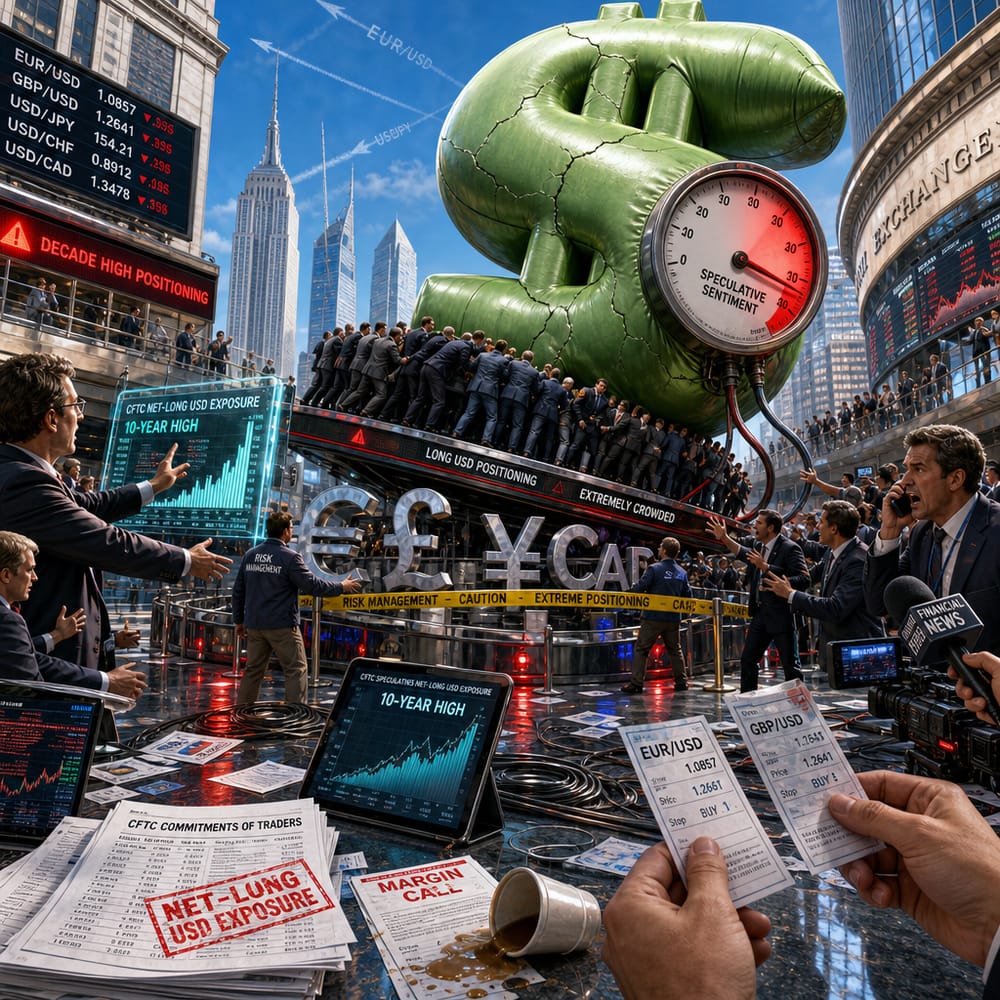
Is that a giant red flag waving over the forex market, or just the dollar flexing its muscles? Recent data from the Commodity Futures Trading Commission (CFTC) revealed that large speculators have piled into net-long positions on the U.S. dollar like it’s the only lifeboat in a monetary storm. They’ve hit a 10-year high, and if you’ve been around the block a few times, you know what that could mean: when everyone’s betting on one horse, it might be time to look for the exits.
Here's the deal: massive speculative positioning in the dollar is like a party that's about to run out of chips and salsa. Everyone's having a good time, but it can't go on forever. So, what's the big deal, and should you care if you're not a currency trader? Well, the dollar is the world's reserve currency, the linchpin of global trade; if it sneezes, other currencies and even entire economies might catch a cold.
A DOLLAR DOMINANCE
Let's set the scene. In recent months, the dollar has been the undeniable heavyweight champ, buoyed by rising Treasury yields and a U.S. economy that, while not exactly a sprightly teenager, is still jogging faster than many of its peers. But with great power comes great responsibility—and potential vulnerability.
The currency market is a fickle beast, and when sentiment becomes this one-sided, it usually means trouble's brewing. If everyone’s long the dollar, who’s left to buy? A correction might be lurking around the corner, ready to slap the dollar back down to earth.
RISKS AND TRIGGERS
Potential catalysts for this anticipated correction are like a buffet of bad news. Inflation concerns? Check. A fiscal deficit that makes your student loans look like pocket change? Double check. But one of the biggest game-changers could be the Federal Reserve deciding to pivot on interest rates. If the Fed hints at cutting rates or even just pauses its relentless hikes, expect dollar bulls to turn into bears faster than you can say "rate cut."
Geopolitical turbulence—like the U.S.-Iran stand-off that’s been poking at oil prices—could also stir the pot. If hostilities cool or new diplomatic overtures are made, risk-averse capital might flow out of the greenback and into riskier assets, depressing the dollar.
ECHOES ACROSS THE CURRENCY MARKET
So, what happens if the dollar takes a breather? Picture a dance floor where the DJ just changed the track. The euro, for one, which has been languishing in the dollar's shadow like the kid nobody picks for dodgeball, might get its time to shine. A weaker dollar could bolster the EUR/USD pair, as investors seek alternate havens.
The British pound, which has its own Brexit-like baggage but is always eager for a comeback, could also see a resurgence. Over in Asia, the yen, which has been sliding against the dollar like a penguin on ice, might catch a break, particularly if Japanese policymakers decide it’s time to tweak their ultra-accommodative monetary policy.
The loonie (that's the Canadian dollar, for the uninitiated) could similarly perk up, especially with North American trade ties and energy prices playing their usual roles in shaping its fortunes.
WHY IT MATTERS TO YOU
You might be thinking, "So what, I’m not trading forex. Why should I care?" Well, the dollar's antics ripple through everything from the price of your imported coffee to the cost of your holiday in Paris. A correction in the dollar could mean cheaper foreign goods and travel, giving your wallet a bit of a break. On the flip side, if your investments are tied up in U.S. assets, a weaker dollar could eat into those returns.
In essence, the currency market is like the puppet master behind the scenes, pulling strings in ways you don't always see immediately. Whether you’re a seasoned investor or just trying to keep tabs on your IRA, understanding these dynamics can help you make more informed financial decisions.
So, as the forex world watches with bated breath, remember that when the herd gets too crowded in one direction, it often pays to have a Plan B. Keep an eye on those Fed announcements and don't underestimate the power of the geopolitical news cycle. It just might save you from being the last one left holding the (dollar) bag.
This article is for informational purposes only and is not investment advice. Always do your own research or consult a licensed financial professional before making investment decisions.
© Copyright 2024. All Rights Reserved.
© Copyright 2024. All Rights Reserved.