

SpaceX's Stock Rebound: A Sign of Stability?
Monday, August 10, 2026
SPACEX'S STOCK REBOUND: A SIGN OF STABILITY?
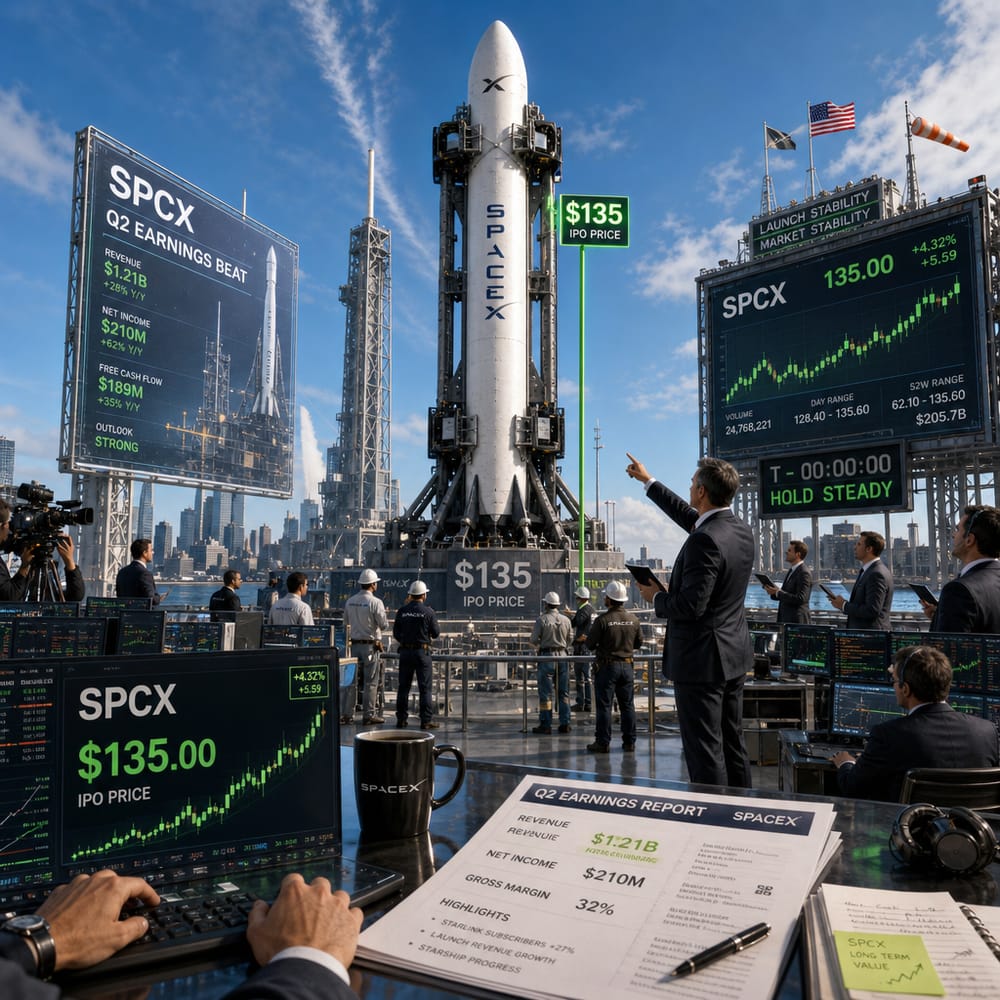
Hold onto your rocket boosters, folks—SpaceX is making headlines again, and this time it's not for launching a Tesla into orbit or trying to colonize Mars. The company has recaptured investor attention by bringing its stock back to the $135 IPO price. Following a first quarter that resembled a rollercoaster more than a rocket launch, SpaceX seems to have found some stability. But let's dig deeper into what's been shaking and shaping this cosmic comeback.
From the moment SpaceX's stock hit the Nasdaq, it has been more turbulent than a Space Mountain ride. The post-IPO volatility was fueled, in part, by the typical blend of market speculation and uncertainty that shadows even the most stellar of companies. Add to the mix the fact that retail investors sold SpaceX shares for the first time last Friday, and you've got a recipe for volatility. Investors were left wondering if Elon Musk's intergalactic dreams were too lofty, even for this planet’s most celebrated entrepreneur.
But then came the Q2 earnings report, like a balm for rattled nerves. SpaceX reported revenues of $7.81 billion, exceeding analysts’ expectations. This was a glimpse into a universe where SpaceX might just reach the $100 billion annualized recurring revenue target by the end of the year, as CFO Bret Johnsen confidently stated. Deutsche Bank analysts are nodding in agreement, noting that while SpaceX's current run-rate sits at $31 billion, the ambitious target depends heavily on new contributions from projects like Starlink and increased satellite launches.
Yet with great ambition comes great risk—and rewards. For those willing to ride the space wave, SpaceX offers tantalizing prospects. The company’s ability to execute its ambitious plans could mean hefty returns. The burgeoning space economy, with SpaceX at the helm, offers a frontier as promising as the Gold Rush era—if you've got the grit (and the funds) to stick it out.
But let's not ignore the potential pitfalls. SpaceX’s goals are more than sky-high; they're stratospheric. Aiming for $100 billion in annual revenue by year-end is no small satellite. Achieving such targets would require not just successful launches, but sustained demand and logistics that run like clockwork. That's no guarantee, especially when you're dealing with complex technologies and regulatory hurdles that come with launching things into the great beyond.
Moreover, competition is brewing. Rivals are not simply sitting on their launchpads waiting for SpaceX to win the space race. Companies like Blue Origin and emerging players from countries eager to claim their share of space real estate are ramping up their efforts. SpaceX may have the first-mover advantage, but it's a crowded sky up there.
So, is this the calm before another storm, or the beginning of a steady ascent to new heights? SpaceX's rebound to its IPO price does suggest a renewed investor confidence in the company's growth trajectory. The question now is whether this stability is sustainable. If SpaceX can continue to outpace expectations and navigate the competitive landscape, its stock could very well be headed for a new orbit.
For the retail investor scrolling through their stock app, wondering if SpaceX is a lift-off or a crash landing, consider this: Space may be the final frontier, but it's also the wild west of investment opportunities. If you're willing to risk the turbulence for the chance to be part of something this groundbreaking, keeping an eye on SpaceX might just be worth your while. Just remember, in the stock market—much like in space—nothing is ever completely risk-free.
This article is for informational purposes only and is not investment advice. Always do your own research or consult a licensed financial professional before making investment decisions.
© Copyright 2024. All Rights Reserved.
© Copyright 2024. All Rights Reserved.