

SpaceX's Starmind AI Satellite Network: A New Era in Space-Based Computing
Thursday, November 26, 2026
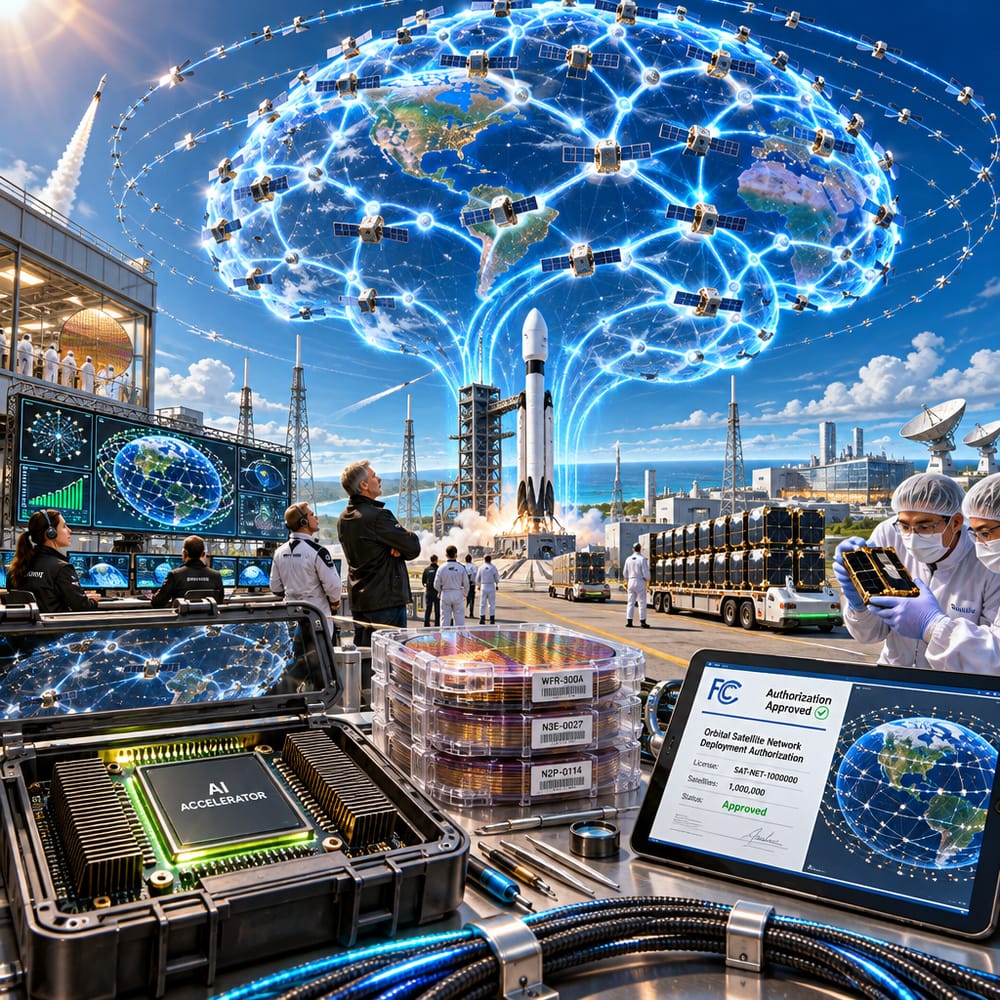
SPACEX'S STARMIND AI SATELLITE NETWORK: A NEW ERA IN SPACE-BASED COMPUTING
They say the sky is the limit, but SpaceX just got permission to push past even that. You heard it right — the Federal Communications Commission (FCC) just gave the green light for Elon Musk’s space-centric brainchild, SpaceX, to unleash a constellation of one million satellites. The mission? To create a space-based AI data center empire called Starmind. It’s like the plot of a sci-fi blockbuster, but this is 2026, and it’s all real.
Imagine one million satellites circling the Earth like tiny, tech-savvy bees, each humming away with the power to revolutionize artificial intelligence (AI) as we know it. The aim? To supercharge AI's capabilities, cut the cord from terrestrial constraints, and usher in a new era of computing. But what does this mean for us mere mortals scrolling on our phones and for the giants already dominating the AI scene?
THE BENEFITS OF SPACE-BASED AI PROCESSING
First, let’s talk about the perks of having your data processing in orbit. Space-based AI isn’t just about adding more stars to our night sky; it’s about tackling the logistical roadblocks Earth-bound AI faces. For one, data traffic jams could be a thing of the past. With the Starmind network, data can be processed at lightning speed directly in space, bypassing the bottlenecks of Earth's infrastructure.
Moreover, space-based AI systems can potentially run cooler than their Earthly counterparts. Space has a natural advantage in temperature regulation, and that could translate into more efficient processing and lower energy use. Not to mention, housing AI infrastructure in the vastness of space could free up space on our planet (pun intended) for other developments.
IMPACT ON EXISTING AI INFRASTRUCTURE PROVIDERS
Of course, there’s a ripple effect for companies that rule the AI roost right now. NVIDIA, TSMC, and other AI darlings might need to brace for a dynamic shift in their business models. If processing power can literally reach new heights, Earth-based data centers might feel the heat—figuratively speaking.
For NVIDIA, a key supplier of AI processing hardware, the playbook might need a few strategic rewrites. They could pivot towards developing tech specifically for the unique challenges of space environments. Similarly, TSMC might see new opportunities in crafting the next-gen chips that can withstand the harsh realities of space.
THE ENVIRONMENTAL PUZZLE
Now, before you start dreaming of space-based TikToks, let’s pause and consider the environmental consequences. Launching a million satellites into space isn’t exactly a green initiative. The carbon footprint of such a monumental task could be hefty. Plus, there’s the looming threat of space junk. If managed poorly, our future could involve dodging the debris of discarded, dysfunctional satellites.
SpaceX will need to be more than just innovative—they’ll need to be stewards of the space environment. We're talking about devising sustainable methods for satellite disposal and ensuring these cosmic outposts don’t become a galactic garbage patch.
A NEW FRONTIER FOR INVESTORS
For investors, this could be a cosmic opportunity. SpaceX’s vision opens up new avenues for investment in space tech and AI. While traditional AI stocks might face challenges, there's room for growth in the space technology sector. Companies that can ride this new wave, providing tech that supports space-based initiatives, could be the ones to watch.
So, what’s the bottom line? SpaceX’s audacious launch of the Starmind network is more than just a tech fairy tale—it’s a reality that’s set to redefine AI processing and change how we think about technology’s relationship with our planet. For those of us on Earth, it’s a thrilling, if slightly daunting, frontier.
The stars are calling, and with SpaceX leading the charge, the future of AI might just be out of this world. Keep your eyes skyward and your portfolios ready—Starmind could very well be the next big leap in our digital evolution.
This article is for informational purposes only and is not investment advice. Always do your own research or consult a licensed financial professional before making investment decisions.
© Copyright 2024. All Rights Reserved.
© Copyright 2024. All Rights Reserved.