

SpaceX's Ambitious Satellite Deployment for AI Data Centers
Thursday, November 26, 2026
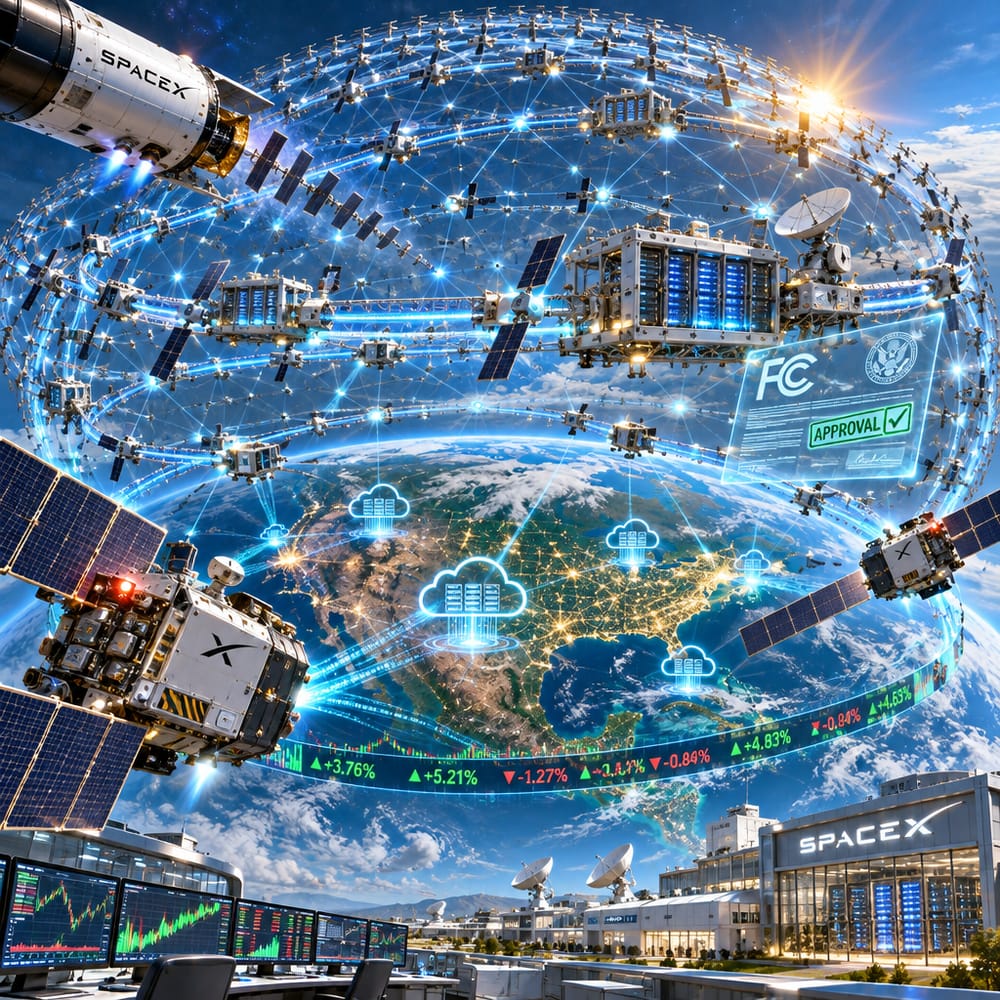
SPACEX'S AMBITIOUS SATELLITE DEPLOYMENT FOR AI DATA CENTERS
Forget the cloud—SpaceX has its sights set on the stars. The Federal Communications Commission just gave a thumbs-up to Elon Musk’s ambitious plan to launch up to 1 million satellites for AI data centers. Yep, you read that right. One million. If SpaceX pulls this off, it won’t just be a big deal for them, but it could also flip the whole cloud computing game upside down and inside out.
To paint a picture, imagine your Netflix binge-watching habit or your late-night Google searches powered not from a data center buried in a cold, unglamorous storage facility but by a constellation of satellites zipping around Earth. Sounds like science fiction, right? But for SpaceX, it's just Tuesday.
WHY THE BIG DEAL?
So, why is Musk aiming his high-powered ambitions toward the sky? It’s all about AI. Artificial Intelligence is the crown jewel of tech right now, fueling advancements in everything from self-driving cars to apps that know you better than your mom. But here's the kicker: AI requires colossal computing power and a boatload of data processing capability. SpaceX's “Starmind” satellite constellation promises to deliver just that, all from the final frontier.
BENEFITS AND RISKS
The concept seems mind-blowing, but don’t start packing for space just yet. The whole endeavor rides on “unproven” technology, according to SpaceX. There’s no MapQuest for navigating the challenges of launching and maintaining a million satellites. Plus, there are the colossal costs and the question of whether it will ever turn a profit. Even Musk, who’s never met a risk he didn’t like, admits this might not achieve “commercial viability” anytime soon.
But if it does work? Well, that’s a game changer. With data centers in space, latency—the time it takes for data to travel from sender to receiver—could be drastically reduced. That means faster internet speeds and quicker access to data-driven AI applications. It might even be the edge the U.S. needs to lead the global AI race.
IMPACT ON CLOUD COMPUTING
Don’t think for a second that the cloud computing giants—Amazon, Microsoft, Google—aren’t watching this closely. If SpaceX successfully moves data processing to the heavens, it might force these Earth-bound behemoths to rethink their strategies. They might have to invest in their space capabilities or pony up to lease satellite space from Musk. Either way, the race to space could heat up faster than a speeding asteroid.
The impact isn’t limited to the big wigs of cloud. Satellite technology suppliers are likely rubbing their hands in glee, ready to dive into the orders this initiative could generate. Think of all the companies that will be building parts, maintenance tools, and software for this sky-high venture. This isn’t just SpaceX going to space; it's a whole supply chain preparing to orbit with them.
REGULATORY AND MARKET IMPLICATIONS
The regulatory hurdles alone could make lesser companies turn tail. Space is the new Wild West of regulations as authorities scramble to write the rulebook. With 1 million satellites set to swarm our skies, there’s more than a need for speed; there’s a need for smart, savvy regulation. The FCC's approval is a huge leap forward, but more oversight will be required to manage space traffic and mitigate the risk of space debris—the cosmic equivalent of your neighbor’s noisy junk car on blocks.
BOTTOM LINE
While SpaceX's celestial data centers might seem like something out of a movie, they're setting the stage for a new era of tech—one where computing power is as boundless as the universe itself. But let’s not put the cart before the horse. SpaceX still has to prove this tech is viable, tackle regulatory mazes, and, yes, make it profitable.
Still, in Elon we trust, right? After all, this is the guy who turned electric cars from a joke into a revolution, shot a car into space for laughs, and is now planning to colonize Mars. So, bet against him if you dare, but don't be surprised if, a few years from now, your data is processed by a satellite whizzing around the globe while you sip your morning coffee.
For the retail investor, this means keeping an eye on the satellite technology market and cloud computing giants. As SpaceX looks to the stars, you might just find some opportunities reaching for your wallet here on Earth.
This article is for informational purposes only and is not investment advice. Always do your own research or consult a licensed financial professional before making investment decisions.
© Copyright 2024. All Rights Reserved.
© Copyright 2024. All Rights Reserved.