

SpaceX's $60 Billion Acquisition of AI Startup Cursor
Wednesday, August 19, 2026
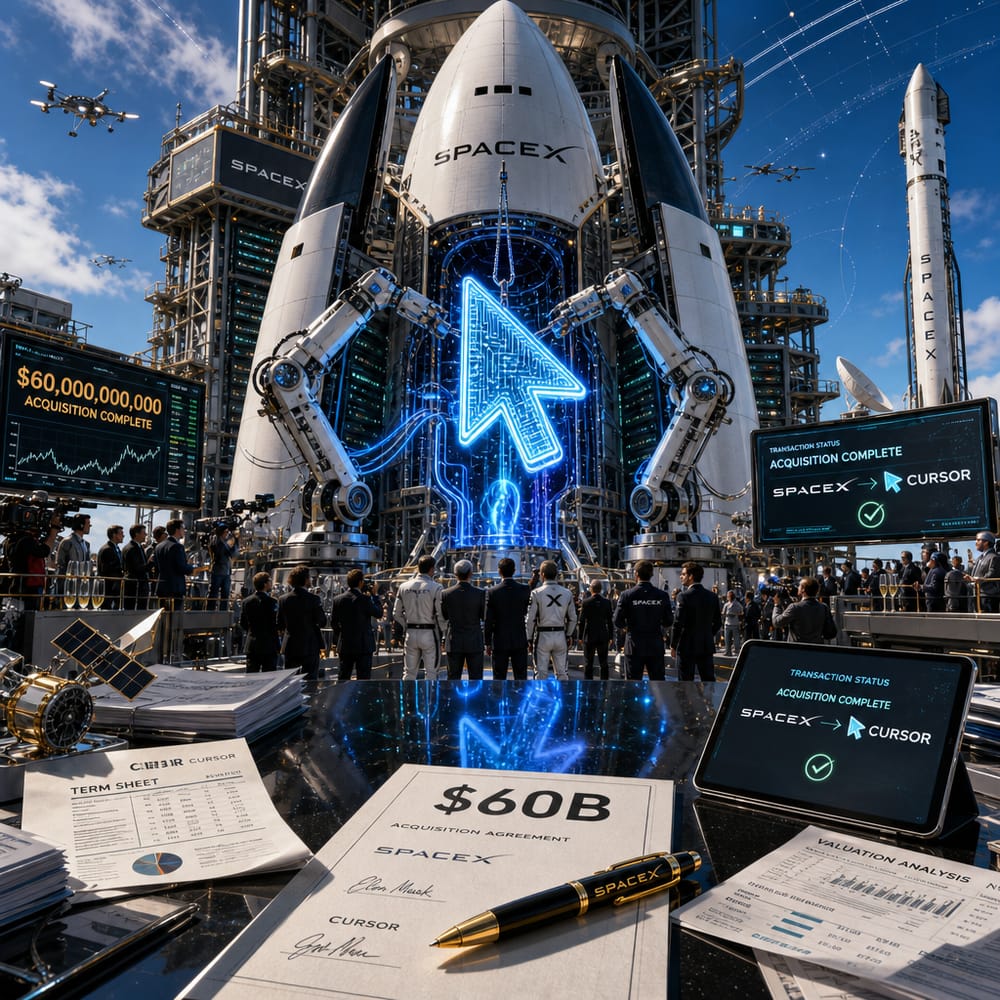
SPACE MEETS AI: SPACEX'S $60 BILLION NEW FRONTIER WITH CURSOR
Elon Musk isn't just looking to put people on Mars; he's now aiming to rocket into the digital frontier. In a jaw-dropping move, SpaceX recently announced the acquisition of AI startup Cursor for a cool $60 billion. That's right, the same company that sends astronauts to the International Space Station is now the proud owner of a cutting-edge artificial intelligence firm. This isn't just any tech deal — it's the largest-ever acquisition of a venture capital-backed startup. Buckle up, because the merger of space travel with artificial intelligence could be about to change the game in ways we've only dreamed of.
But why, you might ask, would a space exploration company need an AI startup? Great question. SpaceX, known for its audacious vision of colonizing Mars, appears to be plotting a course to not just the stars, but the future of tech itself. With Cursor's AI prowess, SpaceX could dramatically enhance its operations, from optimizing rocket launches to potentially paving the way for autonomous space missions.
In the tech world, this acquisition marks a seismic shift. The marriage of deep-tech — where complex technical innovations meet real-world applications — is reaching new heights with SpaceX's bold move. For those keeping score, deep-tech mergers like this one aren't just about expanding product lines; they're about reshaping industries. And in this case, that could mean rewriting the rulebook on artificial intelligence infrastructure.
Cursor, a rising star in the AI galaxy, brings to the table technologies that could revolutionize how data is processed in space missions. Imagine AI systems fine-tuning rocket trajectories mid-flight or analyzing celestial data in real time. That's what the future could hold with this merger. And let's be honest, if there's any CEO with the audacity to dream that big, it's Elon Musk.
But there's another angle to this story that's worth pondering. With such a colossal deal, it's only natural for the regulatory watchdogs to perk up. Could this spark more scrutiny in the tech world, where companies already hold immense power? The answer is likely yes. As tech giants flex their muscles in industries beyond their original purview, expect regulators to scrutinize these mega-deals more closely. After all, the last thing anyone wants is an unchecked superpower in the tech arena.
Zoom out a little further, and this acquisition could be a harbinger of what's to come in the AI infrastructure landscape. We're living in a time when data is the new oil, and companies are scrambling to harness its potential. With its fresh muscle, SpaceX may very well set a new standard for AI deployment — not just in the space sector but across the global economy.
And while SpaceX and Cursor are busy making headlines, investors are left with intriguing questions. How will this shape the future of tech mergers and acquisitions? Will other companies follow suit, perhaps heralding a wave of deep-tech consolidation? For retail investors, this is a story worth watching, offering a window into the future of tech investing — where strategic synergies might yield the next big breakthrough.
In the grand scheme of things, SpaceX's acquisition of Cursor is more than a headline-grabbing deal; it's a signal of the transformative potential that lies at the intersection of space exploration and artificial intelligence. For SpaceX, it's a step towards a future where rockets might one day think for themselves. And for the rest of us, it's a reminder that in the world of Musk and his ilk, the sky is not the limit — it's just the beginning.
This article is for informational purposes only and is not investment advice. Always do your own research or consult a licensed financial professional before making investment decisions.
© Copyright 2024. All Rights Reserved.
© Copyright 2024. All Rights Reserved.