

SpaceX's $44 Billion AI Chip Acquisition
Sunday, November 29, 2026
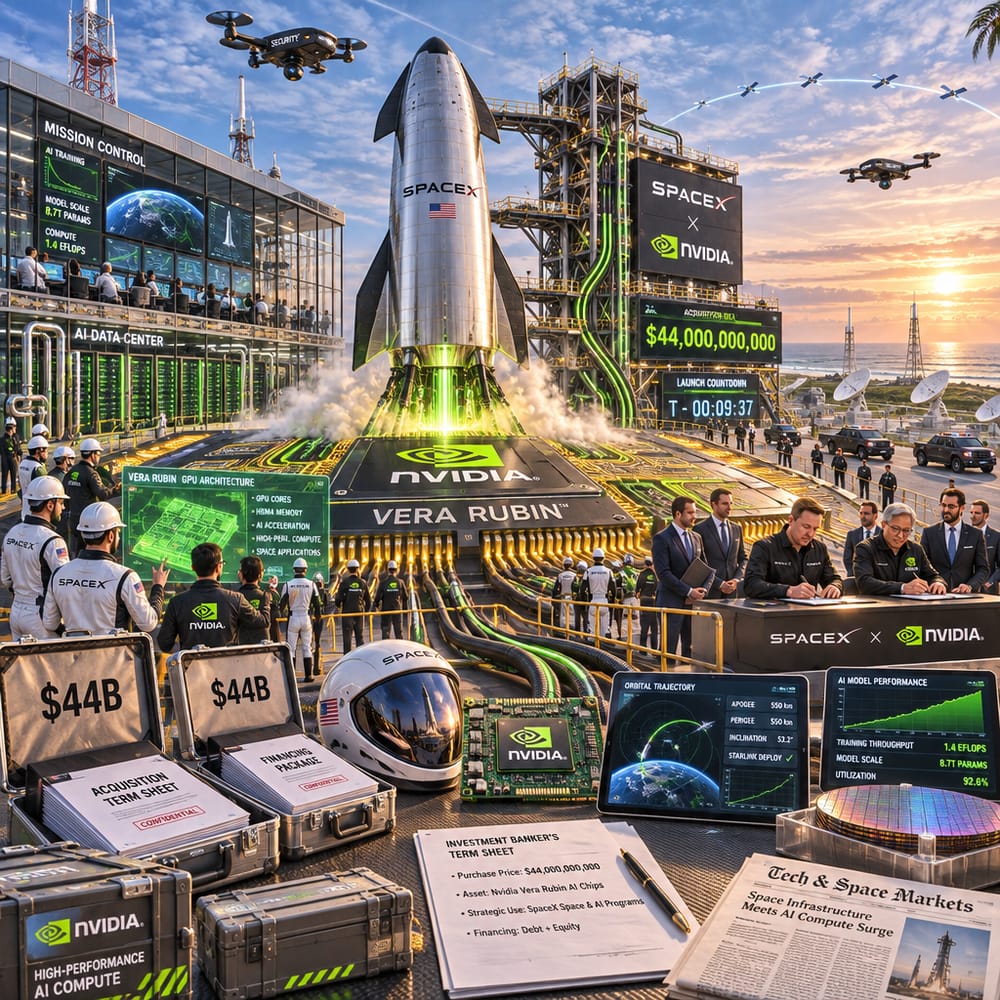
SPACEX ISN'T JUST REACHING FOR THE STARS; IT'S MAKING THEM SMARTER
When Elon Musk dreams of Mars, he doesn’t just picture red dust and rover tracks; he sees an interplanetary internet of things. So, it’s no surprise that SpaceX just snagged a $44 billion deal to acquire Nvidia’s high-performance Vera Rubin AI chips, a move that’s sending shockwaves through both the space and tech industries. And no, these aren’t your average chips. They pack the kind of punch that would make a supercomputer blush.
Now, before you start wondering if Musk plans on integrating AI into his launch playlists, let’s dig into the strategic nuts and bolts behind this cosmic shopping spree.
WHY THE CHIP GRAB?
This isn’t just about having the coolest toys in the cosmic playground. SpaceX’s strategic acquisition is all about bringing AI intelligence to the final frontier. Think faster, more autonomous space missions. Imagine satellites that can conduct on-the-fly repairs or rockets that can adjust their paths around space debris faster than a NASA scientist can say, “Houston, we’ve got a problem."
By integrating Nvidia’s AI chips, SpaceX is essentially turbocharging its tech stack, merging cutting-edge artificial intelligence with aerospace innovation. It’s the tech-geek version of mixing peanut butter with jelly – a classic combo, but one that packs a powerful punch.
A NEW ERA FOR SPACE AND AI?
This isn’t just about SpaceX; it’s a signal flare for the entire space technology sector. The blending of AI capabilities into space exploration is like giving rockets a brain. We’re entering an era where AI could make space missions less about human error and more about machine precision. It’s like handing the keys of the Millennium Falcon over to R2-D2 – you know things are about to get efficient.
The ripple effect of this move could be monumental. Other space companies might soon follow suit, embarking on their own AI shopping sprees. And as space becomes smarter, expect sectors that once seemed like distant relatives – like AI and aerospace – to start acting like close-knit siblings sharing a tech-savvy secret.
WHY THIS MATTERS TO YOU
You might wonder, what’s in it for the Earth-bound investor? Well, this isn’t just some nerdy niche move. Nvidia’s involvement in this mega deal highlights a significant trend: the ever-growing demand for AI infrastructure across a variety of industries.
If Nvidia had a VIP room, it would be filled with space and tech companies looking to buy in on the AI boom. Their stock could very well take off faster than one of Musk’s rockets, thanks to burgeoning demand in non-traditional sectors like space. This could be a golden opportunity for anyone with an eye on AI stocks, as Nvidia continues to build its reputation as the powerhouse provider of AI solutions.
Yes, the stock market is as unpredictable as a cat on catnip, but trends like these give us a peek into where things might be headed. As AI becomes embedded into the literal fabric of the universe, investors might want to consider hitching a ride on this rocket.
LOOKING FORWARD
The big question is, what now? As SpaceX paves the way for this AI-space fusion, we could see this become a new norm. The precedent is set, and the possibilities are as vast as space itself.
For now, we’ll have to wait and see how other sectors react. Will telecommunications, defense, or even agriculture go all in on AI magic, transforming their own industries in ways we haven’t yet imagined? It’s a tech revolution, folks, and it’s happening right above our heads.
So whether you’re a seasoned investor, a space enthusiast, or just a sucker for sci-fi reality, keep your eyes on the sky. The space race isn’t just about who gets there first—it’s about who gets there smartest. And with AI in its arsenal, SpaceX is definitely playing the long game. So grab your popcorn, because this show is only getting started.
This article is for informational purposes only and is not investment advice. Always do your own research or consult a licensed financial professional before making investment decisions.
© Copyright 2024. All Rights Reserved.
© Copyright 2024. All Rights Reserved.