

SpaceX's $1.77 Trillion Debut: Inside the Biggest IPO in History
Tuesday, June 09, 2026
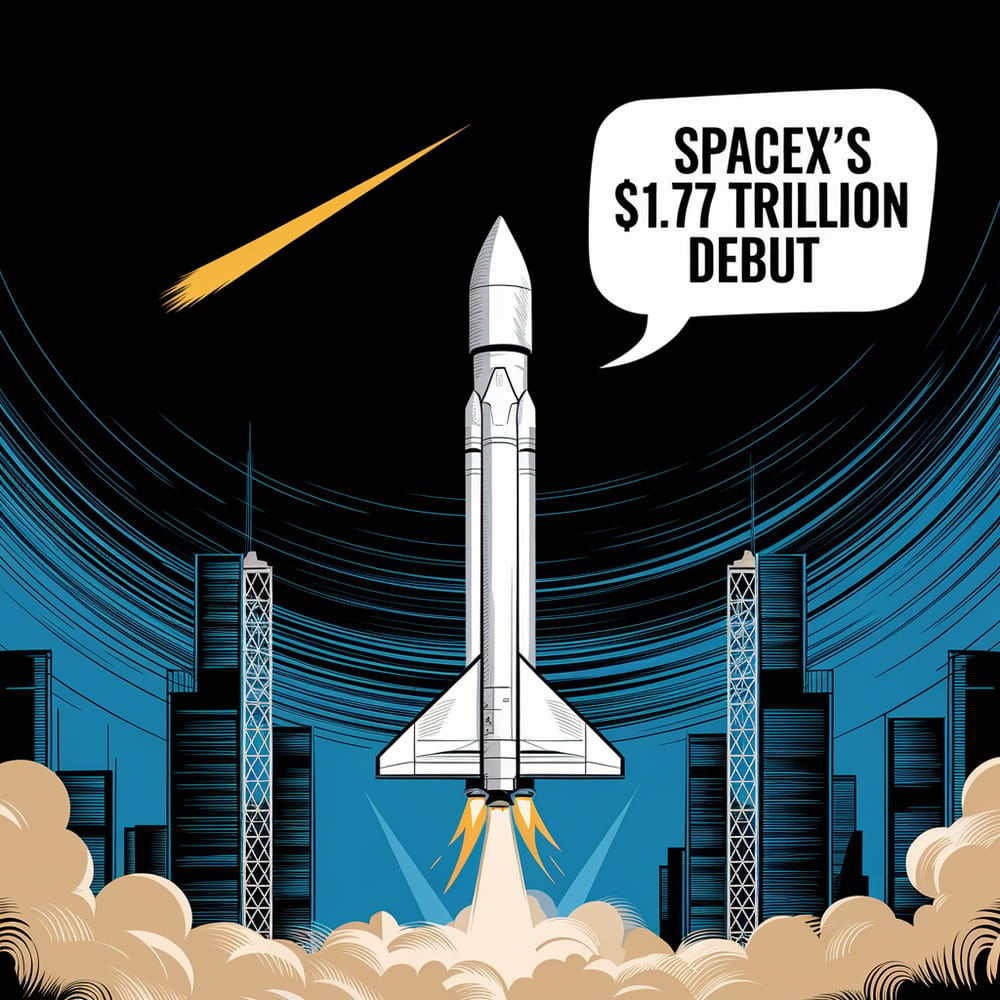
It's the moment Wall Street has waited years for. On Friday, June 12, Elon Musk's SpaceX is set to blast onto the Nasdaq in what would be the largest IPO in history — a debut so big it would instantly make the rocket maker worth more than Tesla itself. Here's what's actually happening, in plain English.
A Debut for the Record Books
SpaceX is scheduled to start trading on the Nasdaq this Friday, June 12, under the ticker SPCX. The company has set a fixed price of $135 a share — unusual for an IPO, where the price is normally nailed down only after a roadshow of pitching to big investors. At that price the offering would raise about $75 billion, more than triple the size of Alibaba's 2014 listing, the largest U.S. IPO on record. In plain terms: this isn't just a big IPO, it's the biggest one ever attempted.
The $1.77 Trillion Question
At $135 a share, SpaceX would carry a valuation of roughly $1.77 trillion. To put that in perspective, that would make it the seventh-most-valuable public company in America — and worth more than Tesla, Musk's other company, which sits around $1.6 trillion. A "valuation" is simply the price tag the market puts on the entire company, and here it's being set sky-high before a single share has traded publicly. The figure also assumes a couple of pending deals close as planned, so it could shift before the bell rings.
What You'd Actually Be Buying
SpaceX is really two businesses under one roof. There's the rocket-launch operation — the Falcon and Starship vehicles that carry satellites, cargo, and astronauts — and there's Starlink, the satellite-internet service that now beams broadband to millions of customers and has become the company's fastest-growing source of revenue. A share of SPCX is a bet on both: the launch business that dominates global spaceflight, and Starlink's drive to become a worldwide telecom player.
Musk Keeps the Keys
Even after selling tens of billions of dollars in stock, Musk isn't loosening his grip. Through a special class of shares, he's expected to keep more than 82% of the voting control after the offering. That means everyday shareholders would own a slice of the company but have little say in how it's run — a setup common at founder-led tech firms, but one that corporate-governance watchdogs often flag. Buyers are, in effect, trusting Musk's vision and judgment to drive their returns.
Why Retail Investors Are Glued to This One
SpaceX has long been one of the most coveted private companies on earth, and until now only venture funds and wealthy insiders could own a piece. An IPO throws the doors open to ordinary investors for the first time. That novelty, combined with Musk's enormous following and the company's marquee status, has fueled huge buzz — and the kind of demand that can send a stock swinging sharply in its opening days of trading.
The Risks Behind the Hype
A record valuation cuts both ways. SpaceX is being priced for years of near-flawless execution, yet it still pours cash into Starship development and has reported heavy losses as it races to scale up. Space is literally rocket science: launches can fail, timelines can slip, and regulators can step in. A debut this hyped can also be volatile, with early prices driven more by excitement than by fundamentals. However euphoric the launch-day headlines turn out to be, the distance between a $1.77 trillion price tag and the underlying business is exactly what skeptics will be watching.
This article is for news and informational purposes only and is not investment advice. Figures as of June 9, 2026.
© Copyright 2024. All Rights Reserved.
© Copyright 2024. All Rights Reserved.