

S&P 500 Hits Correction Territory as Trump’s Trade War Escalates
Friday, March 14, 2025
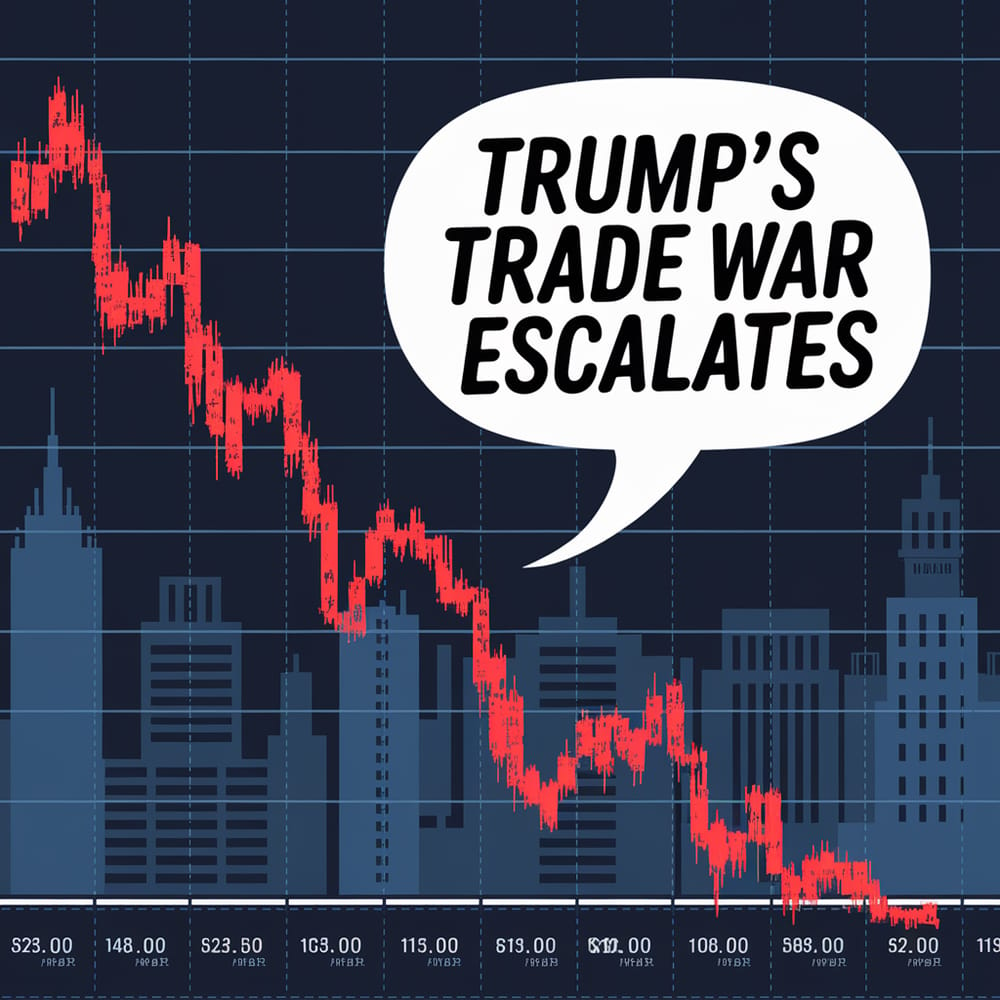
The stock market took another heavy hit Thursday, with the S&P 500 officially falling into correction territory as concerns over Trump’s escalating trade war rattled investors. The index closed at 5,521.52, down 10 percent from its February high of 6,144.15, marking its fastest correction since the COVID-19 crash in 2020.
Investors are growing increasingly nervous as the White House continues its aggressive tariff policies, with new threats of a 200 percent tax on European alcohol and rising tensions with Canada over steel and aluminum tariffs.
What History Says About Market Corrections
Corrections like this aren’t new, but history suggests that the next few months could be rough before stocks recover.
Since 2008, when the S&P 500 enters correction territory, the index has averaged a 1.7 percent decline in the following month. However, looking further out, the picture brightens—stocks have historically rebounded by an average of 2.1 percent over three months and 5 percent over six months.
For long-term investors, history suggests that corrections often present buying opportunities, but only if the underlying economic fundamentals remain strong.
Trump’s Trade War Fuels Market Anxiety
The latest market drop comes as Trump ramps up his trade war rhetoric, targeting the European Union, Canada, and even U.S. allies in Asia. On Thursday, Trump called the EU a “hostile and abusive taxing and tariffing authority”, threatening to impose a 200 percent tariff on European alcohol imports.
Meanwhile, tensions with Canada are escalating, as the country retaliates against U.S. steel and aluminum tariffs. Canadian officials, including Finance Minister Dominic LeBlanc and Ontario Premier Doug Ford, are set to meet with U.S. Commerce Secretary Howard Lutnick in an attempt to de-escalate the dispute before it spirals further.
The uncertainty surrounding trade policy is adding another layer of volatility to an already shaky market, with investors struggling to price in the potential economic impact of these global trade battles.
Are We Headed for a Recession?
While Trump’s administration has downplayed concerns, U.S. Treasury Secretary Scott Bessent attempted to calm investors, urging them to “stay focused on the long-term” rather than short-term market swings.
However, many analysts are less optimistic. LPL Financial strategist Adam Turnquist warns that while corrections are common, the combination of rising tariffs, slowing global growth, and geopolitical tensions could create a more sustained downturn.
Historically, most stock market declines exceeding 15 percent have occurred during recessions, which is why many on Wall Street are closely watching economic data for signs of trouble.
What’s Next for the Market?
With uncertainty high and volatility rising, analysts caution that the selloff may not be over yet. Markets will be watching for:
• The outcome of U.S.-Canada trade negotiations.
• Any response from the European Union to Trump’s tariff threats.
• Upcoming economic data, including inflation and jobs reports.
For now, the market remains in correction mode, and investors are left wondering: Is this just another short-term dip, or the beginning of a deeper market slide?
© Copyright 2024. All Rights Reserved.
© Copyright 2024. All Rights Reserved.