

South African Rand Strengthens Amid U.S. Dollar Weakness and Iran Tensions
Wednesday, August 19, 2026
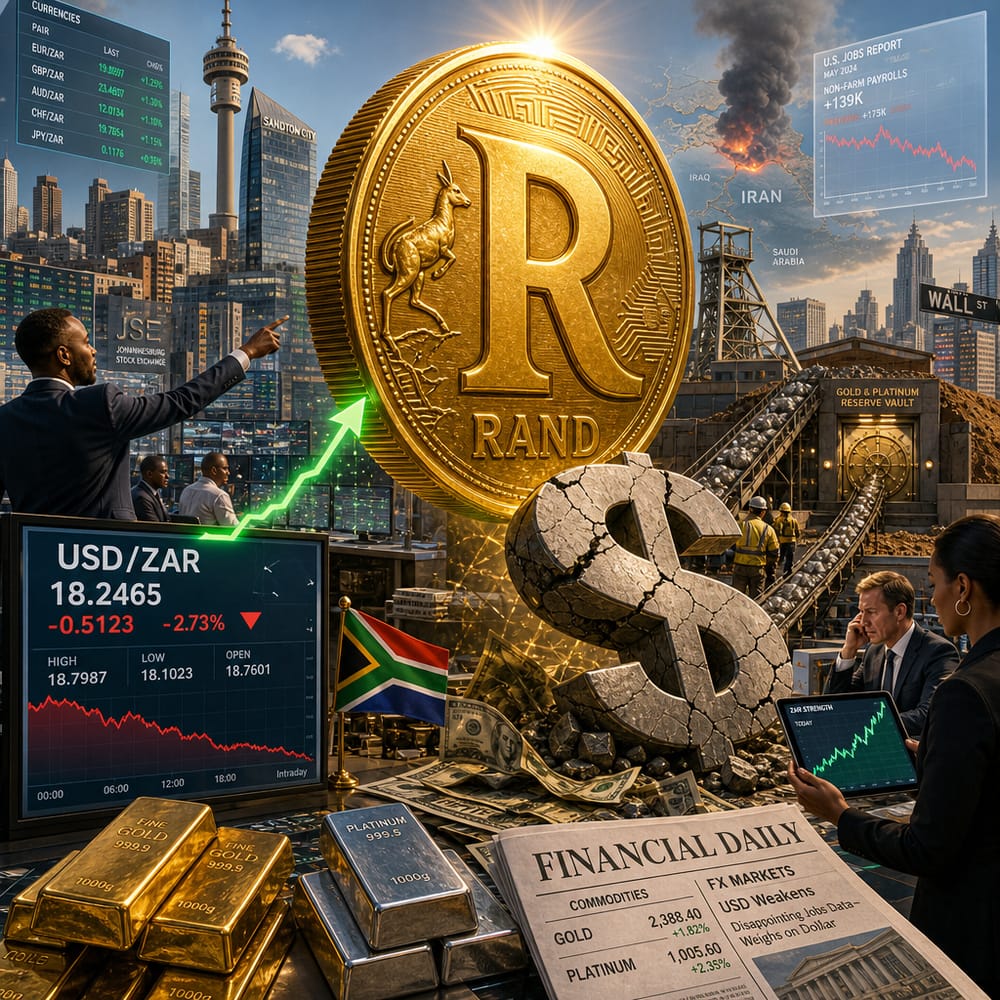
South African Rand Surges: Navigating Currency Swells and Dollar Dips
If you think currency exchanges are the exclusive playground of Wall Street maestros with their tailored suits and slick jargon, think again. The latest tango between the South African rand and the U.S. dollar offers a fascinating lesson in global economics that even the most casual observer can appreciate. Here's the scoop: the rand recently strutted to the tune of a 0.5% gain against the dollar, a move driven by the ebb and flow of international tensions and softer U.S. jobs data. But what does this dance really mean for you and your Instagram-scrolling fingertips? Let's dive in.
WHY DOLLARS AND RANDS ARE RUMBA-ING
Picture this: the world’s stage is set, and geopolitical hotspots like the Strait of Hormuz are the leading actors. Recently, tensions between the U.S. and Iran started to ease off. You might wonder, how does a squabble over a strait halfway across the world cause the dollar to waver? Well, geopolitical tensions often act like an unpredictable tide, making traders edgy and ready to jump ship at the slightest provocation. When hostilities cool, like they have between Iran and the U.S., global confidence gets a boost, impacting currencies worldwide.
At the same time, back in the land of burgers and apple pie, the U.S. job market is showing signs of softening. For those not fluent in Federal Reserve lingo, "softer" jobs data simply means there’s less employment growth than expected. This little hiccup has investors guessing that the Fed might hold off on hiking interest rates, which in turn makes the dollar a tad less attractive. With the dollar doing its best impression of a yawning sloth, emerging market currencies like the rand seize the moment to shine.
THE GREAT DOLLAR DIVE AND THE RAND RESURGENCE
The U.S. dollar may be the global heavyweight champion of currencies, but even champions get winded. When dollar weakness peeks through, it’s like a green light for emerging currencies to rev up. With the dollar catching its breath, the rand capitalized on the opportunity to strengthen, drawing in investors hungry for returns in the foreign exchange (forex) market.
This forex drama isn’t just a spectacle for traders. Investors in commodities are paying attention too. Gold and platinum, two of South Africa's shiny exports, tend to move in sync with the rand’s fortunes. As the rand gains, gold and platinum prices can get finicky, offering both risks and opportunities for market participants.
GEO-POLITICO-WHAT NOW?
So, why should you care about currency fluctuations and geopolitical happenings? Because these forces have the power to sway the market winds, carrying your investment portfolio along for the ride. When conflicts cool and economic signals start flashing, traders adjust their bets, causing currencies to either soar or tumble. Understanding these connections can help retail investors—yes, that includes you—make more informed decisions on when to dive into or climb out of the forex pool.
Moreover, the interplay of geopolitical tensions and economic data offers a treasure trove of opportunities if you know where to look. The forex market, often viewed as a high-stakes chess match, can be an exciting arena for those who enjoy a bit of strategy and intrigue. Spotting the signals in global news and understanding their potential impact lets you ride the waves rather than get swept under.
WHAT TO WATCH NEXT
As we keep our eyes peeled on the global stage, several key players could change the currency script. The Federal Reserve’s next move on interest rates will be a major plot point. If inflation remains a stubborn thorn in the economy’s side, rate hikes could make a comeback, potentially boosting the dollar and altering the current rand rally.
On the geopolitical front, any shifts in the Iran-U.S. narrative could send ripples through the forex waters. The Strait of Hormuz is a crucial artery for global oil supply, and any disruption—or peace—there can send energy markets and related currencies into a tizzy.
In conclusion, the currency lines between the South African rand and U.S. dollar are more than numbers on a screen—they're dynamic stories shaped by global whispers of peace and economic murmurings. Keeping your ear to the ground and your eyes on the prize could pave the way to strategic wins in the financial markets. So, whether you're a budding forex trader or a casual investor, remember: the world of currency is as much about understanding global plots as it is about numbers. Now, go forth and navigate those complex currents!
This article is for informational purposes only and is not investment advice. Always do your own research or consult a licensed financial professional before making investment decisions.
© Copyright 2024. All Rights Reserved.
© Copyright 2024. All Rights Reserved.