

Solana Governance Vote Highlights Centralization Concerns
Monday, August 31, 2026
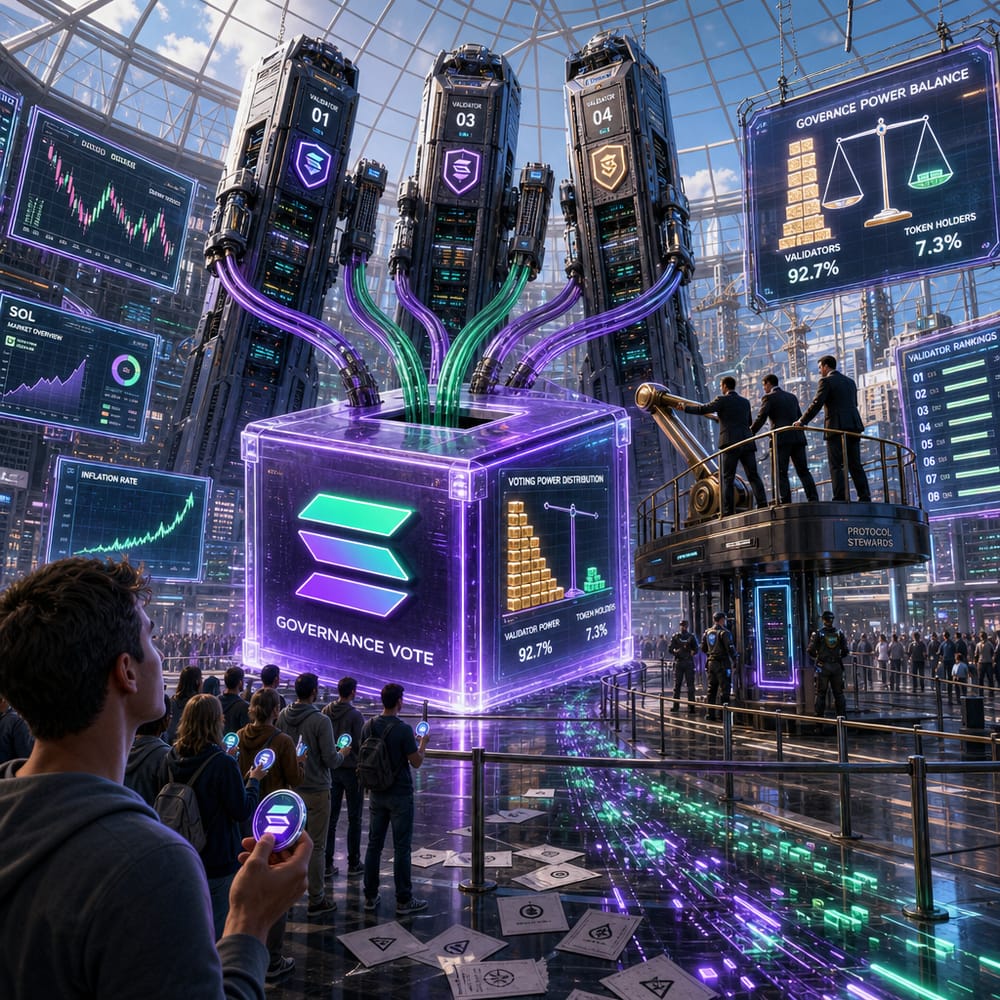
SOLANA GOVERNANCE VOTE HIGHLIGHTS CENTRALIZATION CONCERNS
Picture this: you're a crypto enthusiast, and you bought into Solana's decentralized dream, only to wake up to a governance vote that feels more like an oligarch's ball. Welcome to the drama unfolding in Solana-land, where a recent governance vote on a proposal to double the network's disinflation rate has stirred up a hornet's nest of concerns about, you guessed it, centralization.
So, what's the big deal? Well, in the wild west of crypto, decentralization is the holy grail. It's the promise that no single entity has control, that power is distributed among the many, not the few. But Solana's recent vote has put that ethos in the spotlight—and not in a good way.
WHAT LED TO THIS SITUATION?
The concentration of voting power in Solana's governance is like discovering your local democracy is run by a few big cats who own most of the real estate. You see, in Solana's ecosystem, voting power is linked to the number of tokens you hold, and big validators—essentially the operators who keep the network running—hold a hefty chunk of these tokens. When it came time to vote on the disinflation-doubling proposal, it was like watching the rich kids in school decide on the new cafeteria menu.
While it's not unusual for validators to play a significant role in blockchain governance (after all, they’re the ones keeping the lights on), Solana's setup gives them outsized influence. Think of it as having a few players hold most of the chips in a poker game. They're making the calls, and the small fry are just along for the ride.
SO, WHY SHOULD YOU CARE?
Here's the kicker: this concentration of voting power chips away at the perception of Solana as a decentralized network. When a few entities have the sway to push through significant proposals, it starts to look more like an oligarchy than a democracy. For a blockchain that's marketed itself as the fast and efficient alternative to Ethereum, this kind of centralization could be a credibility killer.
For investors and users, the implications are significant. A blockchain that isn't truly decentralized may face skepticism and lose its competitive edge. And if trust erodes, it’s not just votes at stake—it’s the value of your holdings. In the high-stakes world of crypto, perception is half the battle.
WHAT CAN BE DONE?
So, how to fix this? It’s a bit like rearranging deck chairs on a ship while steering it toward more equitable governance. Solana could start by rethinking its token distribution to ensure new participants can enter the fray without feeling like they’re fighting a losing battle against entrenched validators. More inclusive governance models could include mechanisms for diminishing returns on voting power as token holdings increase. In other words, spread the love around so no one's holding all the cards.
There’s also room to draw inspiration from other blockchain projects that have tackled this head-on. Models like quadratic voting, which amplify the voice of smaller participants, could be explored. Essentially, it's about finding that sweet spot where every participant feels like their voice matters.
The Solana saga is a potent reminder that the road to decentralization is bumpy and fraught with challenges. As networks grow and evolve, so must their governance structures. The crypto world thrives on innovation and adaptability, and Solana will need to embrace both to maintain its decentralized credentials and foster trust among its users.
In the fast-paced realm of blockchain, a misstep on governance can have ripple effects. For Solana, and indeed any blockchain aiming to stay true to its decentralized roots, the lesson is clear: the distribution of power is as important as the technology itself. As the world watches, Solana stands at a crossroads. Its next steps will be crucial in determining whether it remains a decentralized darling or becomes yet another cautionary tale about the perils of centralization.
This article is for informational purposes only and is not investment advice. Always do your own research or consult a licensed financial professional before making investment decisions.
© Copyright 2024. All Rights Reserved.
© Copyright 2024. All Rights Reserved.