

Software Sector Rebound: Genuine Recovery or Short-Squeeze?
Friday, August 14, 2026
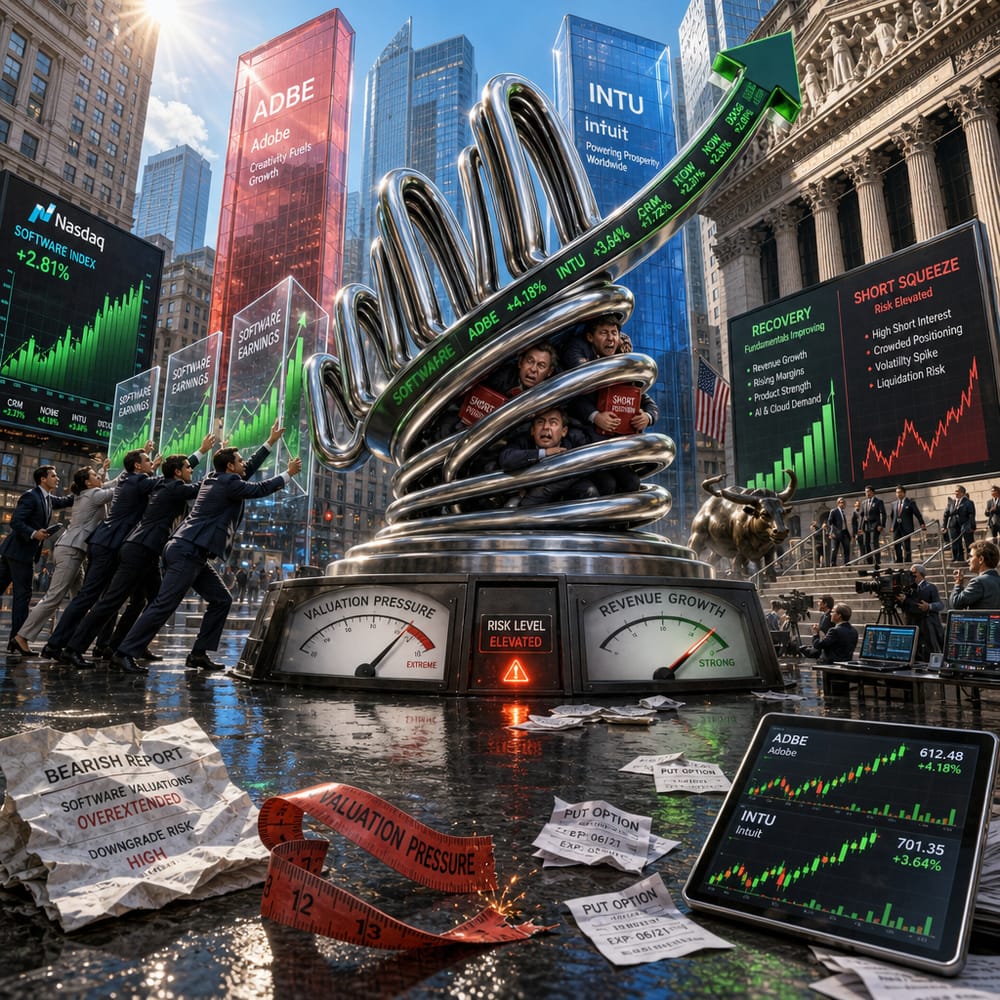
SOFTWARE SECTOR REBOUND: GENUINE RECOVERY OR SHORT-SQUEEZE?
Hold onto your digital hats, folks! The software sector just pulled a Houdini, popping out from behind the curtain with a rally that has retail investors scratching their heads and analysts buzzing with theories. Adobe and Intuit are among the stars of this intriguing performance, but is this a genuine comeback or just a market mirage, the result of a short-squeeze in disguise?
Let’s peel back the layers of this mystery, shall we?
WHAT’S FUELING THIS RALLY?
First, let's talk fundamentals. Adobe and Intuit have been stalwarts in the software world, each wielding a formidable arsenal of products that touch everything from creative design to tax filing. These companies operate in sectors that are as necessary as coffee on a Monday morning. With AI weaving itself into the fabric of every industry, it's no surprise that software companies are getting a slice of that sweet, sweet growth pie.
But here's where it gets spicy: this rally isn’t purely about these companies' undeniable contributions to the digital revolution. It’s also about the broader market dynamics that have set the entire sector buzzing.
Enter interest rates. Rumor has it, the Federal Reserve might keep interest rates steady come September. Low rates are a siren call for tech stocks, luring investors who dream of higher returns. When money is cheap, borrowing to invest in high-growth sectors like software becomes an enticing proposition.
NOW, IS IT REAL OR IS IT ALL SMOKE AND MIRRORS?
The answer isn't black or white; it’s more like fifty shades of gray. Yes, there are solid fundamentals at play — Adobe didn’t become a creative powerhouse overnight, and Intuit’s QuickBooks didn’t earn its stripes by mere chance. But let’s not ignore the undercurrents of speculation and market dynamics that can whip up short-term rallies as well.
Short-squeeze, anyone? For the uninitiated, a short-squeeze happens when investors who have bet against a stock (by borrowing and selling shares they don’t own, hoping to buy them back cheaper in the future) find themselves running for cover as the stock price rises. They’ve got to buy shares to cut their losses, pushing prices even higher. It’s like trying to put out a fire with gasoline.
With the software sector, especially stocks like Adobe and Intuit, being prime targets for short-sellers wary of tech’s lofty valuations, any positive news can send them scrambling. A whisper of good news, and next thing you know, shorts are bolting for the exits, inadvertently fueling a surge.
THE BIGGER PICTURE
While Adobe and Intuit are the headline acts, don’t overlook the supporting players in the broader market drama. The AI boom is like electrifying the stage — Nvidia and Intel are basking in the glow, and Goldman Sachs is happily cashing in on this AI infrastructure rush.
Meanwhile, market jitters over global tensions and economic policy decisions are keeping traders on high alert. Events like the Iranian conflict or U.S. tariffs on foreign-made components have been tossing logs onto the market's fire, creating volatility ripe for short-term trading opportunities.
SO, WHAT'S NEXT?
For investors, the trick is separating the wheat from the chaff. Analyzing whether this rebound has legs involves looking beyond the headlines. Consider the balance sheets, product innovations, and market strategies of these companies.
Most importantly, ask yourself: Is the rally a result of genuine growth prospects or are you looking at a classic case of market overreaction?
At the end of the day, investing is as much about gut feel as it is about spreadsheets. Keep a close eye on the news, watch those interest rates, and never underestimate the power of a good short-squeeze to lead everyone on a merry dance.
As the software sector continues to play the comeback kid, investors would be wise to enjoy the show but know when it's time to leave the theater. After all, in the world of Wall Street, the next act is always just around the corner.
This article is for informational purposes only and is not investment advice. Always do your own research or consult a licensed financial professional before making investment decisions.
© Copyright 2024. All Rights Reserved.
© Copyright 2024. All Rights Reserved.