

Softer Wholesale Inflation (PPI) Adds to Mixed U.S. Inflation Picture
Tuesday, August 18, 2026
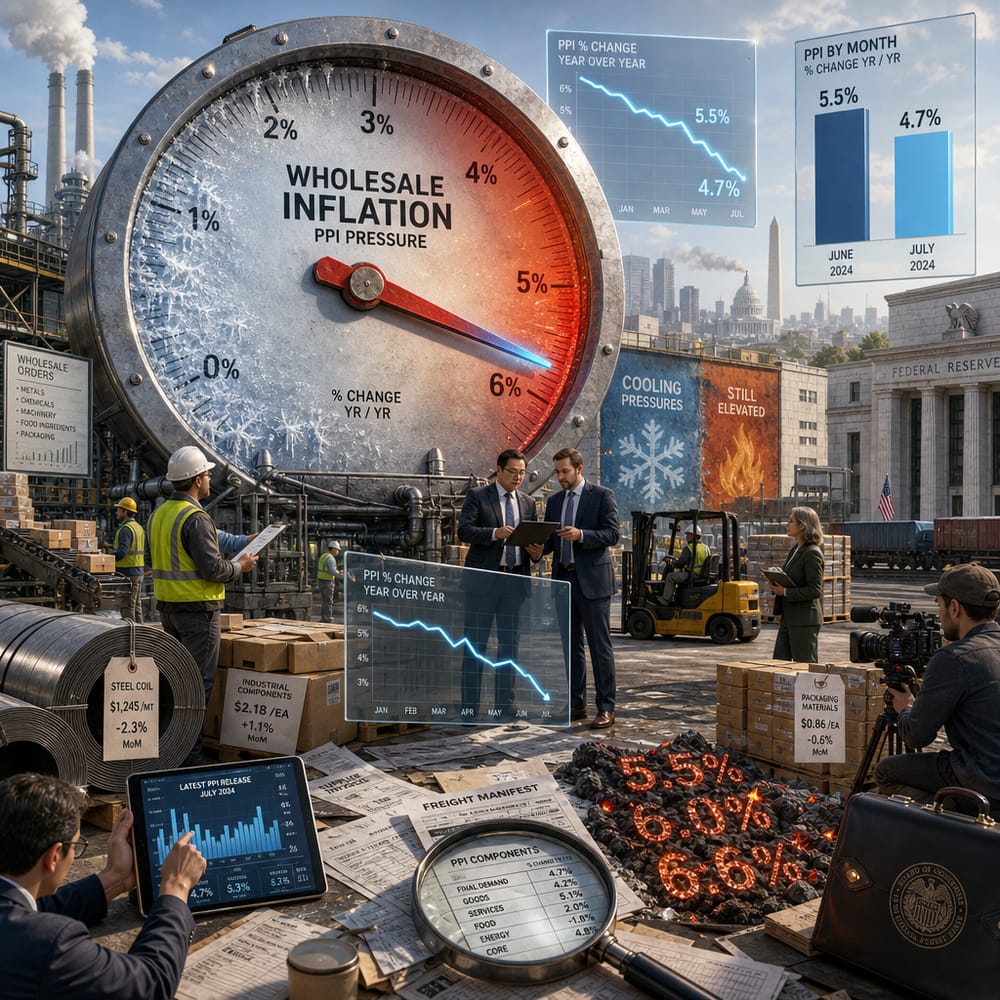
IS THE PPI DIP GIVING THE FED A CHILLED OUT VIBE?
Hold onto your hats, wallet-watchers! The latest Producer Price Index (PPI) has dropped from 5.5% in June to a cooler 4.7% in July, and this whiff of easing inflation might just be the breath of fresh air the Fed needs. But don’t pop the champagne corks yet—this inflation rollercoaster is still loaded with unexpected twists.
What does this PPI dip mean? In the simplest terms, it hints at a softening in wholesale prices. In the complex financial web that weaves our economy, the PPI measures the cost change of goods and services from the producer's perspective. Think of it as a peek behind the curtain at what it costs to make the stuff we buy. When these costs ease, it can be a sign that consumer prices might follow suit. But here's where it gets interesting: a dip in PPI could mean the Fed has a bit more room to breathe and rethink its strategies.
WHY THE FED CARES
The Federal Reserve, aka the financial puppet master of the economy, has been sweating bullets over inflation like a college student cramming for finals. If inflation pressures ease, the Fed might relax on hiking interest rates. Imagine interest rates as the thermostat for the economy: crank them up, and things cool down; lower them, and the economy heats up. Recently, the Fed's been cranking up rates to tame inflation, so a sign that the inflation beast is calming could mean a slower, steadier hand on the rate knob.
But don't get too comfy. The Fed is still dealing with the broader inflation picture, where bond yields are shooting up like a rollercoaster at Coney Island. Rising yields suggest that investors expect higher rates—it's like a spooky economic ghost story where everyone anticipates inflation even if the data is starting to chill out. The Fed will watch closely to see if this PPI dip holds up or is just the calm before the next storm.
WHAT THIS MEANS FOR MARKETS
Investors are on the lookout for any hints of what the Fed might do next because every move they make sends ripples through the stock market waters. If the Fed signals it might slow rate hikes, or even pause them, markets might just throw a little party. Lower rates can mean cheaper loans, more spending, and, hopefully, a bump in stock prices.
Recently, the markets have been jittery, with the S&P 500 on a losing streak and bond yields reaching highs not seen since the early 2000s. This is partly due to worries that inflation isn't done causing chaos. But the cooler PPI is a welcome development and might just ease some of that anxiety. Investors could start to believe that maybe the economy can have a soft landing rather than tanking in a fiery blaze of overheating inflation.
THE BIGGER PICTURE
Even with a softer PPI reading, it's not all sunshine and rainbows. The U.S. economy is a complicated beast, and plenty of factors are still driving concerns. The ripple effects of trade talks, especially with our Canadian neighbors, and the ever-present geopolitical drama, like tensions in the Strait of Hormuz, keep the global market waters choppy. And with oil prices playing footsie with the highs, the cost of living could still be on the rise.
Moreover, the potential fiscal strain from the U.S. government's growing debt load adds another layer of uncertainty. The higher interest rates needed to cool inflation also make U.S. debt more costly to finance—a headache that Uncle Sam could do without, thank you very much.
In this tangled web of economic indicators, the PPI's recent cooling might suggest a little less inflation is coming our way. But the Fed's got its eyes on the entire ballgame, not just a single play. So, as we watch and wait for their next move, remember that in the world of finance, certainty is as rare as a unicorn sighting. Stay sharp, stay informed, and maybe consider sitting on your hands before making any hasty investment decisions.
This article is for informational purposes only and is not investment advice. Always do your own research or consult a licensed financial professional before making investment decisions.
© Copyright 2024. All Rights Reserved.
© Copyright 2024. All Rights Reserved.