

Softening Job Market Could Influence Fed's Rate Decisions
Sunday, August 23, 2026
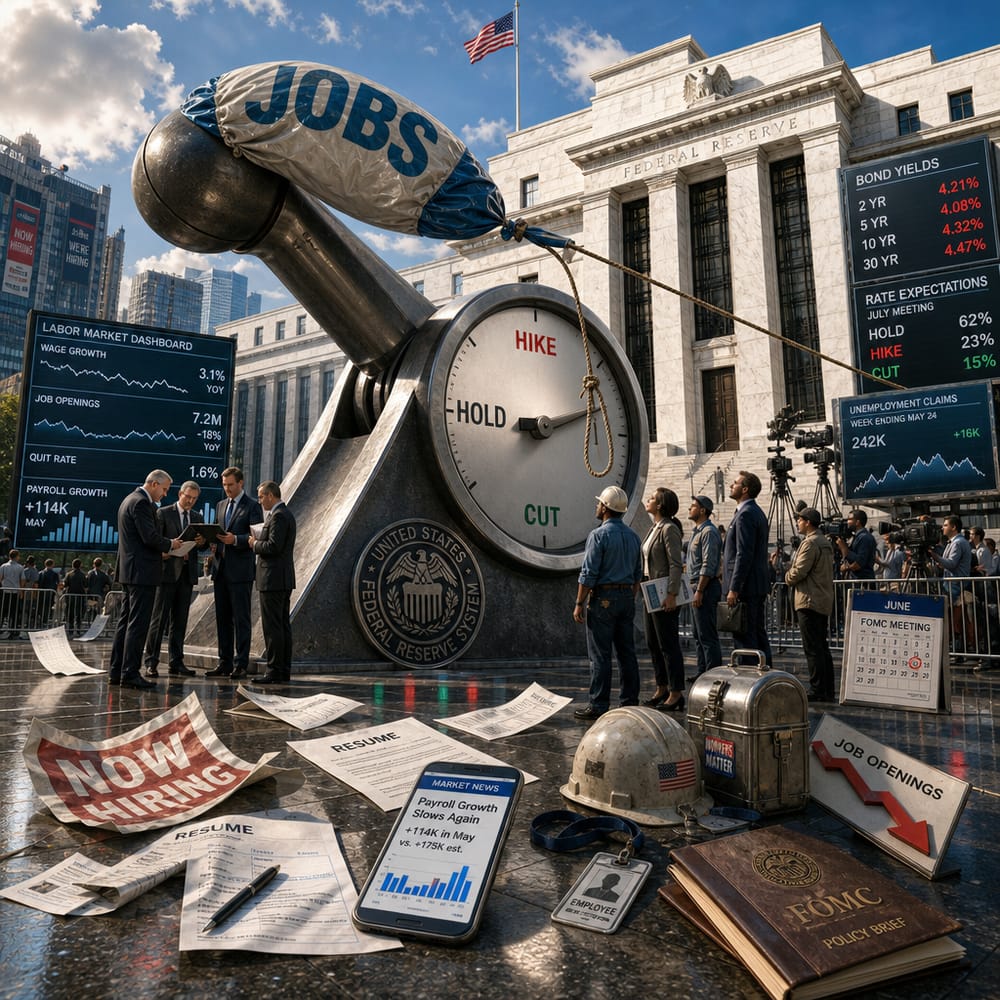
CRACKS IN THE JOB MARKET COULD CHANGE THE GAME FOR THE FED
Is the job market finally cooling off, or is it just playing hard to get? Recent data suggests that the once red-hot labor market might be finding its chill, and this shift could heavily influence the Federal Reserve's next moves on interest rates. For those of us watching the Fed's every twitch, this is like discovering a plot twist in your favorite binge-worthy series. Let's dive into what's happening and why it matters.
The U.S. labor market, which had been hotter than a mid-July sidewalk, is showing signs of easing up. Hiring isn't coming to a screeching halt, but it's losing some of its previous turbocharged momentum. This change is crucial because the Fed has been laser-focused on curbing inflation, which is influenced by a tight labor market, where too many jobs chasing too few workers push wages and prices skyward.
SO, HOW DOES A COOLER JOB MARKET INFLUENCE RATE DECISIONS?
Imagine the Federal Reserve as a tightrope walker, balancing between taming inflation and avoiding an economic nosedive. Interest rates are their balancing pole. If the job market cools, the Fed might feel less pressure to crank interest rates sky-high. You see, high rates make borrowing money more expensive, which can slow down spending and investment — good for fighting inflation but not always great for economic growth.
With a softer job market, the Fed might decide it can take a breather and avoid pushing rates up even more. It's like the Fed's getting the green light to slow down its hike on rates, giving the economy a chance to breathe. For everyday folks and businesses, this could mean mortgages and loans might not become more expensive anytime soon.
WHAT ARE THE BROADER ECONOMIC IMPLICATIONS?
A softening labor market isn't just a chess piece for the Fed. It has ripple effects across the economy. On one hand, businesses may find it easier to hire without offering sky-high wages, which can help control costs and prices. On the other hand, if the job market cools too much, it could spell trouble for consumer spending, which is the lifeblood of the U.S. economy. Fewer jobs and stagnant wages mean less money changing hands.
And let's not forget Wall Street, where investors will be weighing the potential for a less aggressive Fed against the fear of slowing economic growth. Markets thrive on predictability, and uncertainty about the labor market adds a bit of spice — or anxiety, depending on your perspective.
WHY SHOULD YOU CARE?
If you're an investor or just someone with a mortgage, this shift in the job market is worth watching. A less aggressive Fed can stabilize markets, making investments a bit less nerve-wracking. If you've been considering locking in a mortgage rate, now might be a good time before any unexpected changes. And for businesses, hiring could become a bit more predictable, easing some pressure off the bottom line.
In essence, a cooler job market gives the Fed more flexibility, potentially paving the way for steadier economic growth without the looming threat of rapidly rising rates. For the rest of us, it means a little less volatility in our financial lives — and maybe some better news the next time you check your investment app.
So, as we wait for the next chapter in this economic saga, keep an eye on your wallet and your portfolio. The Fed's decisions in response to these job market changes will be the plot twist we all need to watch. Who knows, maybe this time we won't have to binge-watch the news to understand what's coming next.
This article is for informational purposes only and is not investment advice. Always do your own research or consult a licensed financial professional before making investment decisions.
© Copyright 2024. All Rights Reserved.
© Copyright 2024. All Rights Reserved.