

Soft U.S. Economic Data Pressures Dollar
Sunday, August 23, 2026
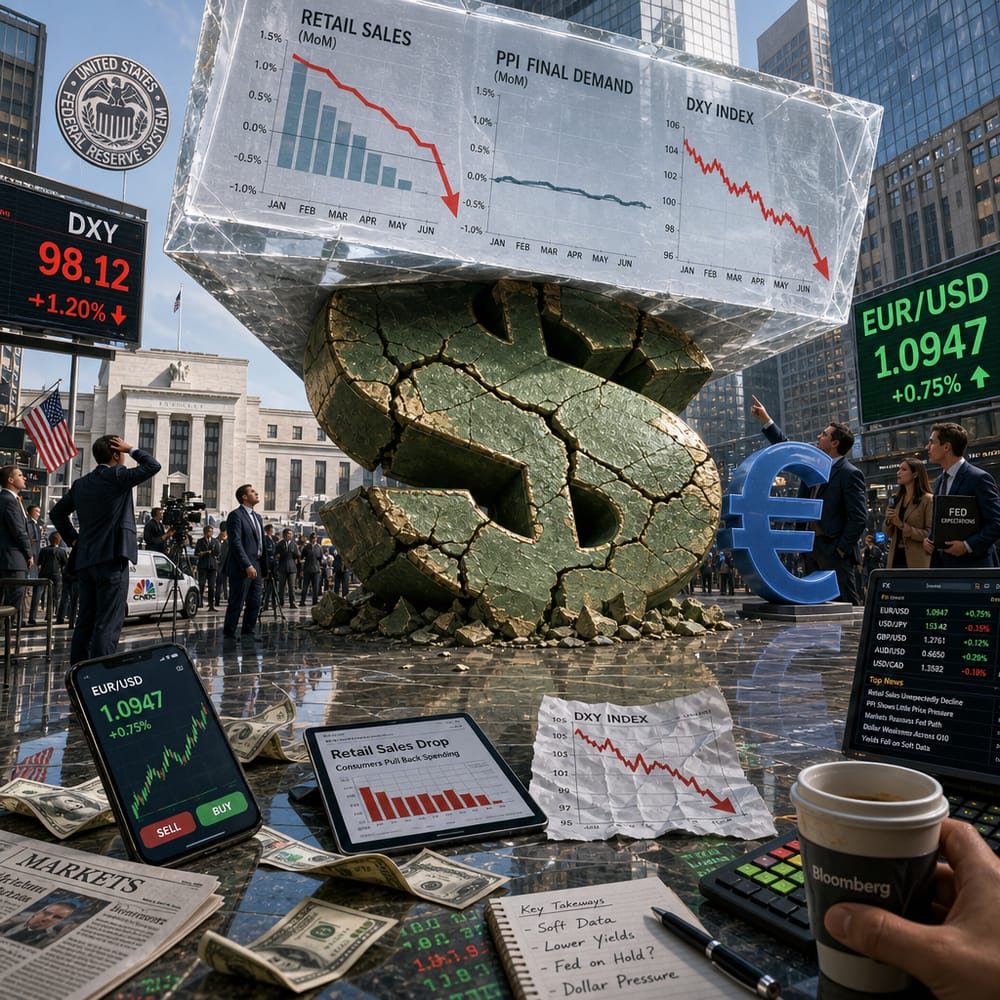
THE DOLLAR’S LOST ITS SWAGGER: WHAT’S DAMPENING THE GREENBACK’S MOJO?
If you’re the type who checks the currency rates before your morning coffee, you might have noticed the U.S. dollar looking a bit deflated lately, like a party balloon the day after. But why the sudden angst in greenback-ville? Enter stage left: recent U.S. economic data that's more "meh" than magnificent.
THE ECONOMIC DATA DUDS
The United States just unfolded a mixed bag of economic reports that would make Goldilocks ponder. Retail sales numbers have slumped, suggesting that consumers aren’t exactly in a buying frenzy. Meanwhile, the Producer Price Index (PPI)—a measure of wholesale prices—has been flatter than a pancake. These aren’t exactly the type of figures to send the dollar soaring.
So, what’s the big deal? Why does a drop in retail therapy sessions or stagnant PPI matter to the dollar? Because economic indicators are like tea leaves for the Federal Reserve—they hint at where the economy's headed and what to do about it. Sluggish sales and static prices suggest that demand isn't outstripping supply, which translates to lower inflationary pressures. And when inflation isn’t knocking on the door, the Fed's obsession with raising interest rates tends to calm down. Lower rates generally equate to a less attractive dollar, as investors hunt for better returns elsewhere.
FED POLICY: THE DRIVING FORCE
Now, the Fed is like that famous movie director whose visions dictate the script of America’s economic sequel. When they tighten the policy belt by raising interest rates, it’s usually to combat inflation. But, if the economic data whispers “slowdown,” the Fed might hold off on those rate hikes.
For currency investors, this means the dollar could lose its appeal faster than last season’s fashion. A hawkish Fed (one that raises rates) can boost the dollar, as higher rates attract foreign capital. Conversely, a dovish Fed (one that's chill on raising rates) can send investors scurrying toward other currencies offering more bang for their buck.
THE CURRENCY CHESSBOARD: EURO TAKES A MOVE
Meanwhile, across the Atlantic, the euro is playing its cards. With the dollar's recent slip, the euro's looking like the cool kid in class. The EUR/USD pair—a barometer of Euro to U.S. dollar strength—has been inching upwards. As the dollar looks less attractive due to potential softening Fed policies, the euro has picked up some sparkle.
But why should you care? Well, if you’re planning a European vacation or buying goods priced in euros, a strong euro means your dollars might not stretch as far. On the flip side, U.S. exporters might find it easier to sell products abroad when the dollar’s weaker.
WHAT’S NEXT FOR THE DOLLAR?
So, is the dollar doomed to languish in the doldrums? Not necessarily. Currency markets have more twists and turns than a soap opera, and they’re just as dramatic. Future economic data could swing the narrative. If retail sales bounce back or if inflation heats up unexpectedly, the Fed could revise its script and opt for rate hikes, giving the dollar some muscle memory.
For everyday investors, this means keeping an ear to the ground for economic indicators and Fed announcements. The market doesn’t sleep, and neither should your attention if you’re navigating currency or international investments.
In this tangled web of economic data, Fed whispers, and transatlantic moves, remember: currencies are fickle, and today’s dismal dollar story could be tomorrow's comeback. Just like that party balloon, the dollar has a knack for reinflating when the winds change. Until then, stay informed, stay curious, and who knows—maybe that next U.S. data release will be the breath of fresh air the dollar needs.
This article is for informational purposes only and is not investment advice. Always do your own research or consult a licensed financial professional before making investment decisions.
© Copyright 2024. All Rights Reserved.
© Copyright 2024. All Rights Reserved.