

Soft September Jobs Report Intensifies Debate over Fed’s Next Move
Tuesday, October 06, 2026
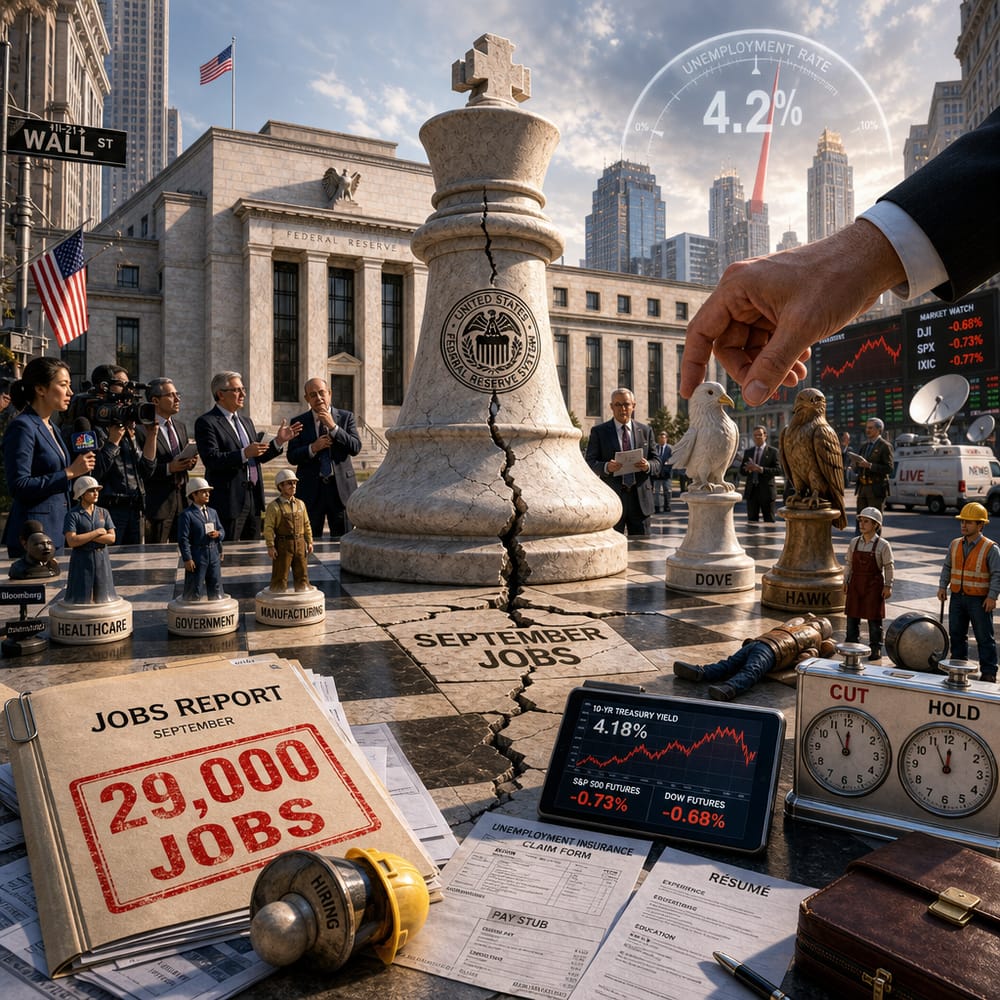
When it comes to job numbers, September was the financial equivalent of a missed high-five. Just 29,000 jobs made their debut, falling dramatically short of the expectations that economists had set. Meanwhile, the unemployment rate took an unpleasant leap to 4.2%. For those who think economics is just a bunch of gobbledegook, let me translate: these figures are raising eyebrows and making the Federal Reserve's next move more interesting than a season finale cliffhanger.
THE FEDERAL RESERVE AND THE RATE RIDDLE
In the world of finance, the Federal Reserve is like the wizard behind the curtain, pulling levers and hoping to keep the economy’s see-saw balanced. With these latest job figures, the Fed now has some serious thinking to do. Do they pause interest rate hikes and give this teetering job market some much-needed breathing room? Or do they continue their tightrope walk between curbing inflation and encouraging employment?
For those who may have dozed off during Econ 101, here's the scoop: interest rates are like the Goldilocks of the economy. Too high and they freeze spending and borrowing; too low and they fuel spending spikes that can overheat inflation. The Fed’s decision whether to hold rates steady or tweak them will send ripples through stock markets, and perhaps even your wallet.
MARKET REACTIONS: BUCKLE UP
Wall Street traders are probably rethinking their weekend plans now that the Fed's October meeting will be more unpredictable than a cat in a room full of rocking chairs. Markets have already been on a rollercoaster ride, and a Fed pause on rate hikes could provide a temporary thrill for stocks. In simple terms, a pause might act like an adrenaline shot, spurring investor enthusiasm and potentially leading to a short-term rally.
But remember, what goes up must come down. Without the safety net of a robust labor market, any market gains could be as fleeting as a New Year’s resolution. Investors should brace themselves for a bumpy ride as everyone waits to see how the Fed interprets these subpar job numbers.
HOW DOES THIS ALL STACK UP?
To put this in perspective, the jobs landscape has been on a eclectic ride lately. The past couple of years saw jobs bouncing back faster than a trampoline thanks to post-pandemic recovery, but now we're hitting a bit of a snag. September’s weak numbers may not be a harbinger of doom, but they do stand out like a sore thumb in a year that’s already been full of economic twists and turns.
There have been periods when job growth lagged, only for the numbers to bounce back like a boxer after a standing eight count. However, in the current economic climate, every data point is scrutinized as if it were the Zapruder film.
WHAT TO WATCH FOR
So what’s next on this economic carousel? Keep an eye on the Fed’s October meeting. Jerome Powell and his merry band of central bankers will be faced with a decision that could either soothe or rile up the markets, much like throwing a stone into a sea of financial uncertainty.
The tepid job growth might also reignite debates about how the Fed should handle external pressures, like global economic jitters or geopolitical tensions that have been bubbling in the background. Investors will need to stay vigilant, like eagle-eyed hawks, for any sign of more definitive trends in the labor market.
THE TAKEAWAY
In a nutshell, while September’s job numbers may seem like a downer, they’re not the end of the world. They do, however, add another layer of complexity to the already convoluted puzzle the Federal Reserve has to solve. For retail investors, it might be time to grab some popcorn because the Fed's next moves are going to be more suspenseful than a summer blockbuster. Stay tuned, stay informed, and as always, be ready for whatever the market throws your way.
This article is for informational purposes only and is not investment advice. Always do your own research or consult a licensed financial professional before making investment decisions.
© Copyright 2024. All Rights Reserved.
© Copyright 2024. All Rights Reserved.