

Soft Q2 GDP Reinforces Tepid U.S. Growth Outlook
Thursday, August 27, 2026
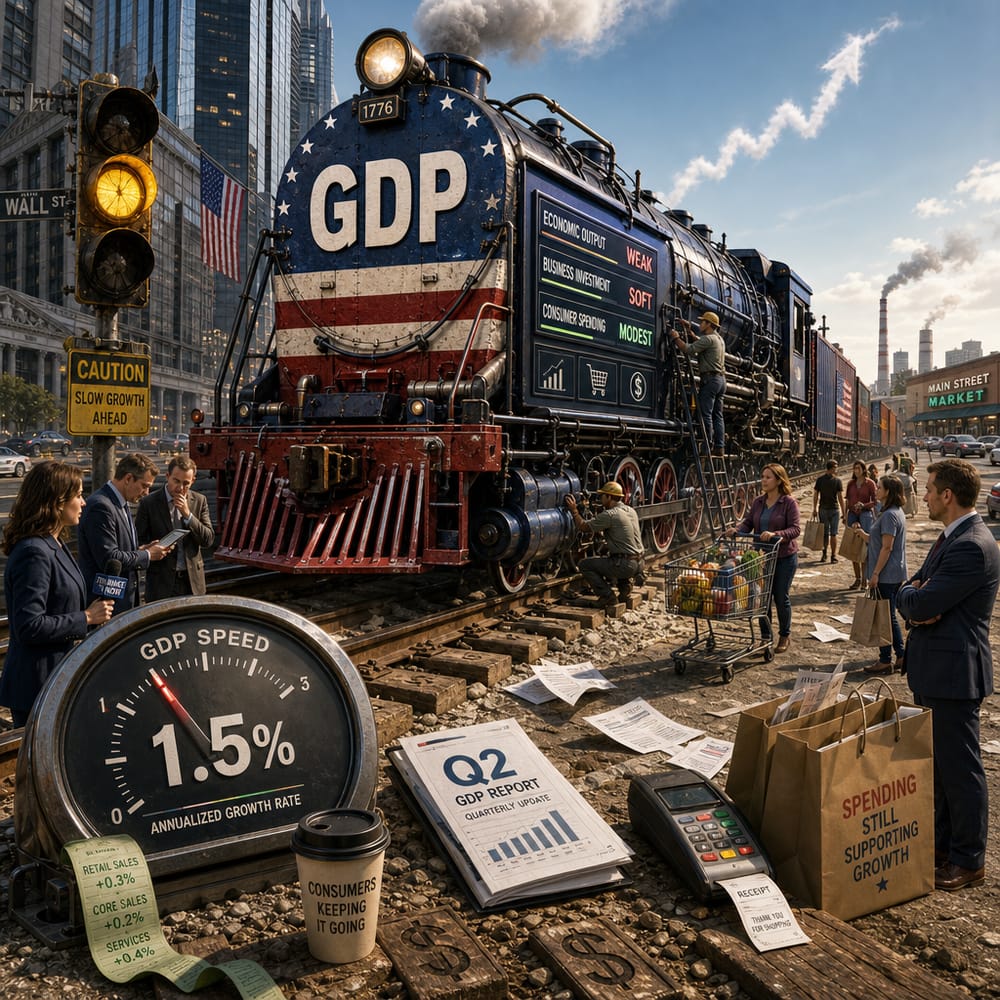
AMERICA'S ECONOMIC SNOOZEFEST: SOFT GDP GROWTH AND ITS RIPPLE EFFECTS
If you thought the U.S. economy was going to put on some fireworks in the second quarter, prepare for disappointment. The latest GDP numbers just rolled out, and they’re about as exciting as watching paint dry. The economy grew at a meager 1.5% annualized rate in Q2, which means it’s barely crawling along when we’d all rather see it sprint. So, what's causing this sluggish performance, and how might it influence future economic policy? Buckle up, folks—this economic soap opera might be more dramatic than you think.
THE CULPRITS BEHIND THE SLUGGISH NUMBERS
You might wonder why the GDP growth has been dragging its feet like a reluctant teenager out of bed on a school morning. Well, let’s break it down. The usual suspects are the ones you’d expect: a combo of cautious consumer spending, choppy business investments, and a hiccup in exports. While consumer spending is still holding its ground and flexing its muscles, it's not exactly going all Hulk on us. People are buying, but maybe not splurging on the new flat-screen TV or that snazzy new car as much as they used to.
On the business front, companies are tightening their belts, partly due to the global economic uncertainty that just won’t quit. With geopolitical tensions and trade issues still making headlines, businesses are playing it safe rather than going all-in on that fancy new project. And don’t get us started on exports. With a less-than-robust global economy, American goods and services are finding fewer takers abroad.
THE FED'S NEXT MOVE: TO HIKE OR NOT TO HIKE?
Now, let's dig into the juicy part—how will these lukewarm GDP numbers play into the Federal Reserve’s plans? Cue the suspenseful music, because Fed officials are in a pickle. One camp, led by the likes of Cleveland Fed President Beth Hammack, isn’t mincing words about the need to raise interest rates. Inflation is still playing peek-a-boo above the Fed’s comfort zone, at around 3% annually, despite its relentless pursuit of a 2% target.
Hammack's stance? She’s got her hiking boots ready. Her message is clear: it’s better to act now than regret it later. She thinks financial conditions aren't restrictive enough, meaning the economy might be running a bit too hot. This puts the Fed on high alert to tighten monetary policy—now or never, she argues.
But not everyone is ready to join the rate-hike party. Kansas City Fed President Jeffrey Schmid is a bit more cautious, highlighting inflation’s stubborn streak but stopping short of calling for immediate action. The Fed's tightrope walk involves balancing inflation against slowing economic growth, and officials are aware of the potential risks of moving too quickly.
WHAT DOES THIS MEAN FOR EVERYDAY INVESTORS?
Alright, so what’s the takeaway for us mere mortals who aren’t Fed policymakers? For those keeping a close eye on their investments, the Fed’s next move could send ripples through the market. If interest rates rise, borrowing costs go up, and that could put the brakes on economic activity even further. Stocks, especially those high-flying tech names that have led the market, might see some turbulence.
And what about your favorite sectors? Consumer spending may continue to be resilient, but any shifts in interest rates could affect credit card rates, mortgages, and auto loans. Those expenses could make consumers tighten their belts, impacting retail and other spending-driven sectors.
What’s the silver lining in this whole saga? For starters, a slower economy could mean inflation continues to cool off gradually. Lower inflation could give consumers more spending power in the long run. And for those with a glass-half-full perspective, tepid GDP growth might be just the nudge needed to keep the economy from overheating.
THE BOTTOM LINE
So, there you have it, folks. The U.S. economy is tiptoeing its way through another quarter, leaving us with more questions than answers. The GDP growth might be sluggish, but the intrigue around future Fed moves and economic policy decisions is anything but.
As this economic drama unfolds, keep an eye on inflation numbers, Fed speeches, and market sentiment. Who knows, it might just be the thriller you didn’t know you signed up for.
This article is for informational purposes only and is not investment advice. Always do your own research or consult a licensed financial professional before making investment decisions.
© Copyright 2024. All Rights Reserved.
© Copyright 2024. All Rights Reserved.