

Soft July Jobs Report Dampens Fed Rate-Hike Expectations
Tuesday, August 11, 2026
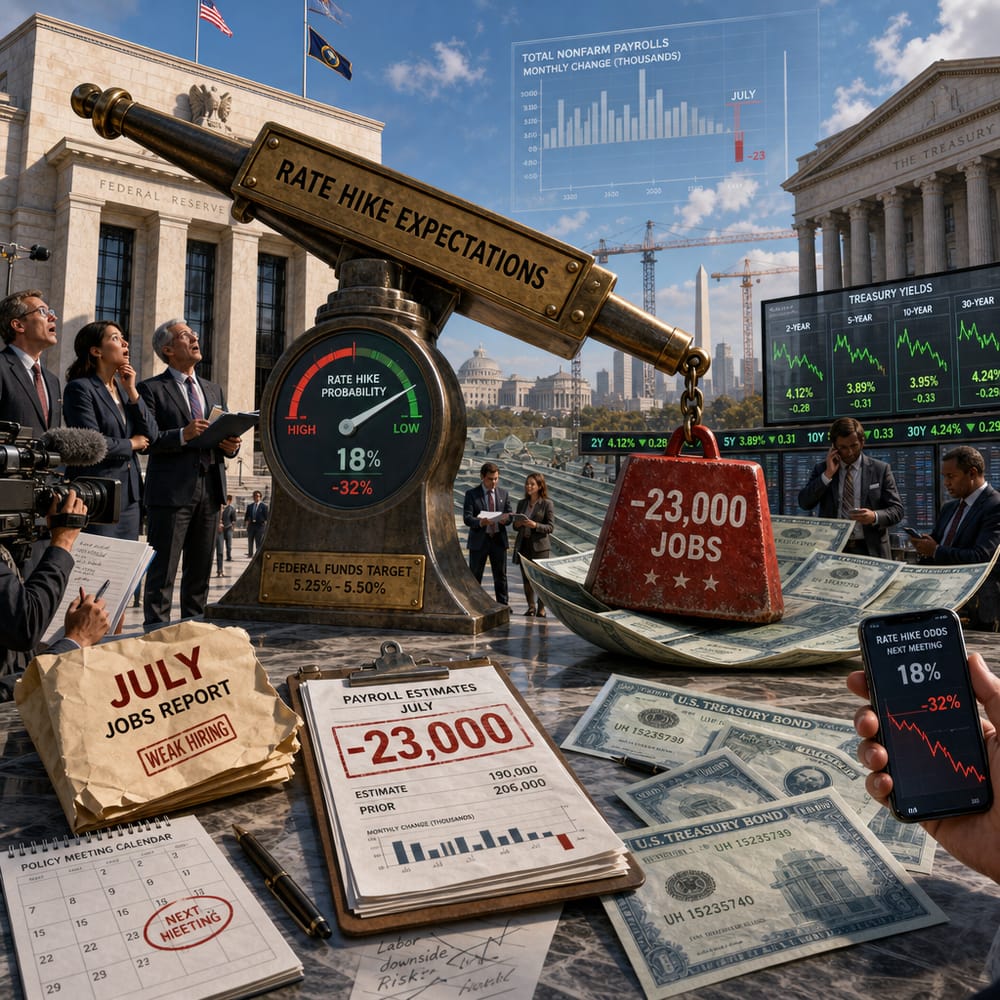
JULY JOBS REPORT SHOCKER: CAN THE FED HANDLE THE HEAT?
Picture this: the U.S. labor market is supposed to be a well-oiled machine chugging along, but instead, it just hit a speed bump, big time. July was expected to be a month of job gains, and experts were predicting a sunny day. Instead, we got a thunderstorm in the form of a stunning 23,000 job losses. Yes, you read that right. The employment market didn’t just stall; it went into reverse.
You don’t need to have a PhD in economics to get why that’s a big deal. Jobs are more than just paychecks; they’re the lifeline of consumer spending — which, fun fact, drives about 70% of our economy. So, when jobs dip, it's like pulling the rug out from under the nation's financial feet. The big question on everyone’s lips: What’s Uncle Sam’s game plan now?
The Federal Reserve (the Fed for short), which is like the financial world’s referee, had been hinting at another interest rate hike. But, with this jobs report, it’s looking like someone just threw a monkey wrench into those plans. When the job market stumbles, interest rate hikes become as popular as a skunk at a lawn party. Higher rates mean more expensive borrowing, which isn’t exactly what you want when people might be tightening their belts.
So, who took the biggest hit? The tech sector, which had been riding high on the waves of the remote work revolution, felt the heat. It’s as if someone finally said the emperor has no clothes, and now the sector is scrambling to cover up. Retail and hospitality weren’t spared either. Both sectors, which depend heavily on consumer confidence and spending, proved vulnerable when the winds of economic change started blowing.
Now, how does this ripple through our economy? If job losses pile up, people tighten their wallets. Fewer shopping sprees at the mall and more nights in with Netflix can lead to lower revenues for businesses. As a result, companies might slow down their own investments, and the economic engine could sputter a bit more.
Looking ahead, the Fed has a puzzle that’s trickier than a Rubik’s Cube. Do they raise rates and risk further slowing the economy, or keep them steady and potentially let inflation bubble up again? The Fed’s been walking a tightrope, trying to balance growth and inflation. Now, with this job report, the rope just got a lot wobblier.
If the job market doesn’t turn around, we could be staring at some long-term repercussions. Think of it as a domino effect: Job losses lead to spending cuts, which lead to less revenue for businesses and, ultimately, more layoffs. It’s a vicious cycle that everyone in Washington is keen to avoid.
On the other hand, there’s a silver lining to all this. Treasury bonds, often the safe haven for investors in troubled times, might see a surge in demand. When uncertainty stalks the market, investors tend to seek refuge in these government-backed securities. This could drive bond prices up but, paradoxically, send yields plummeting. And when bond yields drop, mortgage rates might follow — a sliver of good news for prospective homeowners.
So, what does all this mean for you, the savvy retail investor scrolling through this article? Keep your eyes peeled on the Fed’s next move. Their decision on interest rates could ripple through every corner of the market, affecting everything from your stock portfolio to your mortgage interest rate. In short, it’s time to stay informed and be ready to pivot your investment strategy as needed.
The July jobs report was the economic equivalent of a surprise party — only this one didn’t come with cake and balloons. Instead, it served up a healthy dose of uncertainty. But with uncertainty comes opportunity. The key is staying vigilant and adaptable in this ever-evolving economic landscape. Because who knows? Maybe this storm will pass, and we'll find ourselves cruising along smoothly once again.
This article is for informational purposes only and is not investment advice. Always do your own research or consult a licensed financial professional before making investment decisions.
© Copyright 2024. All Rights Reserved.
© Copyright 2024. All Rights Reserved.