

Soft Jobs Report Spurs Market Euphoria
Saturday, August 08, 2026
THE MARKET PARTY STARTS WHEN JOBS STAY HOME
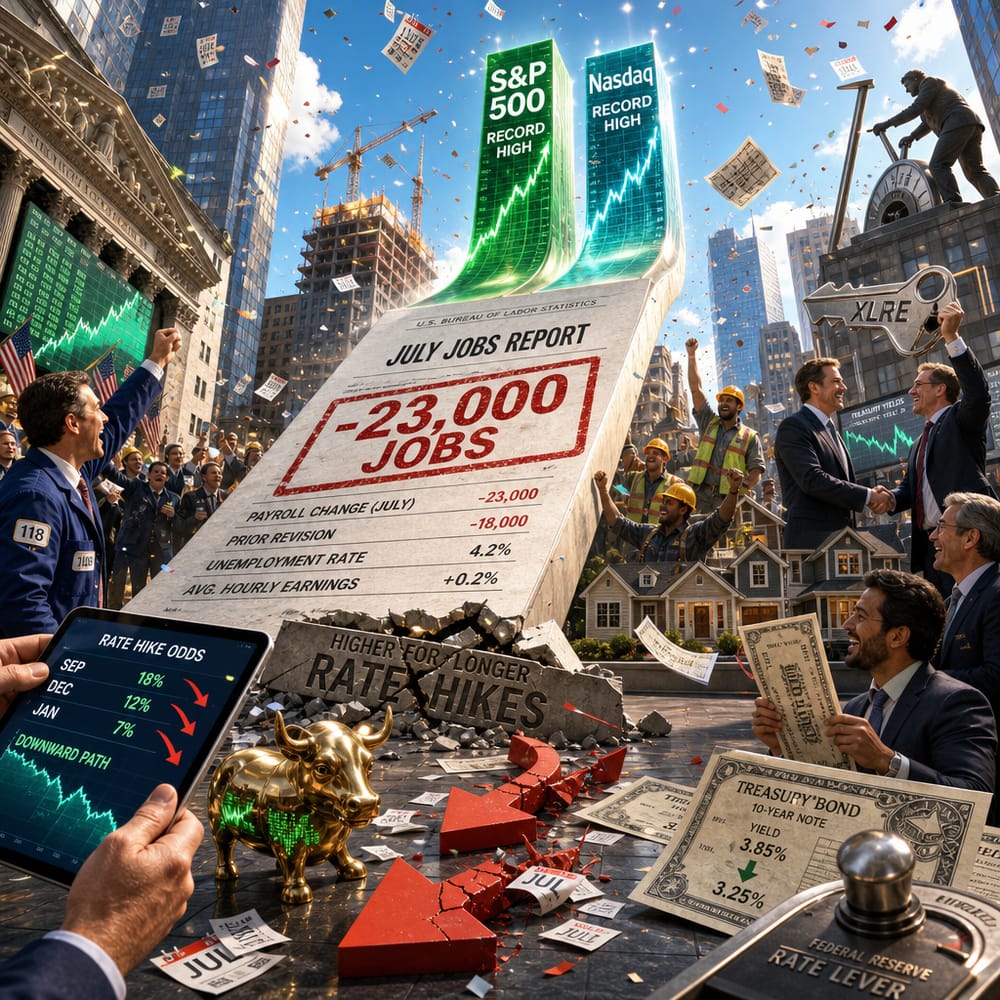
In a world where numbers usually do the talking, the latest U.S. jobs report came in like a whisper. And if you were expecting a fireworks show, you might have found yourself holding a sparkler in a rainstorm. The economy lost 23,000 jobs in July, an unanticipated plot twist in the saga of economic recovery. But strangely enough, Wall Street popped the champagne and partied like it’s 1999. What gives?
Let's unpack this surprise celebration. First, the missing jobs number was the headline no one was expecting. Analysts had been bracing for a gain, not a loss. But while that might seem like bad news, investors saw a silver lining: less chance of the Federal Reserve hiking interest rates in September. You see, when job numbers sag, it gives the Fed cold feet about cranking up rates, since they don't want to hobble an already wobbly economy. That’s music to the ears of equity markets, which thrive on low interest rates like plants on sunlight.
The S&P 500 and the Nasdaq Composite took those gloomy employment figures and turned them into fuel, soaring to new record highs. Think of it as a paradoxical dance where bad news is good news. Who knew job loss could have such a rosy upside?
HOW DID THE STOCKS AND BONDS REACT?
The overnight trading scene was as lively as a New York City street. Stocks took their cue from the jobs report and skyrocketed, pushing benchmark indices to new zeniths. Meanwhile, yields on Treasury bonds—the returns investors get for lending Uncle Sam some cash—started flirting with lower numbers. That’s because bonds become more attractive when rates are expected to stay low, like a safe haven in a storm.
But it's not just about the overall market mood. With rate hikes potentially on hold, some sectors are stepping into the spotlight. Real estate and homebuilder stocks, like DHI and LEN, found themselves in investors’ favor. Lower rates mean cheaper mortgages, and that spells a rosier outlook for real estate. On the flip side, financials like JPMorgan Chase and Bank of America could feel a bit pinched, as they benefit more when rates are higher.
THE BIG QUESTION: WILL THE PARTY LAST?
You might be wondering whether this market euphoria is a new dawn or just a passing phase. The wise money is keeping an eye on the next big economic datapoint—the Consumer Price Index (CPI) that’s landing soon. It’s the yardstick for inflation, and if it shows prices heating up, it could swing sentiment faster than a hot stock tip at a cocktail party.
Plus, the current odds for a September rate hike from the Fed have slid to the back burner, thanks to these job numbers. However, market moods are fickle. They could turn on a dime with a spicy CPI reading or any unforeseen economic curveballs.
ARE WE SEEING A SECTOR SWITCH-UP?
There’s buzz about potential rotation—investors shifting their money from bonds to more economically sensitive stocks, known as cyclicals. These investments tend to outperform when the economy picks up, though they’re a bit like roller coasters: thrilling on the way up, but not for the faint-hearted on the dips. Keep an eye on sectors like industrials and consumer discretionaries if this rotation gains momentum.
WHAT COMES NEXT?
So, what’s the take-home for the everyday investor? If you’re glued to the markets like a die-hard sports fan, pay close attention to economic indicators like the upcoming CPI. These are the play-by-play calls that can change the dynamics on your investment field in an instant.
The market’s reaction to the jobs report may feel like a paradox, but in the high-stakes game of investing, sentiment is king. Today’s job losses have become tomorrow’s stock market gains, as long as they keep the Fed’s hands off the rate hike button.
And just like that Powerball ticket holding the promise of a life-altering fortune, the market is a gamble—sometimes you hit it big, and other times, you find yourself back at square one. So, keep your eyes on the screen, your ears to the ground, and get ready to pivot as the economic narrative unfolds.
This article is for informational purposes only and is not investment advice. Always do your own research or consult a licensed financial professional before making investment decisions.
© Copyright 2024. All Rights Reserved.
© Copyright 2024. All Rights Reserved.