

Soft Jobs Report Rekindles Rate-Hike Debate
Wednesday, August 12, 2026
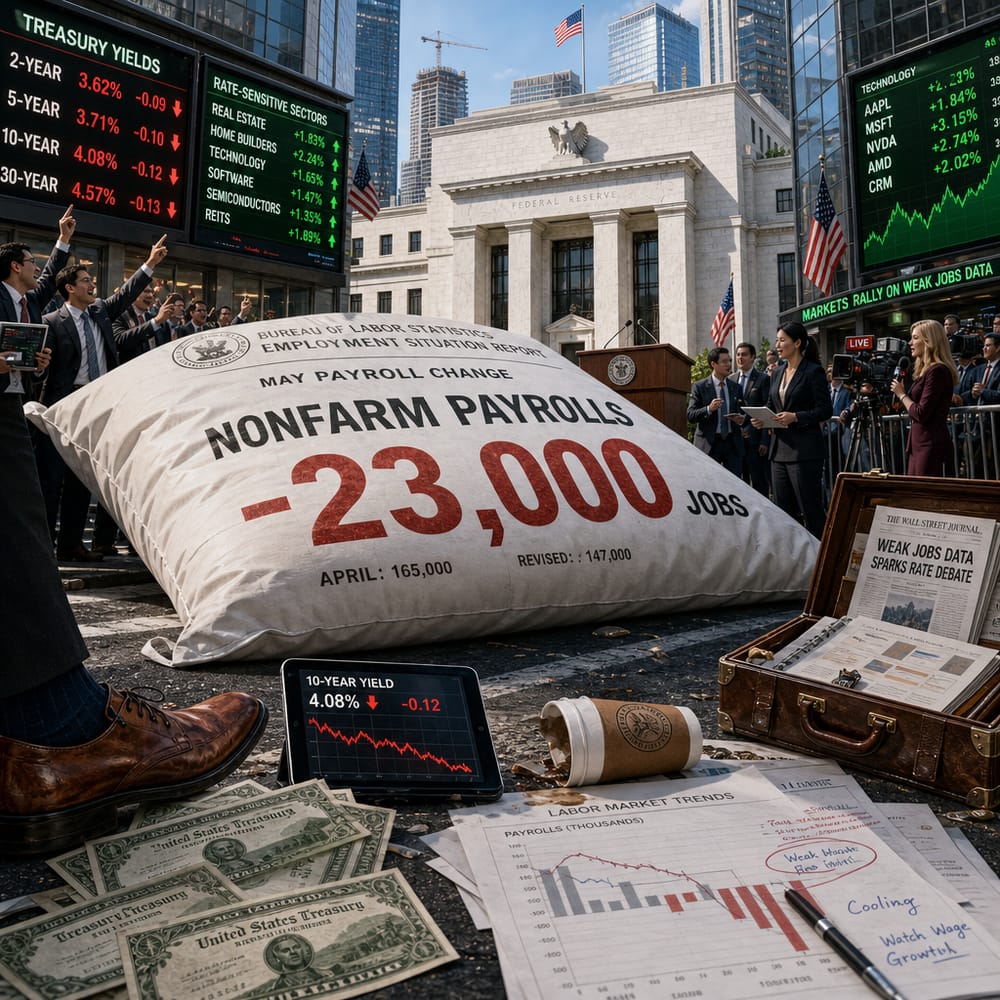
SOFT JOBS REPORT REKINDLES RATE-HIKE DEBATE
Blink, and you might have missed it. Wall Street did a double take on August 7 when U.S. nonfarm payrolls nosedived by 23,000 jobs. That's right, folks—a decline, and the first one since February. It was as if someone hit pause on the steady drum of job growth that’s been pounding away. So, what gives?
For your average investor scrolling through the daily headlines, this unexpected hiccup in job creation has sparked a round of monetary policy bingo. Investors are piecing together clues to predict when the Fed might next tweak interest rates. And boy, is the game heating up.
WHY IT MATTERS
In a world where rate hikes are as anxiety-inducing as a dentist appointment, a softer labor market might just be the Novocain we need. With fewer jobs being added, the Federal Reserve might think twice about jacking up interest rates. Easier monetary policy could be a lifesaver for rate-sensitive assets—like bonds and real estate—because lower rates make borrowing cheaper and investments in those sectors more attractive.
THE FED’S DILEMMA
The Fed’s been on a bit of a mission: slow down inflation without sending the economy into a tailspin. It’s like threading a needle while riding a unicycle. Fun, right? The softer job numbers could give them the excuse they need to keep interest rates steady for a little longer or even take a pause. After all, tightening the financial screws too much could squeeze the economy in all the wrong places.
But hold your horses before celebrating cheap mortgages and credit cards. The Fed is also eyeing inflation and other economic signals like a hawk. With inflation being a stubborn thorn in its side, other data releases—like the upcoming Consumer Price Index report—will play a crucial role in the Fed’s next steps.
INVESTORS, GET READY
So, what does this mean for you, the retail investor? If the Fed decides to go easy on the rate hikes, we could see a rally in rate-sensitive assets. Cue the spotlight on government bonds, utilities, real estate, and any company that needs cheap capital to thrive. Lower interest rates typically mean these sectors could attract more investor love.
Treasury yields might also take a breather, which is a fancy way of saying the government can borrow at lower costs. If you’re in the bond market, it’s your time to shine (or at least not squirm as much).
On the flip side, stocks typically get a boost when the Fed signals a softer stance. The idea is that lower borrowing costs fuel corporate growth, leading to higher profits. But remember, stocks are a moody bunch, and sentiment can flip faster than a pancake at an all-you-can-eat breakfast.
THE WAITING GAME
As the Fed weighs its options, investors are in a bit of a holding pattern. They’re looking ahead to the next batch of economic data like kids waiting for Santa. Inflation reports, housing stats, and global market developments are all on the watch list.
In a market where one eye is on job numbers and the other on inflation, volatility is the name of the game. So, grab your popcorn and stay tuned because we’re in for a bumpy ride. The Fed’s next move will be crucial, and whether they choose to push the pause button or press onward with rate hikes, the ripple effects will be felt across the financial ecosystem.
In the meantime, keep your ear to the ground and your portfolio diversified. A weaker labor market may have given the Fed a reason to hold its horses, but markets are still navigating uncharted waters. Stay sharp, stay informed, and maybe keep a stress ball handy.
This article is for informational purposes only and is not investment advice. Always do your own research or consult a licensed financial professional before making investment decisions.
© Copyright 2024. All Rights Reserved.
© Copyright 2024. All Rights Reserved.