

SMIC Raises Prices as AI Demand Fuels Revenue and Profit Surge
Tuesday, August 25, 2026
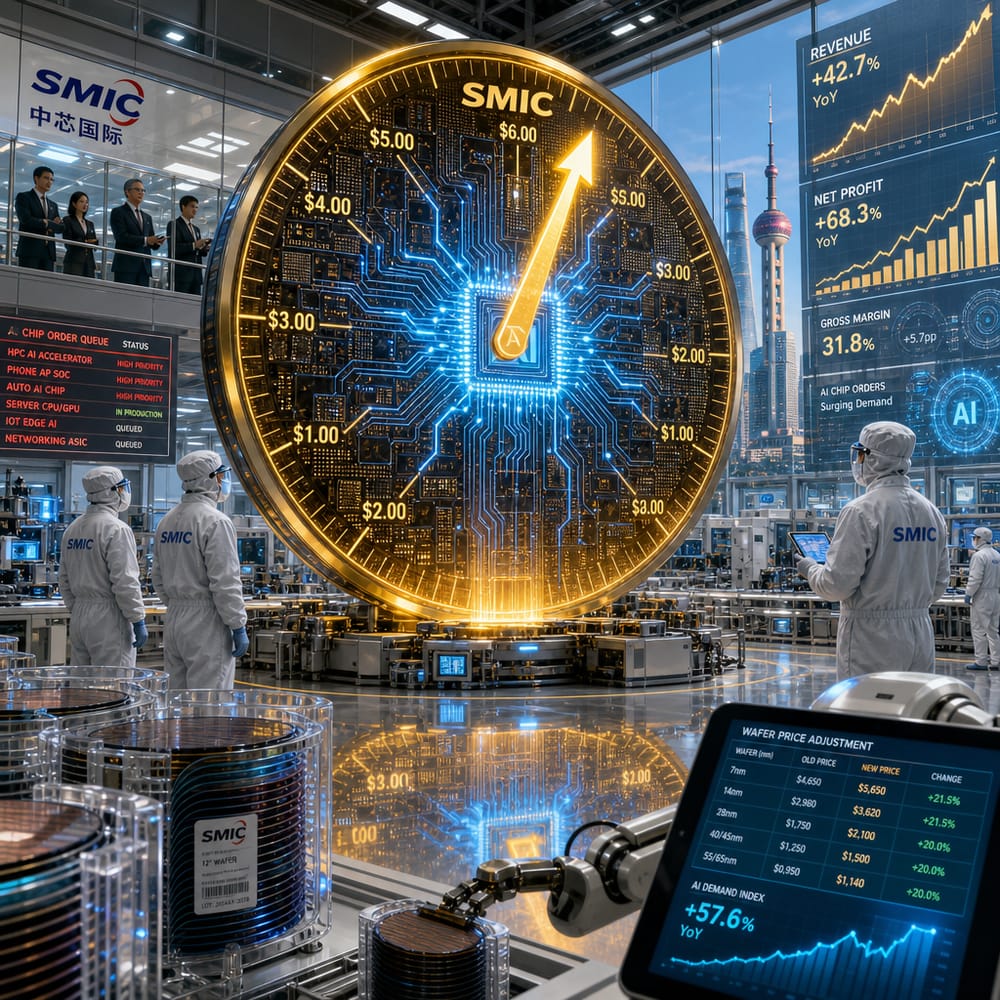
SMIC RAISES PRICES AS AI DEMAND FUELS REVENUE AND PROFIT SURGE
In the high-stakes world of semiconductors, where demand is soaring but supply chains are as tangled as a bowl of spaghetti, one company is flexing its muscles—and its prices. SMIC (Semiconductor Manufacturing International Corporation) has decided to cash in on the global frenzy for AI chips by hiking up its wafer prices like a landlord with a captive audience of tenants in a hot rental market. That’s right, the chipmaker is taking advantage of the AI boom by boosting prices and, not surprisingly, watching its revenue and profit balloon.
For those who have been living under a silicon rock, wafers are the large, thin disks of pure material, usually silicon, that are sliced up to make all sorts of chips. You’ve got one in everything from your smartphone to your car’s dashboard, and now, increasingly, in the ever-expanding AI market. SMIC has reportedly pumped up its wafer prices by a jaw-dropping 10% to 20%. If you think those numbers are insignificant, think again. In a world where every percent matters, that's a leap worthy of Olympic applause.
Why the price hike? Well, it’s a classic case of supply and demand. AI applications—from your favorite virtual assistant to the newest self-driving car—are gobbling up chips like they’re going out of fashion. But here's the catch: the supply of these oh-so-crucial wafers isn't quite keeping pace with this insatiable appetite. SMIC, like many of its peers, is running close to full capacity. This fancy term “capacity utilization” means they've got their factories whirring at full tilt, producing as many wafers as they can without actually breaking the machinery. Yet, they still can’t churn them out fast enough to meet the soaring demand.
Now, let's talk ripple effects. SMIC's price hikes won't make just their shareholders happy—it’s set to send shockwaves across the global chip supply chain. As prices rise, the cost of producing everything from your favorite gaming console to sophisticated AI servers will likely get caught in the updraft. It’s a domino effect where higher wafer costs lead to more expensive chips, which in turn could lead to pricier gadgets and gizmos on the consumer end.
To put it in layman’s terms, this could mean those shiny new AI-powered toys might come with a heftier price tag. Companies relying on these chips will either have to absorb the extra costs or pass them on to consumers. And you don’t need a degree in economics to guess how that might shake out.
But before you start fretting about the rising costs of tech, remember that this price maneuver by SMIC highlights something deeper: the profound impact AI is having on industries worldwide. Sure, it's causing a bit of a bottleneck right now, but it's also a testament to the massive leap AI technology is taking, transforming sectors from healthcare to transportation.
The price hikes also underscore a growing tension in the chip industry: the delicate balance between supply and demand. Companies like SMIC are walking a tightrope, striving to ramp up production without faltering under pressure. It’s a stark reminder of the critical role these semiconductor giants play in keeping the world’s digital heartbeat steady.
So, what does this mean for investors? Well, if you're holding SMIC stock, you might be feeling pretty pleased with yourself right now. With revenues and profits on an upward trajectory, thanks to savvy pricing strategies and red-hot demand, shareholders have reason to celebrate. But for those watching from the sidelines, it might be time to take a closer look at which companies can navigate these turbulent waters—and who’s waving a white flag.
In short, SMIC’s bold move isn’t just about capitalizing on current demand; it's a harbinger of an industry in flux. As AI continues to reshape the landscape, smart investors would do well to keep their ears to the ground and their eyes on the companies best positioned to thrive in this brave new world of silicon domination. After all, in the semiconductor game, you either keep up or get left in the digital dust.
This article is for informational purposes only and is not investment advice. Always do your own research or consult a licensed financial professional before making investment decisions.
© Copyright 2024. All Rights Reserved.
© Copyright 2024. All Rights Reserved.