

Smart Wearable IPOs in Flux — Oura Postpones $2B Listing
Thursday, October 01, 2026
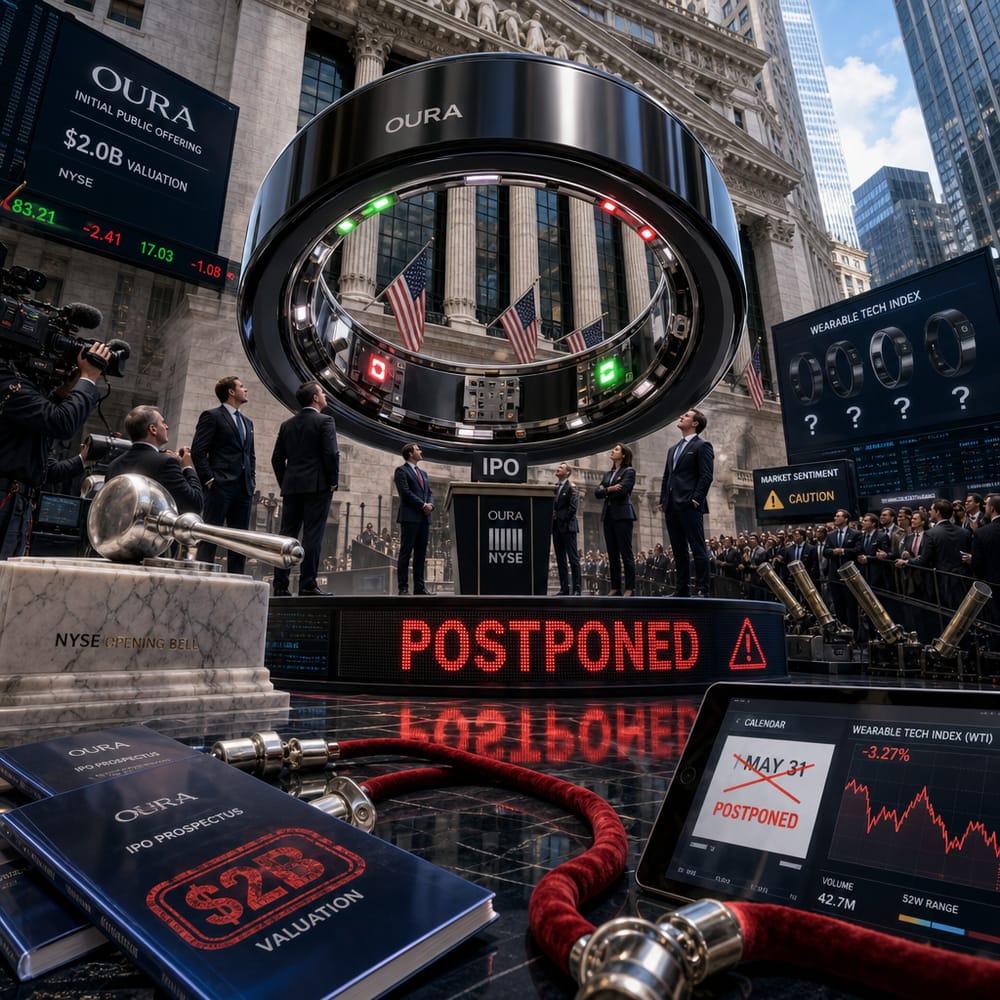
SMALL RINGS, BIG RIPPLE: OURA'S IPO DELAY AND THE FUTURE OF WEARABLES
It's not every day that a tech company decides to hit the brakes on a much-hyped initial public offering (IPO) worth a cool $2 billion. Yet that's exactly what Oura Inc. just did. Yes, the very creators of those sleek smart rings that do everything but make you breakfast have decided to delay their Wall Street debut. So, what's going on in the land of wearable tech, and why should your investment radar be buzzing louder than a vibrating Fitbit?
First, let's talk about the elephant—or, rather, the ring—in the room. Oura was set to tap into the public market, aiming to capitalize on the growing fascination with health-tech gadgets. These aren't just any wearables; they're the kind that gather data on your heart rate, sleep patterns, and perhaps even bad relationship habits (concerning your sleep, anyway). So, when they suddenly put a pause on their IPO, eyebrows were understandably raised.
The reason for postponement? Drumroll, please: market conditions. But this isn't just about a jittery stock market. Investors are currently walking a tightrope, balancing their excitement over tech innovation with a healthy skepticism stemming from economic uncertainties and interest rate gyrations. With the ongoing market drama—think surging oil prices, volatile stock indices, and the unpredictability of the global job market—Oura's decision to wait seems less like cold feet and more like a savvy business move.
Now, why does this matter beyond that shiny ring of yours? Oura’s IPO delay is a canary in the coal mine for how Wall Street views health-tech wearables. It’s a sector at a crossroads: is it a health-tech revolution, or just a temporary consumer electronics craze? This question isn’t just philosophical; it could redefine how similar companies approach the public markets and how they’re valued.
If investors start lumping wearable tech with basic consumer electronics, it could spell trouble for future IPO valuations. Let's face it: nobody wants to be compared to last year's iPhone in a world where everyone is looking for the next Tesla. On the flip side, if investors see wearables as integral to the future of health technology, akin to a digital stethoscope for the masses, then we’re talking about a whole different ballgame.
And let's not forget the broader tech IPO market. Oura’s delay adds to a growing list of tech companies hitting the pause button. Whether it's AI firms grappling with ethical concerns or software companies navigating cybersecurity issues, the landscape for tech IPOs is murky at best. Investors are being more selective, dissecting business models with a magnifying glass like they’re inspecting a Monet for authenticity.
The implications of Oura’s decision ripple out far beyond its Helsinki headquarters. If you're an investor with a penchant for tech stocks, this could mean recalibrating your perspectives on what constitutes a sound investment in the health-tech space. It also nudges us to consider how market volatility influences corporate strategy—because, let's face it, these companies are just as influenced by interest rates and geopolitical uncertainty as your 401(k).
So, will wearables cement their place as indispensable health aids, or will they swivel back to being luxury gadgetry with a short lifespan—like the digital step-counter craze of 2009? Only time will tell. But one thing’s for sure: Oura’s postponed IPO is a reminder that in the capricious world of tech investment, sometimes the smartest move is to wait until the dust settles.
In the meantime, whether you're a gadget geek or just curious where your money should go, keep an eye on the pulse of both the market and your own heart rate. After all, in the ever-evolving landscape of tech investments, staying informed is the best way to ensure you don’t miss out on the next big thing—whatever it may be.
This article is for informational purposes only and is not investment advice. Always do your own research or consult a licensed financial professional before making investment decisions.
© Copyright 2024. All Rights Reserved.
© Copyright 2024. All Rights Reserved.