

Small-Cap Volatility Amid Macro Uncertainty
Friday, August 21, 2026
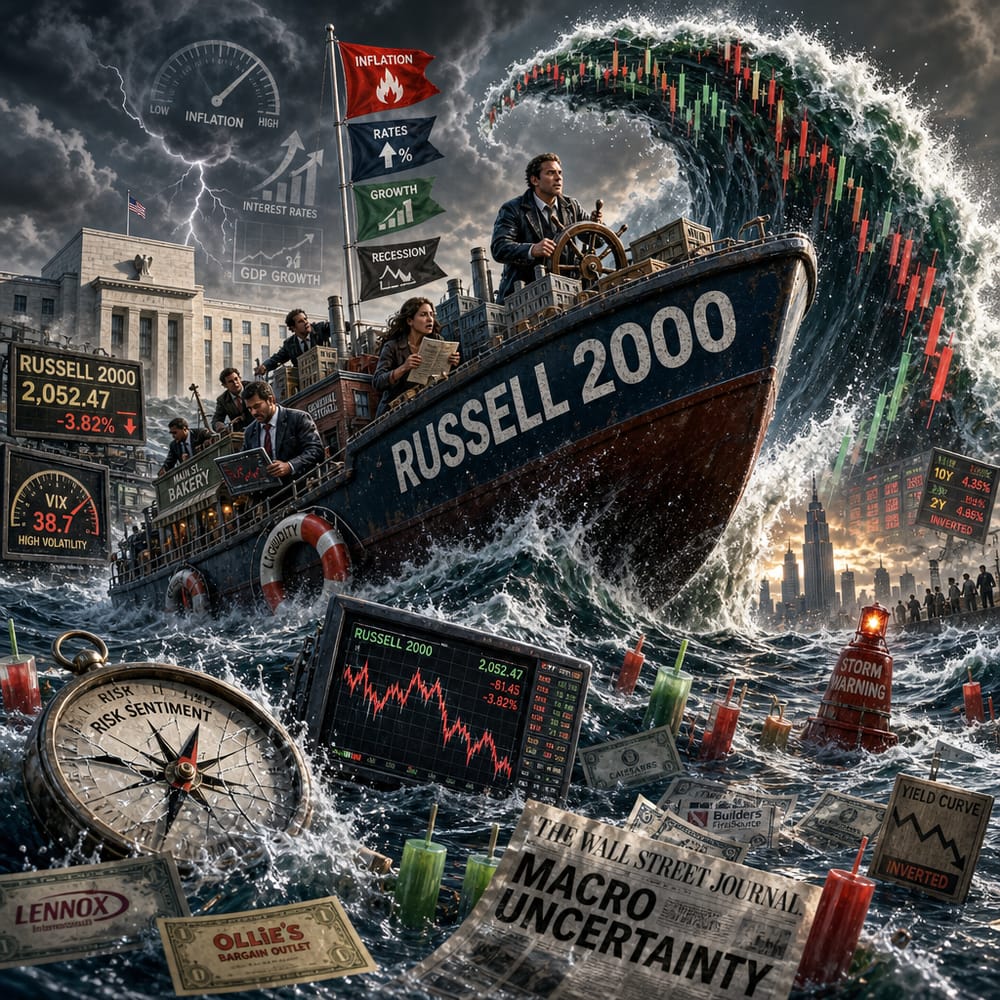
HEADLINE: Small-Cap Stocks: The Rollercoaster Ride Amid Macro Whirlwinds
Ah, small-cap stocks. The wild child of the investment world—often surprising, always entertaining, and occasionally downright scary. If you’re watching the Russell 2000 Index lately, you might feel like you're riding a rollercoaster blindfolded. And not the fun kind, but the stomach-churning, scream-your-lungs-out variety. Why? Because small caps are having a moment, and not necessarily the good kind.
MACROECONOMIC PRESSURES: THE USUAL SUSPECTS
Before we delve into what’s rattling these tiny titans of Wall Street, let’s set the stage. Picture a poker game where inflation, interest rates, and Treasury yields are all bluffing each other—and nobody knows who holds the winning hand. The big specter haunting the room? Rising Treasury yields, which have been marching higher, leaving investors jittery and markets wobbly. When Treasury yields rise, borrowing costs go up, potentially slowing the economy. And who feels the pinch first? Our small-cap friends.
Oil prices are another player in this chaotic chess match. With Brent crude flirting with $95 per barrel, every truckload of goods just got a bit pricier to transport. Throw in the geopolitical tension swirling around the Strait of Hormuz, and the energy sector starts feeling like a pressure cooker. This backdrop of macroeconomic uncertainty is not exactly the soothing lullaby small-cap stocks were hoping for.
SMALL CAPS AS MARKET THERMOMETER
Here's the deal: small-cap stocks often serve as a litmus test for market sentiment and economic outlook. They're like that friend who tells you if your brand-new outfit is fabulous or a fashion faux pas. If small caps are under pressure, it often signals broader investor caution.
Small-cap companies, typically more domestically focused, are closely tied to the U.S. economy's health. When economic clouds gather, investors tend to flee to the perceived safety of larger, multinational corporations. This retreat leaves small-cap stocks, like those in the Russell 2000, jittery and volatile.
THE RIPPLE EFFECT ON BROADER MARKETS
So what does this small-cap volatility mean for the rest of us stock market surfers? When small caps start bouncing like a pinball in a machine, it can drag broader market sentiment down with them. Larger indices, like the S&P 500, may find themselves caught in the undertow, as risk appetite sours and investors retreat to safer harbors.
Recently, we’ve seen some relief rallies in the broader market—thanks, in part, to stronger-than-expected earnings reports and a bit of optimism (or perhaps wishful thinking) about inflation cooling off. But these upticks are often fragile when small caps are in turmoil.
LOOKING FORWARD: A WATCHFUL EYE
Now, before you go stuffing your cash under your mattress, remember that stock market cycles are as dependable as the changing seasons—what goes down must come up. If you're a retail investor, keep your eyes peeled. While small-cap stocks may be on a bumpy ride now, they historically offer significant growth potential over the long term. Think of them as the hare to the large-cap tortoise.
In the meantime, keep an eye on key economic indicators like the Federal Reserve’s interest rate decisions and oil price trends. Changes here could stabilize the smaller fry or send them scurrying further. As ever, diversification remains your best friend—spreading your investments across different asset classes can cushion the blow when volatility spikes.
As the curtain falls on this act of small-cap drama, remember: It's a fast-paced world out there, and small caps are in the spotlight for their ability to reflect our broader economic and market mood. Keep watching, keep learning, and most importantly, keep your seatbelt fastened—this rollercoaster isn't over yet.
This article is for informational purposes only and is not investment advice. Always do your own research or consult a licensed financial professional before making investment decisions.
© Copyright 2024. All Rights Reserved.
© Copyright 2024. All Rights Reserved.