

Small-Cap Resilience: Russell 2000 Closes Higher Despite Tech Turmoil
Thursday, November 19, 2026
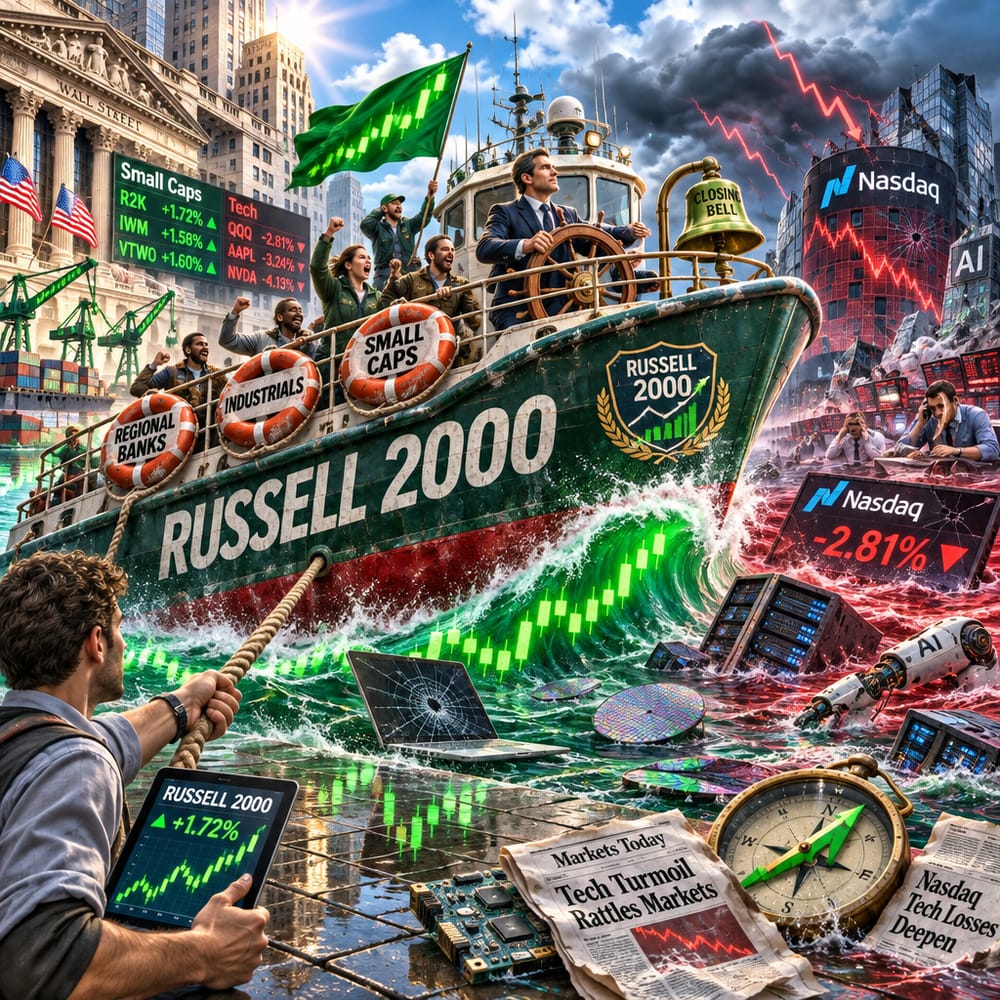
SMALL-CAP RESILIENCE: RUSSELL 2000 CLOSES HIGHER DESPITE TECH TURMOIL
In a world where tech giants usually hog the spotlight, it looks like the Russell 2000 is stealing the show. While big tech stocks were riding a rollercoaster this week thanks to the much-hyped Anthropic IPO, small caps were quietly climbing the ladder of success. Yes, the Russell 2000, an index tracking smaller companies, managed to close higher despite the broader tech sector taking a nosedive. Intrigued? You should be. This could be a window into the market dynamics that might just reshape your investment game.
Picture this: The tech-heavy Nasdaq was having a meltdown. The Anthropic IPO, which looked like a scene from a sci-fi movie with dollar signs, initially soared then took a dive, dragging tech stocks with it. Investors were dumping AI darlings faster than you could say "algorithm" and rushing to get a slice of the newcomer pie. Despite all this chaos, the Russell 2000 barely batted an eyelash. How?
Let's explore what’s behind this small-cap wonder. For starters, small-cap stocks are known for their ability to zig when the rest of the market zags. The companies in the Russell 2000 often operate under the radar, far from the headline-grabbing antics of the tech titans. They’re like the indie bands of the financial world, quietly building a fan base while mainstream acts dominate the airwaves.
The resilience of the Russell 2000 can be attributed to several factors. First, the sectors driving its recent strength are vastly different from those bogging down the Nasdaq. While tech was grappling with volatility, sectors like financial services and healthcare within the Russell 2000 were thriving. Small regional banks and healthcare providers were basking in their moment under the sun, partly due to rising interest rates and increased demand for healthcare services.
Additionally, small caps are often more domestically focused. This means they’re less susceptible to the global shocks that can rock larger companies reliant on international markets. With interest rates on the rise, big players juggling foreign debt are feeling the pinch, but small-cap firms, with their domestic revenue streams, are less exposed and thus more stable. This gives them a unique edge when the global financial seas are stormy.
Moreover, small-cap stocks are the darlings of economic recovery phases. When the economy picks up speed, these companies tend to benefit more quickly than their larger counterparts. They've got less bloat, meaning they can pivot and grow without the slow churn that often hampers larger corporations. In times of economic uncertainty, like the current tech-induced upheaval, investors often turn to these nimble players as safe havens with growth potential.
For retail investors, the resilience of the Russell 2000 presents an intriguing narrative. While tech stocks may glitter during a boom, they lose their luster at the first sign of trouble. Small caps, on the other hand, offer a more grounded opportunity. They don’t promise the moon, but they do offer the steady satisfaction of watching your investments grow while the rest of the market is busy panicking.
So, what are the implications for those of us weighing where to park our hard-earned cash? Diversification has always been key, but perhaps now more than ever, it’s crucial to think beyond the tech sector’s stock market dominance. The Russell 2000’s performance isn't just a fluke; it’s a testament to the power of a diversified portfolio. Sure, tech stocks are exciting and come with the allure of cutting-edge innovation, but there’s a case to be made for the consistent, albeit less flashy, returns from small-cap stocks.
In a market environment that feels like trying to decipher a Rorschach test, and where tech is wobbling like a toddler on a sugar high, the steady climb of the Russell 2000 might just be the dose of stability your portfolio needs. So, while everyone else is busy obsessing over the next tech bubble, savvy investors might want to take a closer look at the small but mighty.
This article is for informational purposes only and is not investment advice. Always do your own research or consult a licensed financial professional before making investment decisions.
© Copyright 2024. All Rights Reserved.
© Copyright 2024. All Rights Reserved.